


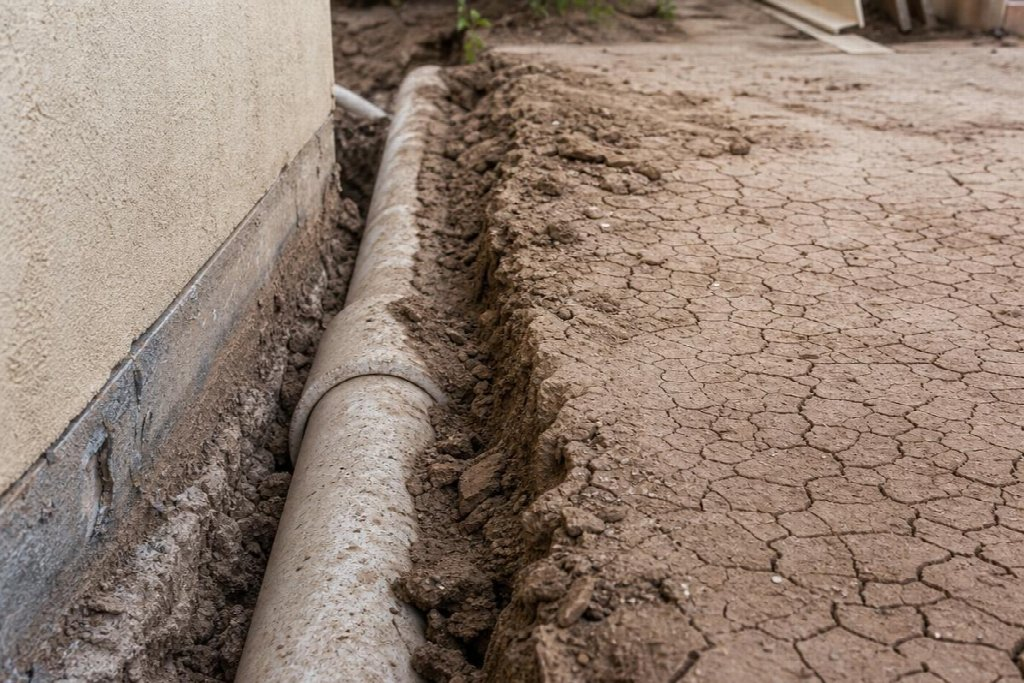
Your sewer line could be failing right now, and you would never know it. The clay-heavy ground beneath most Phoenix neighborhoods expands and contracts with every monsoon season and dry spell, quietly stressing underground pipes for years before a single symptom appears inside your home. Penguin Air, Plumbing & Electrical, a Phoenix-based plumbing and HVAC company founded in 2011 and rated A+ by the BBB, has seen this pattern play out across Greater Phoenix more times than most homeowners would expect.
Why Phoenix Soil Is Quietly Destroying Sewer Lines
The Greater Phoenix Valley sits on two problem soils: montmorillonite clay (called adobe clay locally) and caliche hardpan. Both react sharply to moisture. Montmorillonite swells when wet and shrinks when dry, creating lateral stress on buried pipes every season. Caliche resists drainage, trapping water against the more reactive clay above it and intensifying the swelling cycle.
The Monsoon Effect
The Phoenix Valley receives roughly 8 inches of rain per year, most of it falling in a narrow monsoon window from early July through mid-September, when a single storm can drop more than an inch in under an hour. Soil swings from bone-dry to saturated in weeks, then stays parched for months. That differential settlement shifts the ground unevenly, and PVC, clay tile, and cast iron sewer lines absorb that stress year after year. Most homeowners see no symptoms until a backup forces the issue; by then, the damage has been building for years.
What Expansive Clay Soil Does to a Sewer Line
Montmorillonite clay can expand up to 15% in volume when it absorbs water. During monsoon season or after heavy irrigation, the soil swells and presses outward against anything buried in it. Then the dry season hits, and it contracts and pulls away. Pipes buried in that soil take the full force of each swing. Phoenix expansive soil plumbing problems tend to show up in three specific patterns:
- Bellying: Uneven settlement causes one section of pipe to sag. Waste pools in that low spot, clogs form, and anaerobic bacteria accelerate corrosion from the inside out.
- Joint separation: Adjacent soil sections shift in opposite directions, pulling pipe couplings apart and inviting tree roots and groundwater into the line.
- Cracking and crushing: Lateral soil pressure builds against the pipe wall until it cracks or collapses inward.
Pool systems and drip irrigation lines compound the problem. Localized soil saturation near the foundation intensifies the natural monsoon-driven movement, creating pressure hot spots right where sewer lines run. Backwashing a pool filter onto the same patch of soil month after month is one of the most overlooked causes of localized settlement in older lots.
Why Cast Iron and Clay Tile Pipes Are Most Vulnerable
Older neighborhoods across Maryvale, Sunnyslope, and South Mountain have high concentrations of pre-1985 homes, many still running original clay tile or cast iron sewer lines. Both materials are brittle and were never designed to flex with soil movement. Cast iron also corrodes from the inside as it ages, thinning the pipe wall at the exact moment soil pressure peaks.
Newer PVC pipes are more flexible but not immune. Fast-build subdivisions across the East Valley from the 1990s and early 2000s sometimes used poorly compacted backfill, which settles unevenly over time and stresses joints on newer lines. Improperly bedded pipe with rocky native fill rather than clean sand concentrates stress at single points.
Can Phoenix Homeowners Prevent Soil-Related Sewer Damage?
Soil movement in the Valley cannot be stopped, but homeowners can reduce how often clay swells and shrinks by managing moisture near the foundation. Consistent drip irrigation, rather than deep sporadic soaking, keeps soil moisture more stable and cuts down on expansion-contraction cycles. Directing roof downspouts and pool backwash well away from the foundation helps equally.
Choose the Right Trees
Mesquite, ficus, and willow trees have aggressive root systems that find and exploit even a hairline joint gap. Safer options include desert-adapted trees with compact, non-invasive roots, such as palo verde or desert willow. Any tree should be planted at least as far from the sewer line as its mature canopy is wide.
Inspection Frequency Matters
A sewer camera inspection every five to seven years gives homeowners early visibility into bellying, joint separation, and early cracking. Homes built before 1990 in older Glendale and Tempe neighborhoods warrant inspections every one to two years. Knowing where the sewer cleanout access point sits in the yard also matters; a plumber can diagnose and clear a blockage faster when access is immediate, shrinking the damage window during an active backup. If a home lacks an accessible cleanout, adding one is an inexpensive upgrade that pays for itself the first time a fast diagnosis is needed.
Trenchless methods, including pipe bursting and cured-in-place lining, rebuild a damaged line without trenching across the entire yard, an important advantage when the line runs under a driveway, pool deck, or mature landscaping. Sewer line repair from Penguin Air, Plumbing & Electrical covers both trenchless and traditional methods depending on the line’s condition.
Frequently Asked Questions
How much does trenchless sewer repair typically cost compared to traditional excavation?
Trenchless methods typically cost less than traditional dig-and-replace once landscaping and driveway restoration are factored in. Trenchless is usually the better value when the existing pipe is structurally sound enough to support a liner or be burst and replaced in place.
Does homeowners insurance cover sewer line damage caused by shifting soil?
Standard policies typically exclude gradual damage from soil movement, root intrusion, or pipe aging, since these are considered normal wear rather than sudden events. Some insurers offer an optional sewer line rider or endorsement, often $25 to $150 per year, that can cover repair or replacement if the line fails from a covered cause.
How long does trenchless sewer repair take compared to a full excavation?
Trenchless repair is typically completed in a single day to a few days, since it avoids digging a continuous trench and instead uses small access points. Traditional excavation often takes longer once trenching, pipe replacement, and restoring landscaping or hardscape are all factored into the timeline.
Why is a camera inspection necessary before choosing a repair method?
A camera inspection shows the exact location and nature of the damage, whether it is a belly, a separated joint, root intrusion, or a collapsed section, rather than just confirming that a problem exists. Trenchless lining specifically requires the existing pipe to have enough structural integrity left to support a new liner, which only a camera inspection can confirm.
About Penguin Air, Plumbing & Electrical
Penguin Air, Plumbing & Electrical is a Greater Phoenix home services company founded in 2011, serving homeowners across Phoenix, Scottsdale, Chandler, Mesa, Gilbert, Glendale, and Tempe with HVAC, plumbing, and electrical services. The company holds a BBB A+ Rating and has maintained BBB Accreditation since 2011, along with a Business Ethics Award. Licensed plumbers handle every sewer scope and repair on both pre-1985 cast iron and clay tile lines and modern PVC systems. The office is located at 3710 E University Dr # 1, Phoenix, AZ 85034.
Business Name: Penguin Air, Plumbing & Electrical
Address: 3710 E University Dr # 1, Phoenix, AZ 85034
Phone Number: (480) 525-5400