

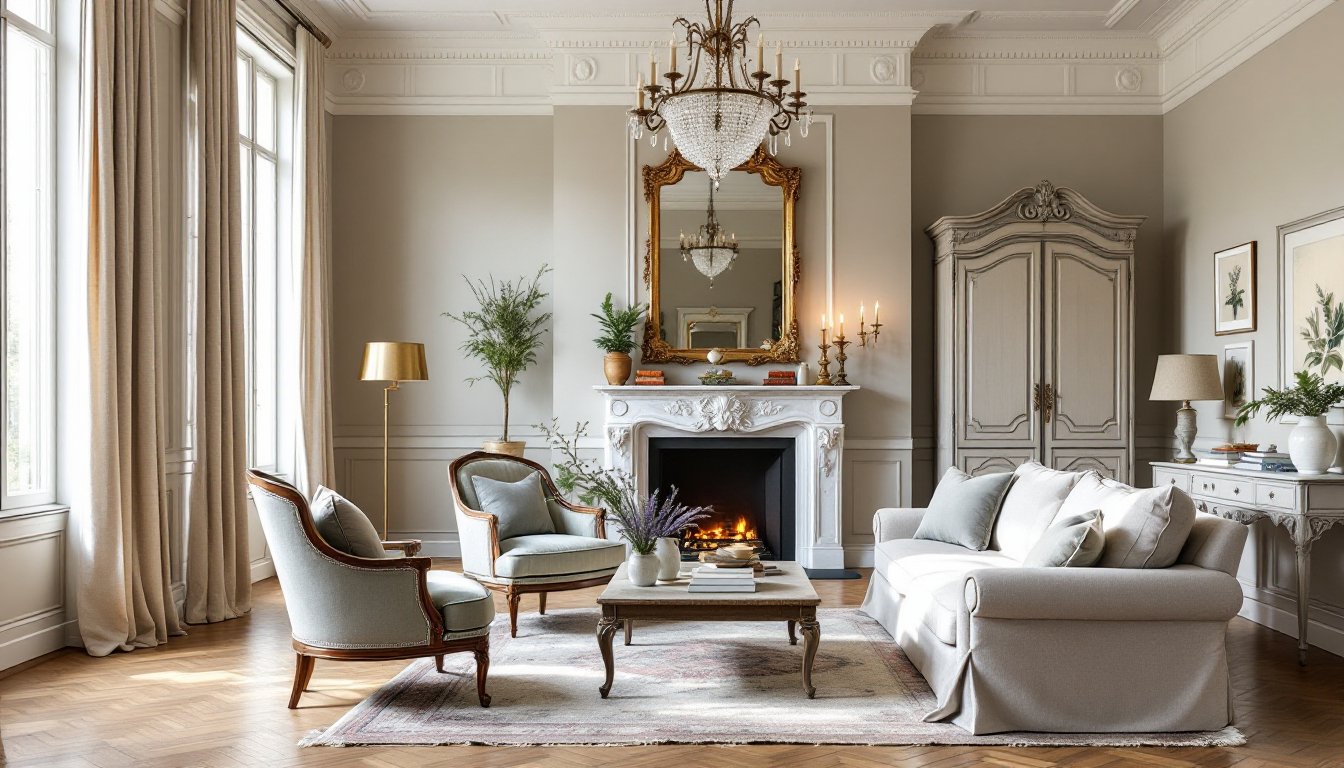
French interior design has captivated homeowners for centuries with its effortless blend of refined elegance and lived-in comfort. Unlike minimalist trends that come and go, this style celebrates layered textures, curated antiques, and a color palette that whispers sophistication. Whether transforming an entire home or updating a single room, understanding the foundational principles of French design makes the difference between a space that looks decorated and one that feels authentically Parisian. This guide breaks down the key elements, room-by-room strategies, and budget-conscious approaches to bringing French style into any home.
Key Takeaways
- French interior design prioritizes quality over quantity, blending refined elegance with lived-in comfort through layered textures, curated antiques, and neutral color palettes.
- Authentic French style requires a neutral foundation—ivory, greige, and warm white—paired with intentional accent colors and natural materials like reclaimed wood, stone, and brass for visual depth.
- Creating a French-inspired living room involves strategic architectural elements like crown molding, multiple light sources, and furniture arrangements that encourage conversation rather than focusing on a TV.
- French country kitchens combine rustic charm with functionality using painted cabinetry, open shelving with ironstone dishware, and natural stone countertops or budget-friendly butcher block alternatives.
- Budget-conscious decorators can achieve French style through secondhand furniture hunting, DIY architectural details, strategic hardware swaps, and fabric projects that cost significantly less than retail furnishings.
- French interior design celebrates organized, curated collections and intentional styling rather than perfection, creating spaces that feel authentically inherited and evolved over time.
What Is French Style Interior Design?
French style interior design encompasses several regional variations, but all share a commitment to elegance without pretension. The look balances ornate details with restrained color schemes, creating spaces that feel both grand and welcoming.
At its core, French design prioritizes quality over quantity. A single well-crafted armchair with carved walnut legs holds more value than a roomful of disposable furniture. This philosophy extends to architectural details, crown molding, wainscoting, and herringbone floors aren’t just decorative flourishes but integral elements that establish the room’s character.
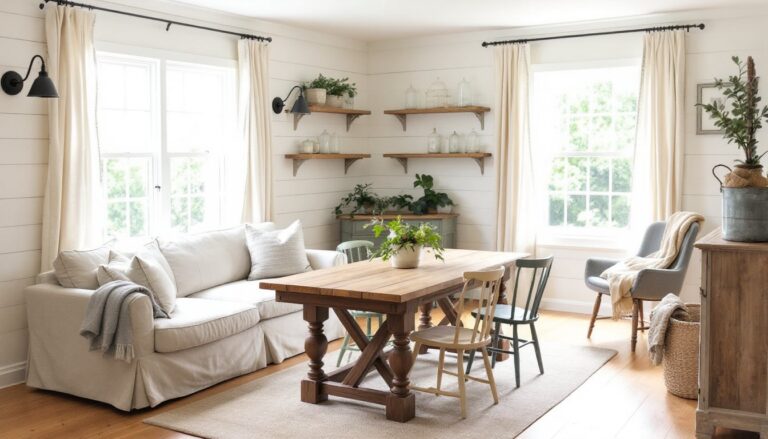
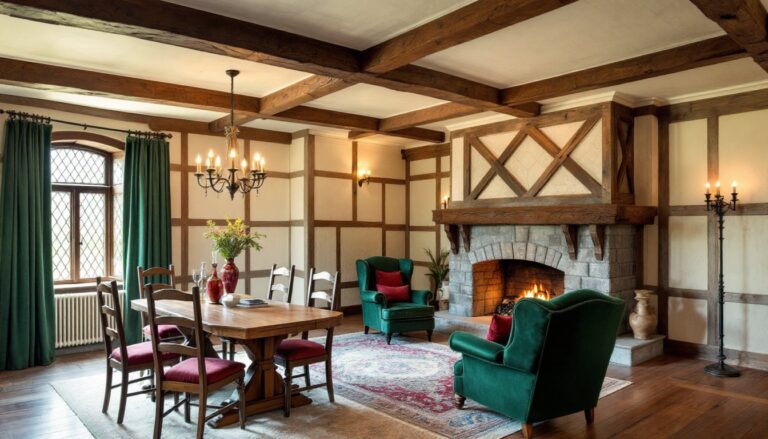
The two dominant French styles are Parisian and French Country. Parisian interiors lean formal, with high ceilings, crystal chandeliers, and gilded mirrors. French Country embraces rustic textures like exposed beams, stone walls, and weathered wood tables. Both styles share a love of natural light, antique furnishings, and the kind of patina that only develops over time.
Unlike modern design trends that emphasize clean lines and empty surfaces, French interiors embrace organized clutter, collections of books, framed botanical prints, or vintage pottery arranged with intention. The goal isn’t perfection but a curated look that suggests the room evolved naturally over generations.
Key Elements of French Interior Design
Elegant Color Palettes and Textures
French color schemes favor neutral foundations with occasional jewel-tone accents. Base colors include ivory, gray-beige (greige), soft taupe, and warm white. These neutrals create a calm backdrop that allows architectural details and furnishings to take center stage.
Paint finishes matter as much as color. Matte or chalky finishes mimic the look of aged plaster walls common in historic French homes. Skip high-gloss paints except on trim or doors. Benjamin Moore’s “White Dove” and Farrow & Ball’s “Elephant’s Breath” are popular choices that capture that subtle, weathered quality.
Texture layering is non-negotiable. Combine linen curtains with velvet upholstery, a jute rug under a distressed leather ottoman, and silk throw pillows on a linen sofa. This mix prevents the neutral palette from feeling flat. Natural materials, reclaimed wood, stone, iron, and brass, add visual interest without introducing bold colors.
Accent colors appear sparingly: a dusty blue armchair, sage-green cabinet doors, or burgundy velvet drapes. These pops of color feel intentional rather than scattered throughout the space. Many designers recommend following the proportion principles when balancing neutral backdrops with accent elements.
Antique and Vintage Furnishings
Authentic French interiors feature furniture that looks inherited, not purchased as a matching set. Hunt estate sales, antique markets, and online auctions for pieces with genuine age and craftsmanship.
Louis XV and Louis XVI styles are hallmarks of French furniture design. Look for curved cabriole legs, carved floral motifs, and caned backs on chairs. These don’t need to be museum-quality, minor wear and faded upholstery add character.
Key furniture pieces include:
- Bergère chairs: Upholstered armchairs with exposed wooden frames and cushioned seats
- Armoires: Large freestanding wardrobes, often carved or painted
- Console tables: Narrow tables with ornate legs, placed against walls
- Trestle dining tables: Heavy wooden tables with visible joinery
Mixing eras keeps the look from feeling like a museum. Pair an 18th-century-style dining table with mid-century French bistro chairs. Combine a gilded Baroque mirror with a simple farm table. This layering creates visual depth and suggests the home evolved organically.
Upholstery fabrics lean toward linen, velvet, and toile. Strip overly bright or modern fabrics and reupholster in neutral linen or a classic toile pattern. This single change can transform a flea-market find into a statement piece.
How to Create a French-Inspired Living Room
Start with the architectural bones. If the budget allows, add crown molding and picture rail molding to create the illusion of higher ceilings and traditional French proportions. Basic pine molding runs $1-3 per linear foot, with installation adding $2-4 per foot if hiring out. A miter saw makes cleaner corner joints than a circular saw, and a brad nailer speeds up installation.
Flooring sets the foundation. Wide-plank oak or reclaimed pine floors, finished in a medium or weathered tone, capture the French aesthetic better than glossy cherry or dark walnut. If replacing floors isn’t feasible, area rugs can anchor the space, choose faded Persian rugs, natural fiber jute, or vintage Aubusson-style designs.
Arrange furniture to encourage conversation rather than orienting everything toward a TV. Position two bergère chairs flanking a fireplace, with a sofa perpendicular to create a U-shape. Leave enough walking space, about 36 inches between furniture pieces, to maintain an uncluttered feel.
Lighting requires multiple sources. Swap builder-grade ceiling fixtures for a crystal or iron chandelier as the room’s focal point. Add table lamps with linen or silk shades on side tables, and consider wall sconces flanking a mirror or artwork. Aim for warm, layered lighting rather than a single overhead source.
Wall treatments complete the look. Paint walls in a soft neutral, then hang an oversized gilt mirror above a console table. Group smaller framed pieces, botanical prints, vintage maps, or black-and-white photography, in an asymmetrical arrangement. Incorporating pattern principles helps balance busy toile fabrics with simpler wall colors.
Window treatments should feel substantial. Floor-to-ceiling linen drapes in ivory or gray, hung on simple iron rods, soften hard edges and add privacy without blocking light. Skip fussy tiebacks or valances.
Designing a French Country Kitchen
French country kitchens prioritize function wrapped in rustic charm. The look skews more casual than Parisian interiors but maintains the same attention to natural materials and aged finishes.
Cabinetry typically features painted wood in soft colors, cream, pale blue, or sage, with visible brushstrokes or distressing to suggest age. If working with existing cabinets, a coat of chalk paint in Annie Sloan’s “Old White” or “French Linen,” lightly sanded at edges and corners, creates an authentic worn look. Swap modern hardware for iron or brass pulls and bin pulls on drawers.
Countertops favor natural stone. Marble, soapstone, or limestone fits the French country aesthetic, though these materials require sealing and are prone to staining. Butcher block offers a budget-friendly alternative with similar warmth. Avoid glossy granite or engineered quartz if aiming for authenticity.
Open shelving displays everyday dishware, stacks of white ironstone plates, ceramic pitchers, and glass jars filled with dry goods. Use reclaimed wood for shelves, mounted on simple iron brackets. This approach requires keeping items tidy: open shelves expose clutter instantly.
A farmhouse sink (also called an apron-front sink) anchors the workspace. Fireclay versions are durable and heat-resistant, though they cost $400-800. Stainless steel apron sinks run $200-400 and offer easier maintenance.
Lighting choices include wrought iron chandeliers or industrial-style pendant lights over an island. According to resources like Architectural Digest, oversized pendant fixtures create visual interest while providing task lighting for meal prep.
Backsplashes lean simple: white subway tile in a classic running bond or herringbone pattern, or natural stone tile in neutral tones. Grout lines should be 1/8 inch for a traditional look. Use a tile wet saw for clean cuts around outlets and edges.
Textiles soften the space. Drape linen tea towels over the oven handle, place a striped table runner down the center of an island, and use linen or cotton cafe curtains on lower cabinet windows if present.
Budget-Friendly Tips for Achieving French Style
French style doesn’t require a trust fund, but it does demand patience and a willingness to hunt for the right pieces. Start with these cost-effective strategies.
Paint transforms everything. A gallon of quality paint covers approximately 350-400 square feet and costs $30-60. Painting existing furniture in French-inspired neutrals, especially darker pieces that feel heavy, instantly lightens a room. Lightly distress edges with fine-grit sandpaper after painting for an aged effect.
Shop secondhand first. Estate sales, Craigslist, Facebook Marketplace, and thrift stores yield solid wood furniture at a fraction of retail prices. Look past ugly upholstery or outdated finishes, these are fixable. A $50 chair with good bones becomes a statement piece after reupholstering in linen. Designers featured in Elle Decor frequently discuss mixing high and low price points.
DIY architectural details. Installing crown molding, picture rail, or even faux wainscoting using MDF boards and a router costs significantly less than hiring a carpenter. Basic molding profiles run under $2 per linear foot at home centers. A compound miter saw ($150-300 used) pays for itself after one room if the alternative is contractor labor at $40-60 per hour.
Prioritize key pieces. Rather than filling a room with mediocre furniture, invest in one or two standout items, a vintage armoire, an antique dining table, or a quality linen sofa, and build around them with budget finds.
Use fabric strategically. Linen fabric remnants or discounted bolts create custom curtains, pillow covers, or table runners at a fraction of ready-made prices. A basic straight-stitch sewing machine handles these projects, or hem tape works for no-sew solutions.
Swap hardware and lighting. Replacing builder-grade cabinet pulls with brass or iron versions ($3-8 each) and updating light fixtures to vintage-style chandeliers or sconces ($50-200) dramatically shifts a room’s aesthetic without major renovation. Online resources such as MyDomaine offer practical project guides for these swaps.
Create faux finishes. Techniques like color washing or limewashing walls mimic aged European plaster using standard latex paint thinned with water. These methods add texture and depth for the cost of paint and a few hours of labor.
Edit ruthlessly. French style favors empty space and restrained styling. Remove half the accessories and decor currently in a room. What remains will have more visual impact and create the uncluttered elegance central to French design.