

Tudor style isn’t just for sprawling English manors. This 16th-century design language, with its signature dark beams, rich textures, and Old World craftsmanship, translates surprisingly well into modern American homes, whether you’re renovating a period property or layering character into a newer build. The key is understanding which elements define the look and how to execute them without turning your living room into a Renaissance faire. This guide breaks down the fundamentals of Tudor interiors and shows homeowners how to incorporate authentic details using materials and methods that work for today’s DIY projects.
Key Takeaways
- Tudor interior design, characterized by exposed dark wood beams, rich jewel-tone colors, and ornate details, can be successfully adapted to modern homes without requiring period-authentic materials.
- Exposed ceiling beams are the most impactful Tudor element and can be achieved affordably using faux polyurethane or hollow wood beams, spaced 24-36 inches apart and stained dark for authenticity.
- Half-timbering accent walls, dark wrought iron hardware, heavy carved furniture, and tapestry textiles work together to create an authentic Tudor aesthetic that feels substantial and historically grounded.
- Strategic Tudor interior design upgrades—like fireplace surrounds with heavy mantels, leaded glass window effects, and hand-forged lighting fixtures—deliver high visual impact without major renovation costs.
- Wide-plank hardwood flooring, stone surrounds, and open shelving displaying pottery and metalware complete a cohesive Tudor interior that balances period character with modern functionality.
What Is Tudor Interior Design?
Tudor interior design originated during the Tudor dynasty in England (roughly 1485–1603), a period marked by substantial timber-framed construction and handcrafted detail. Unlike minimalist styles that prioritize negative space, Tudor interiors embrace weight, texture, and ornamentation.
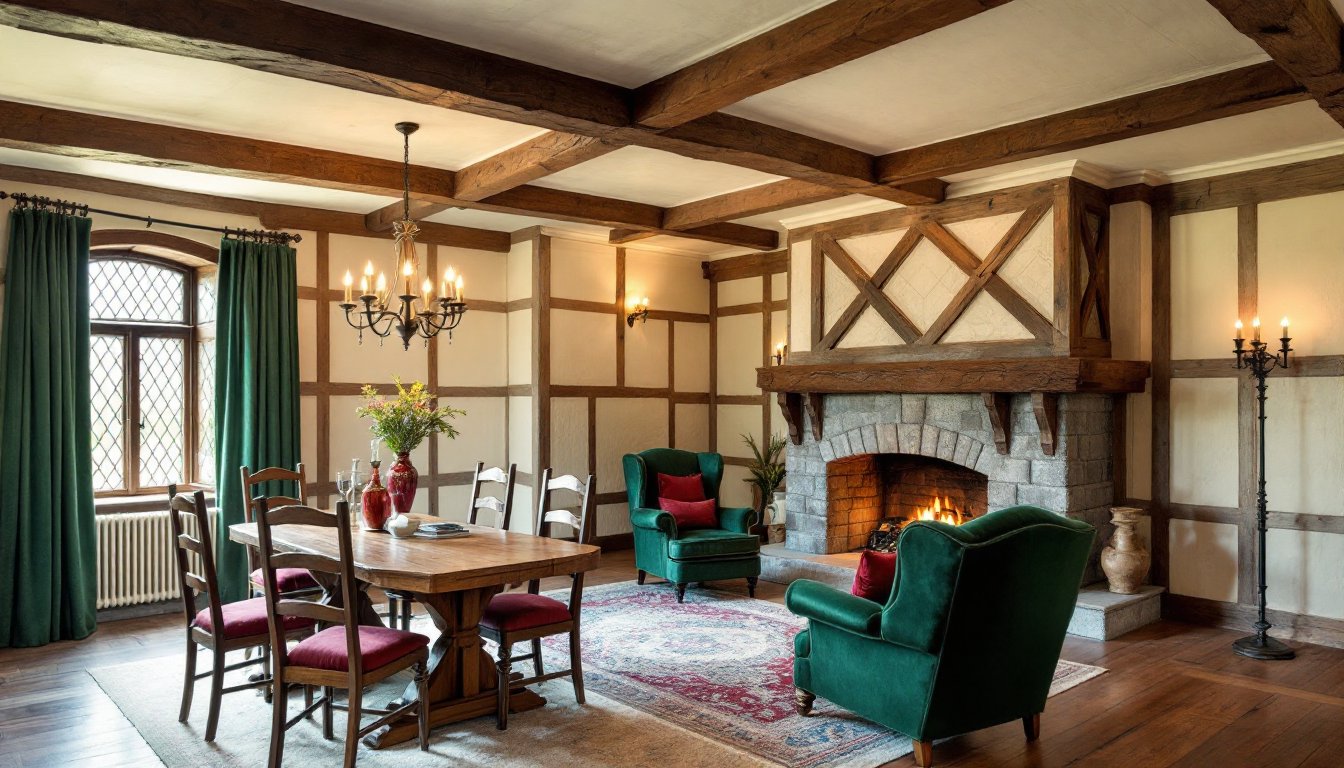
The hallmark is exposed structural timber, heavy beams left visible on ceilings and walls, often arranged in geometric patterns. These weren’t decorative afterthoughts: they were load-bearing members of the home’s frame, typically oak or chestnut. In authentic Tudor homes, you’ll also find plaster infill panels between timbers, sometimes with decorative pargeting (raised plaster designs).
Other defining features include stone or brick fireplaces with substantial mantels, leaded glass windows (often in diamond or rectangular patterns), and carved woodwork on staircases, door frames, and wall paneling. Floors were traditionally stone or wide-plank hardwood, and ceilings often featured coffered or beamed designs.
The color palette leans dark and saturated: deep reds, forest greens, golds, and rich browns dominate, contrasted by cream or off-white plaster walls. Textiles play a big role, tapestries, heavy drapes, and patterned upholstery add warmth and reinforce the sense of history. It’s a style that rewards attention to architectural detail and material authenticity.
Key Characteristics of Tudor Style Interiors
Exposed Wood Beams and Dark Timber
Exposed ceiling beams are the backbone of Tudor style. In original construction, these were true structural members, typically 6×8″ or larger rough-sawn oak timbers, supporting floor joists above. For DIY retrofits, you have options. Reclaimed barn beams offer authentic heft and patina, but they’re expensive and heavy (a 10-foot 6×8″ oak beam weighs around 80 pounds). Faux beams made from polyurethane or hollow wood boxes are lighter, easier to install, and available in realistic finishes that mimic aged oak or walnut.
Installation requires locating ceiling joists with a stud finder and securing beams with lag screws (minimum 3″ into solid framing). For faux beams, construction adhesive plus screws into blocking works well. Space beams 24″ to 36″ apart for a traditional look, too close feels busy, too far loses impact. Stain them dark (Jacobean or dark walnut) to match period authenticity.
Don’t limit beams to ceilings. Vertical timber framing on walls, half-timbering, creates dramatic visual interest. This involves mounting dark-stained boards (1×6″ or 1×8″ pine works) in geometric patterns over painted drywall or plaster-textured walls. Use a nail gun and wood glue, ensuring vertical pieces align with studs for a solid mount. This is cosmetic, not structural, but it captures the Tudor aesthetic effectively.
Wall paneling is another timber element worth considering. Wainscoting or full-height paneling in oak or walnut adds warmth and authenticity. Look for raised-panel or flat-panel styles rather than modern shaker profiles. Finish with a satin polyurethane or tung oil to preserve the wood’s character without excessive shine.
Rich Colors and Ornate Details
Tudor interiors don’t shy away from color. Walls in jewel tones, burgundy, emerald, sapphire, or burnt sienna, ground the space and contrast beautifully with dark wood. For a DIY approach, choose flat or eggshell paint finishes that mimic historic lime-wash plaster. Brands like Benjamin Moore and Sherwin-Williams offer heritage palettes: colors like “Caliente” (deep red) or “Hunter Green” capture the period feel.
Ceilings were often left off-white or cream to reflect light, especially in homes relying on candlelight. If you’re painting between beams, use a warm white (not stark builder white) to avoid harsh contrast.
Ornate details define Tudor character. Look for opportunities to add carved or turned wood elements: newel posts on staircases, corbels supporting beams or shelves, and decorative brackets. Architectural salvage yards are goldmines for authentic pieces, but reproduction hardware suppliers like House of Antique Hardware and Van Dyke’s Restorers carry period-appropriate designs.
Wrought iron hardware, strap hinges, door handles, and curtain rods, adds medieval weight. Choose hand-forged or hammered finishes over polished chrome or brushed nickel. For fireplaces, a heavy iron grate or andirons reinforce the aesthetic.
Textile patterns matter, too. Damask, brocade, and tapestry fabrics in rich colors work for drapery, upholstery, and throw pillows. Avoid modern geometric prints: opt for florals, heraldic motifs, or Renaissance-inspired designs. Heavy velvet drapes with tasseled tiebacks suit the style well, and they provide practical insulation in older homes with drafty windows.
How to Incorporate Tudor Design Elements in Modern Homes
You don’t need a stone cottage to pull off Tudor style, strategic updates work in tract homes, bungalows, or even modern builds. Start with architectural bones that have the most visual impact.
Ceiling beams are the fastest transformation. Measure your ceiling span and order faux beams cut to length, or buy dimensional lumber (4×6″ or 6×8″ Douglas fir) and distress it yourself with a wire brush, chain strikes, and dark stain. Mount perpendicular to joists, spacing evenly. In kitchens, running beams above an island or along the main ceiling plane adds instant character without overwhelming the space. Many designers working with interior design trends find that mixing Tudor elements with modern functionality creates compelling, livable spaces.
Accent walls with half-timbering work in dining rooms, entryways, or primary bedrooms. Frame the wall in dark-stained 1×6″ boards arranged in a grid or herringbone pattern, leaving painted drywall visible between timbers. This mimics traditional wattle-and-daub construction. Keep the grid proportional, squares or rectangles roughly 24″ to 36″ on a side feel balanced. Smaller divisions look fussy: larger ones lose the Tudor geometry.
For flooring, wide-plank hardwood (5″ to 7″ planks) in oak, hickory, or reclaimed pine fits the aesthetic. If you’re installing new floors, choose hand-scraped or wire-brushed finishes that add texture and hide wear. Stain them medium to dark brown. In kitchens or bathrooms, natural stone tile, slate, limestone, or travertine in large format (12″×24″ or bigger), grounds the space with historic weight.
Fireplace surrounds offer a high-impact focal point. If you have an existing brick or stone fireplace, leave it exposed or repoint the mortar for a fresh look. For a builder-grade prefab surround, consider a stone veneer upgrade (stacked stone or cultured stone products). Install a heavy wood mantel, 8×8″ or 6×10″ rough-sawn beam, supported by corbels or iron brackets. Finish with dark stain or leave natural if using reclaimed timber. This is cosmetic work, not structural, so it doesn’t typically require permits, but always check local codes if modifying a gas or wood-burning fireplace.
Lighting matters. Swap modern fixtures for wrought iron chandeliers, lantern-style pendants, or wall sconces with candelabra bulbs. Look for fixtures with hand-forged details, not mass-produced reproductions that feel thin. In kitchens, iron pendant lights over an island pair well with recessed cans for task lighting.
Finally, don’t ignore windows. Leaded glass is expensive and difficult to retrofit, but you can fake the look with adhesive lead came strips applied to existing glass in diamond or rectangular patterns. It’s a rental-friendly option that adds Tudor character without permanent modification. For a more permanent solution, companies like Blenko Glass and Bendheim offer custom leaded panels.
Tudor-Inspired Furniture and Decor Choices
Furniture in Tudor interiors leans heavy, carved, and functional. Think solid wood construction, oak, walnut, or mahogany, with visible joinery and minimal upholstery.
Dining tables should be substantial: trestle-style bases or turned legs with a thick plank top (at least 1.5″ to 2″ thick). Avoid glass tops or modern pedestal bases. Pair with ladder-back or carved wooden chairs, either stained dark or upholstered in leather or tapestry fabric. Bench seating along one side adds medieval authenticity and saves space.
For seating in living areas, look for wingback chairs upholstered in rich fabrics, velvet, damask, or leather, with nailhead trim. Sofas should have exposed wood frames (dark stain) and cushions in deep colors or patterned fabrics. Avoid low-profile modern silhouettes: Tudor furniture has height and presence.
Storage pieces like carved chests, armoires, and sideboards fit the style perfectly. Antique or reproduction pieces with Gothic arch details, iron hardware, and dark finishes work best. These double as functional storage and visual anchors. Resources like Country Living often feature vintage and farmhouse-style furniture that pairs well with Tudor aesthetics when selected carefully.
Rugs should be Persian, Turkish, or medieval-pattern reproductions in rich reds, golds, and blues. Wool or wool-blend rugs hold up better than synthetics and add warmth underfoot. Size them generously, rugs that barely fit under furniture look cheap.
For wall decor, consider tapestries, oil paintings in ornate frames, or wrought iron wall art (crosses, shields, or scrollwork). Mirrors with heavy wood or iron frames work well over mantels or in entryways. Avoid modern prints, metal abstracts, or anything minimalist.
Accessories should feel collected, not coordinated. Pewter candlesticks, ceramic or stoneware pottery, leather-bound books, and iron candelabras add layers of texture. Display them on open shelving (wood, not wire), mantels, or sideboards. When considering proportion in interior design, ensure larger furniture pieces anchor the room while smaller accessories add detail without clutter.
In kitchens, open shelving with pottery, copper cookware, and wooden utensils reinforces the handcrafted feel. Swap modern cabinet hardware for iron pulls and latches. If you’re remodeling, consider a farmhouse sink (fireclay or cast iron) and a pot-filler faucet over the range for a functional nod to period kitchens. Projects featured on sites like This Old House demonstrate how Tudor Revival kitchens balance historic character with modern appliances and workflow.
Conclusion
Tudor interior design doesn’t require a castle budget or a degree in architectural history. It rewards thoughtful material choices, a willingness to embrace dark tones and heavy textures, and attention to the details that define the style, beams, ironwork, rich colors, and handcrafted finishes. Whether you’re adding faux timbers to a suburban ceiling or sourcing reclaimed oak for wainscoting, the goal is the same: creating spaces that feel rooted, substantial, and purposefully crafted.