

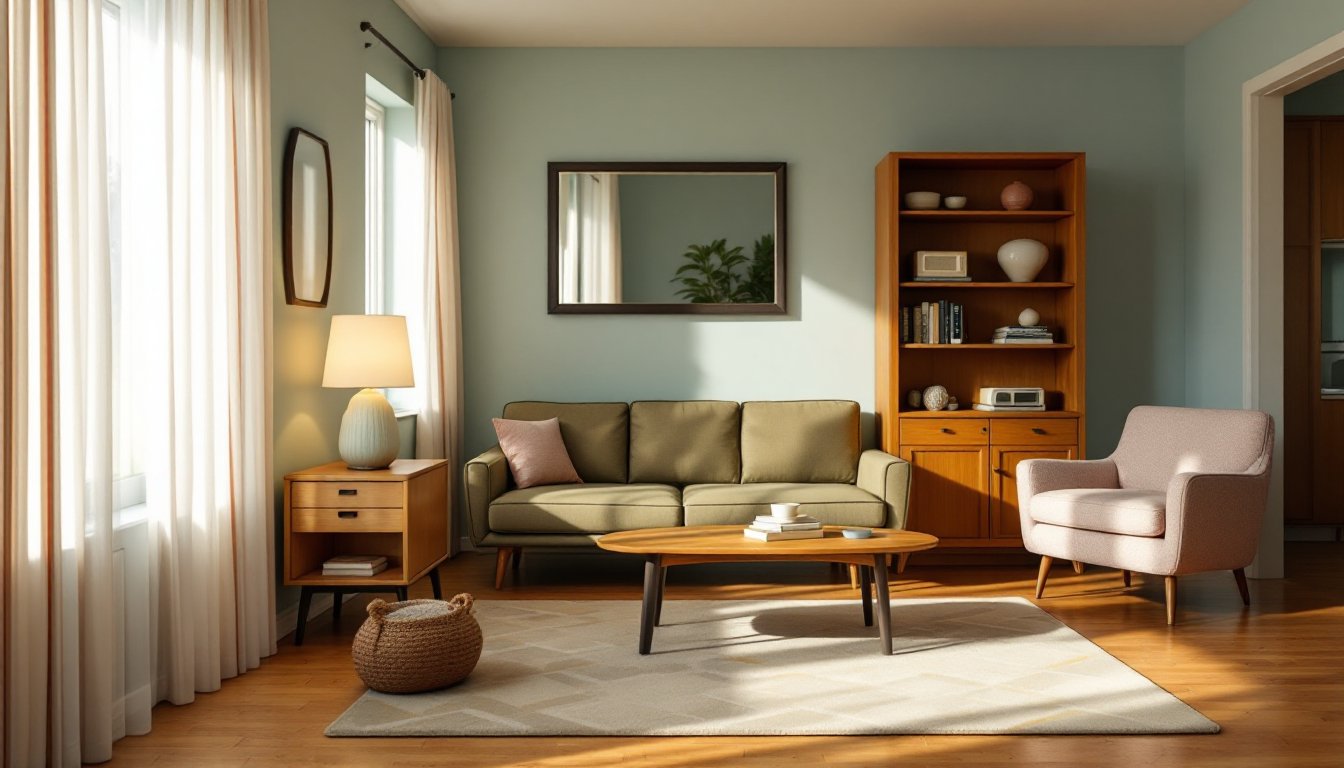
The 1940s were defined by ingenuity born from necessity. World War II reshaped not just global politics but the way Americans furnished and decorated their homes. With manufacturing diverted to the war effort, homeowners made do with less, repurposing materials, embracing practicality, and relying on craftsmanship over consumption. Yet the interiors of that era weren’t drab or lifeless. They balanced restraint with warmth, blending functional furniture, muted palettes, and handmade touches into spaces that still feel surprisingly livable today. Whether you’re restoring a period home or simply drawn to the understated charm of mid-century restraint, recreating 1940s interior design requires understanding both the historical constraints and the creative solutions that defined the decade.
Key Takeaways
- 1940s interior design emerged from wartime necessity and material shortages, creating a utilitarian aesthetic that balanced restraint with warmth and remains livable today.
- Authentic 1940s color palettes feature muted, earthy tones like olive green and mustard yellow in early years, shifting to soft pastels by mid-decade as optimism returned.
- Furniture from this era prioritizes compact, modular designs with streamlined silhouettes, double-duty pieces, and practical materials like plywood and veneered wood rather than ornate Victorian styles.
- Recreating 1940s interior design in modern homes requires editing, clean lines, period-appropriate paint finishes, and sparse accessorizing that values function over decoration.
- Authentic and reproduction pieces can be sourced through estate sales, antique dealers, and quality reproduction companies, with DIY restoration available for those with basic woodworking or upholstery skills.
The Historical Context Behind 1940s Interior Design
Understanding 1940s interiors means understanding rationing, material shortages, and the cultural shift toward frugality. After the attack on Pearl Harbor in 1941, the U.S. government redirected steel, rubber, and textiles to military production. Furniture manufacturers pivoted to building crates and barracks. New appliances disappeared from showrooms. Homeowners couldn’t simply buy their way into a stylish living room, they had to work with what they already owned or could salvage.
This scarcity gave rise to what we now recognize as the era’s signature aesthetic: utilitarian, streamlined, and deeply practical. The War Production Board (WPB) issued regulations limiting the use of metal and hardwoods in civilian furniture, pushing manufacturers toward simpler designs and alternative materials like plywood and particleboard. Upholstery fabrics were rationed, so slipcovers and reupholstering became common DIY projects.
But scarcity wasn’t the whole story. The decade also saw the rise of industrial design as a discipline. Designers like Charles and Ray Eames began experimenting with molded plywood for military applications, techniques that would later define postwar furniture. The aesthetic wasn’t born from poverty: it was shaped by innovation under constraint.
By the late 1940s, as soldiers returned home and manufacturing resumed, a new optimism crept into interiors. Pastel colors replaced the darker tones of the early war years. Suburban expansion and the GI Bill fueled a housing boom, and with it came smaller, more efficient floor plans, bungalows and Cape Cods that prioritized open living spaces and multipurpose rooms. These shifts laid the groundwork for the modern ranch homes of the 1950s, but the aesthetic restraint of the war years lingered.
Key Characteristics of 1940s Interior Design
The 1940s interior is immediately recognizable once you know what to look for. It’s less ornate than 1930s Art Deco, less exuberant than 1950s atomic-age modernism, and far more restrained than either. The look is grounded, functional, and quietly elegant.
Color Palettes and Patterns That Defined the Era
Early 1940s palettes leaned toward muted, earthy tones, olive green, mustard yellow, burgundy, and cocoa brown. These colors weren’t chosen for trendiness: they were practical. Dark walls hid soot from coal furnaces and required less frequent repainting. Wallpaper, when available, featured small-scale geometric patterns, florals, or stripes, nothing too busy or resource-intensive to produce.
By mid-decade, as the war effort wound down, lighter shades emerged. Soft blues, blush pinks, pale yellows, and seafoam greens became popular, especially in kitchens and bedrooms. These colors reflected optimism and a desire to brighten homes that had felt dim during wartime blackouts.
Floral chintz fabrics made a comeback in upholstery and curtains, often paired with solid-colored furniture to avoid visual overload. Checks, plaids, and gingham were common in kitchens and breakfast nooks, practical, cheerful, and easy to clean. If you’re aiming for authenticity, avoid the bold, saturated hues of later decades. Think dusty, not vibrant.
Furniture Styles and Materials
Furniture from the 1940s was compact, modular, and built to last. Streamlined silhouettes replaced the heavy, carved pieces of the 1930s. Sofas sat low to the ground with squared-off arms and thin legs, often tapered wood or metal. Upholstery was tight and tailored, not plush. Think studio apartment efficiency, not overstuffed Victorian parlor.
Wood species shifted due to wartime restrictions. Oak, maple, and birch replaced walnut and mahogany in many mass-produced pieces. Plywood became a legitimate design material, not just a budget substitute. Veneers were common, acceptable craftsmanship, not a mark of cheapness.
Storage was king. Sectional bookcases, corner cabinets, and modular wall units allowed homeowners to maximize small spaces. Many pieces did double duty: a bench with built-in storage, a drop-leaf table that expanded for dinner parties, a secretary desk that folded into a slim cabinet.
Chrome and Bakelite accents showed up in hardware, lamp bases, and furniture trim. These materials had an industrial, modern feel, sleek without being cold. Avoid anything with excessive ornamentation. If it looks fussy or Victorian, it’s not 1940s.
Lighting was functional first, decorative second. Torchieres, swing-arm wall lamps, and simple pendant fixtures were standard. Many designs incorporated frosted glass or fabric shades to diffuse light without wasting wattage. Table lamps often featured ceramic or turned wood bases in solid colors, no elaborate patterns.
How to Recreate 1940s Style in Your Modern Home
Recreating a 1940s interior doesn’t require gutting your house or hunting down museum-quality antiques. It’s about editing, restraint, and understanding the principles that shaped the era. Start by clearing out clutter, this aesthetic thrives on clean lines and unbusy surfaces.
Paint is your fastest, cheapest transformation. If you’re working with original plaster walls, patch any cracks with joint compound, sand smooth, and prime with a bonding primer before applying finish coats. For an authentic look, choose flat or eggshell finishes in period-appropriate colors. Avoid high-gloss: it wasn’t common in living spaces.
Wallpaper can add instant character, but choose patterns carefully. Small-scale geometrics, narrow stripes, or delicate florals work. Avoid anything oversized or overly colorful. If you’re papering over drywall, use a quality primer first to ensure adhesion and easier removal later. Work in sections, smoothing bubbles with a plastic smoother or clean, dry cloth.
Flooring in 1940s homes was typically hardwood, linoleum, or tile. If you have original hardwood, refinish it with a satin or semi-gloss polyurethane, high-gloss is too contemporary. Linoleum is making a comeback: modern sheet linoleum in checkerboard or marbled patterns can mimic vintage installations. For kitchens and bathrooms, consider hex tile in white or soft pastels with contrasting grout.
Window treatments should be simple. Cotton or linen curtains in solids or subtle patterns, hung on plain rods, are historically accurate. Avoid heavy drapes or ornate hardware. Roman shades or roller blinds in canvas or linen also work well.
Accessorize sparingly. A few well-chosen pieces, a ceramic table lamp, a framed mirror with a simple wood or Bakelite frame, a vintage radio (functional or decorative), go further than a room crammed with kitsch. Remember, this era valued utility. If something doesn’t serve a purpose, reconsider its place.
Period lighting makes a big difference. Swap out modern fixtures for reproductions or restored originals. Look for designs with frosted glass shades, metal finishes in brushed nickel or bronze, and clean, geometric shapes. Avoid anything overly ornate or obviously contemporary.
Don’t overlook textiles. Swap out modern throw pillows for covers in period fabrics, chintz, gingham, or solid linens in era-appropriate colors. A wool or cotton area rug in a muted pattern can anchor a room without overwhelming it. Many home design resources offer vintage-inspired textiles that capture the era’s aesthetic without the wear and tear of true antiques.
Sourcing Authentic and Reproduction Pieces
Finding genuine 1940s furniture and decor takes patience, but it’s not impossible. Start with estate sales, local auctions, and antique malls. Postwar suburban homes, especially those built between 1945 and 1950, sometimes still hold original furnishings in basements or attics. Websites like Chairish, 1stDibs, and eBay have dedicated mid-century sections, though prices vary wildly.
When evaluating a piece, check for maker’s marks or labels. Heywood-Wakefield, Drexel, and Widdicomb were major manufacturers of the era. Look for dovetail joints in drawers (a mark of quality), original hardware, and wood grain consistency. Veneered pieces should have tight, intact veneer with no major lifting or bubbling, repairs are possible but time-consuming.
If authentic pieces are out of budget or hard to find, quality reproductions exist. Companies like Rejuvenation and Schoolhouse Electric produce lighting and hardware inspired by 1940s design. West Elm and Room & Board occasionally carry furniture with clean, midcentury lines that fit the era’s aesthetic, even if not exact replicas.
DIY restoration is an option if you’re handy. Reupholstering a vintage chair or refinishing a scratched tabletop can be done at home with basic tools. For upholstery, you’ll need a staple gun, upholstery fabric, foam or batting, and patience. Strip old fabric carefully to use as a pattern for cutting new material. For wood refinishing, start with a chemical stripper (work outdoors or in a well-ventilated space with gloves and a respirator), sand progressively from 80-grit to 220-grit, then apply stain and polyurethane.
Be realistic about your skills. Structural repairs, replacing broken chair legs, regluing loose joints, require clamps, wood glue, and sometimes dowels or screws. If a piece is wobbly or the joinery is shot, it may be worth taking it to a furniture repair shop unless you’re confident in your abilities.
For textiles and smaller decor, thrift stores and flea markets are goldmines. Look for ceramic lamps, Bakelite picture frames, vintage linens, and glassware. Many of these items were mass-produced and are still affordable. Wash vintage fabrics gently, hot water and harsh detergents can set stains or cause fading.
If you’re renovating a home built in the 1940s, consider exploring period-appropriate renovation techniques to maintain historical integrity while improving functionality. Many homeowners successfully blend modern conveniences with vintage aesthetics by keeping original architectural details, crown molding, wood trim, built-ins, and updating only what’s necessary.
Finally, don’t be afraid to mix eras slightly. A 1940s aesthetic pairs well with earlier Arts and Crafts pieces or slightly later 1950s furniture, as long as you maintain the overall restraint and functionality that defined the decade. The goal isn’t a museum, it’s a livable home with character and history woven into its design.
Conclusion
Recreating 1940s interior design is less about rigid authenticity and more about understanding the principles that shaped the era, restraint, functionality, and resourcefulness. Whether you’re restoring a period home or simply borrowing elements for a modern space, the key is editing thoughtfully and prioritizing quality over quantity. The result is a home that feels grounded, intentional, and quietly elegant, qualities that never go out of style.