

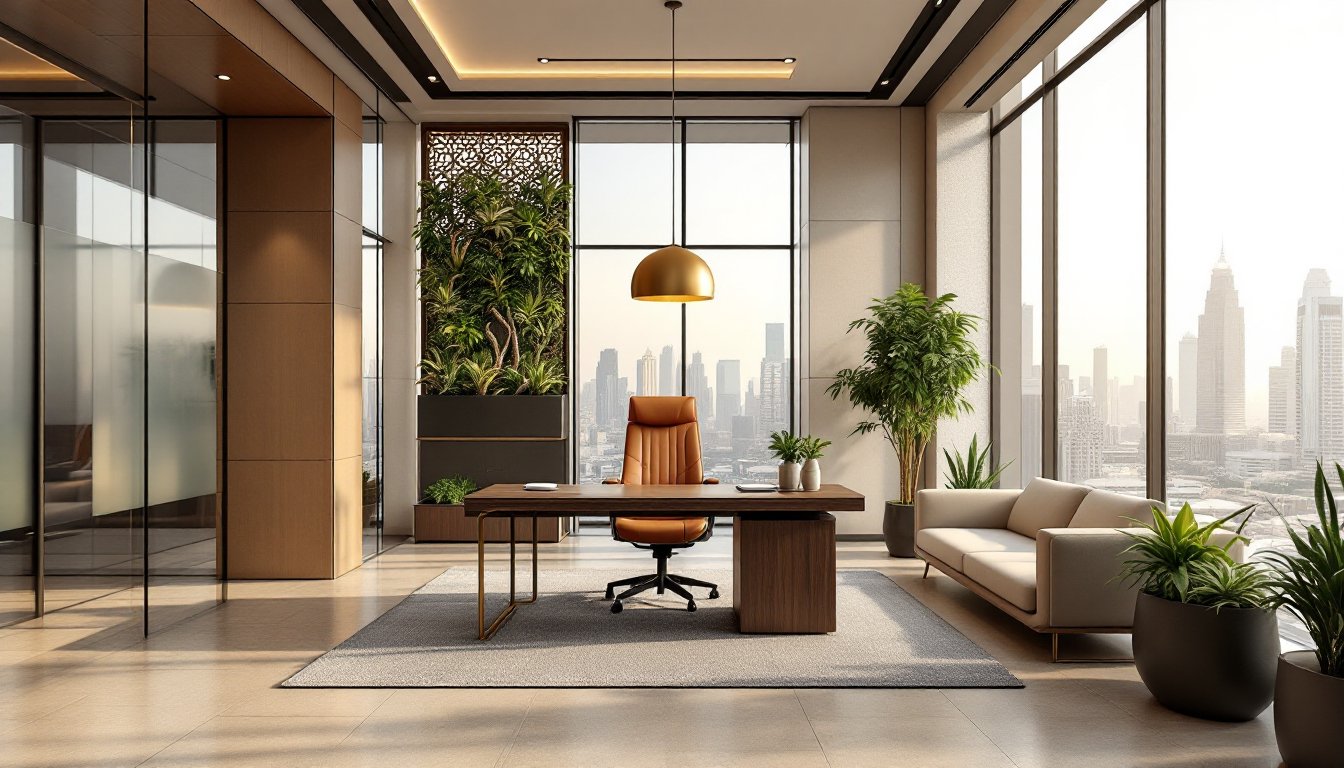
Dubai’s commercial landscape demands workspace design that balances cutting-edge aesthetics with practical functionality. The city’s unique climate, diverse workforce, and ambitious architectural standards create design challenges that don’t apply anywhere else. Whether renovating a villa home office or planning a larger commercial space, understanding Dubai-specific considerations will save time, money, and prevent costly missteps. This guide walks through the essential elements, current trends, and planning steps for office interior design projects suited to Dubai’s environment and regulations.
Key Takeaways
- Dubai’s office interior design must comply with unique building codes, extreme heat conditions, and cultural preferences that differ significantly from global design standards.
- Energy-efficient design is essential: invest in low-E glazed windows, R-19 to R-21 wall insulation, and LED lighting (3500-4000K) to manage Dubai’s intense cooling demands and reduce utility costs.
- Respect cultural norms by using neutral color palettes with metallic accents, adequate ceiling heights (3.0-3.5 meters), and privacy solutions like switchable glass—open plans must be adapted for Middle Eastern business preferences.
- Plan for Dubai’s regulatory environment: obtain municipal approvals, factor in 2-4 week permit timelines, and budget 15-20% contingency for unforeseen issues like water damage or AC rerouting.
- Select durable materials suited to coastal humidity: genuine leather upholstery, powder-coated metal frames, and high-grade porcelain tiles outperform standard options in Dubai’s climate.
- Incorporate trending design elements like modular layouts, biophilic design with hardy plants (succulents, ZZ plants), and acoustic management systems to stay competitive in Dubai’s dynamic business market.
Why Dubai Office Design Stands Apart from Global Trends
Dubai operates under distinct building codes, climate demands, and cultural norms that reshape standard office design approaches. The UAE Fire & Life Safety Code requires specific egress widths, fire-rated materials, and emergency lighting that Western designers might overlook. These aren’t suggestions, they’re enforced during inspections.
Temperature extremes dictate material choices. Coastal humidity warps untreated wood, fades certain fabrics faster than in temperate climates, and promotes mold growth in poor ventilation setups. Offices need HVAC systems rated for at least 45°C exterior temps during summer months, with insulation values that go beyond minimum standards to manage cooling costs.
The workforce composition matters too. Multinational teams expect prayer rooms, gender-appropriate spaces, and culturally sensitive layouts. Open-plan designs popular in Silicon Valley need modification, Dubai professionals often prefer semi-private zones that respect hierarchy and personal space preferences common across Middle Eastern business culture.
Natural light management differs here. While Western trends push for floor-to-ceiling glass, Dubai offices need UV-filtering glazing and strategic shading devices to prevent solar heat gain and glare that makes screens unreadable. The balance between openness and thermal control requires careful engineering, not just aesthetic choices.
Essential Elements of Modern Dubai Office Interiors
Climate-Responsive Design and Energy Efficiency
Dubai’s Estidama Pearl Rating System (similar to LEED) increasingly influences office projects, even residential home offices. Energy-efficient design isn’t optional when cooling costs dominate utility bills eight months yearly.
Start with the building envelope. Low-E double-glazed windows reduce heat transfer by 40-50% compared to single-pane glass. Window films add another layer of protection, look for products with Solar Heat Gain Coefficient (SHGC) below 0.35 for west-facing exposures.
Insulation matters more than most realize. Standard R-13 wall insulation used in moderate climates underperforms here. Upgrade to R-19 or R-21 for exterior walls, especially on south and west faces. Roof spaces benefit from R-30 minimum if the office sits under an unshaded roof deck.
Airflow strategy differs from passive ventilation approaches. Sealed spaces with controlled mechanical ventilation prevent dust infiltration and maintain consistent humidity levels between 40-60%, critical for electronics and comfort. Standalone HEPA filtration systems combat Dubai’s periodic dust storms that clog standard HVAC filters within weeks.
LED lighting with daylight sensors cuts energy use by 60-70% versus traditional fixtures. But, color temperature matters, 5000K “daylight” bulbs feel harsh in Dubai’s intense ambient light. Stick with 3500-4000K for primary task lighting to reduce eye strain.
Cultural Considerations and Aesthetic Preferences
Design choices signal professionalism and respect in Dubai’s business environment. The Interior Design Trends leaning toward minimalism globally get reinterpreted here with added formality.
Reception areas set tone immediately. Marble or porcelain tile (not laminate or vinyl) signals quality, expect to budget for 12×24-inch or larger format tiles in polished or honed finishes. Entryway ceiling heights below 2.7 meters feel cramped by local standards: 3.0-3.5 meters is preferred for commercial-style home offices.
Color psychology shifts in Middle Eastern contexts. While Western offices embrace bold accent walls, Dubai professionals favor neutral bases (beige, grey, white) with metallic accents (gold, bronze, brushed brass). Deep jewel tones work as secondary accents but use sparingly.
Furniture ergonomics matter universally, but material durability faces extra scrutiny. Genuine leather or high-grade polyurethane outperforms fabric upholstery in Dubai’s dust and humidity. Metal frames with powder-coated finishes resist corrosion better than chrome in coastal areas.
Privacy considerations extend beyond physical walls. Many platforms like Houzz showcase open glass partitions, these work better when paired with switchable privacy glass or integrated blinds. Frosted or fluted glass provides permanent screening without blocking light completely.
Top Office Interior Design Trends Dominating Dubai in 2026
Biophilic design with desert-adapted plants leads current projects. Living walls work if irrigation systems account for high evaporation rates, expect to maintain them like pools, not gardens. Hardy species (succulents, snake plants, ZZ plants) survive air-conditioned environments better than tropical varieties designers favor elsewhere.
Tech-integrated furniture moves beyond basic cable management. Desks with built-in wireless charging, pop-up electrical outlets (UK BS 1363 or Type G sockets), and USB-C ports eliminate cable clutter. Smart glass partitions that adjust opacity via smartphone apps offer flexibility for multi-use spaces.
Modular layouts accommodate Dubai’s transient professional population. Demountable partition systems (aluminum-framed with gypsum or glass infill) reconfigure without demolition. Check load-bearing capacity if mounting heavy components, most interior walls use 70mm or 100mm metal studs that need blocking for fixtures exceeding 10kg.
Heritage-modern fusion appears in higher-end projects. Traditional Islamic geometric patterns applied as CNC-cut MDF or metal screens add cultural texture while functioning as space dividers. These work best as accent elements, full-wall applications risk looking like theme park design.
Acoustic management gains priority as open plans dominate. Suspended acoustic baffles (NRC 0.75 minimum) or cloud panels control reverberation in hard-surface spaces. Carpet tiles with dense backing (1000g/m² or higher) absorb sound better than hard flooring without introducing allergen concerns common with wall-to-wall carpet.
The influence of contemporary design concepts shows in material mixing, stone with wood, metal with fabric, but execution quality matters more in Dubai’s competitive market. Sloppy joints, visible fasteners, or mismatched grain patterns stand out glaringly under the city’s bright lighting conditions.
Planning Your Dubai Office Redesign: A Practical Guide
Start with municipal requirements. Dubai Municipality and individual free zone authorities have varying approval processes. Residential villa offices in areas like Arabian Ranches or Dubai Hills typically need Dubai Municipality approval if structural changes or electrical upgrades occur. Free zone offices (DIFC, DMCC, Dubai Silicon Oasis) follow separate protocols.
Permit timelines run 2-4 weeks for straightforward cosmetic work, longer for structural modifications. Required documents typically include: floor plans, electrical and HVAC schematics, fire safety plans, and NOC (No Objection Certificate) from building management if in a multi-tenant property.
Budget allocation in Dubai skews toward materials and finishes rather than labor compared to Western markets, though skilled labor costs rise yearly. Rough guidelines for mid-range home office renovations (15-20 square meters):
- Electrical/HVAC upgrades: AED 8,000-15,000
- Flooring (tile or engineered wood): AED 150-300 per square meter installed
- Custom carpentry (desks, shelving): AED 600-1,200 per linear meter
- Paint/finishing: AED 25-40 per square meter
- Furniture: AED 10,000-25,000 for quality pieces
These ranges shift dramatically based on material grade, import costs, and contractor selection. Always pad budgets by 15-20% for unforeseen issues, hidden water damage, outdated wiring, or AC ductwork rerouting.
Material procurement requires lead time awareness. Custom items manufactured locally deliver in 4-8 weeks: imported fixtures or furniture from Europe/Asia need 8-16 weeks. Ramadan slows progress by 30-40% as working hours reduce, plan project phases accordingly.
Hire contractors with proven Dubai portfolios. Check Dubai Economy Department registration and ask for recent project photos with client references. Many professionals showcasing modern office designs provide realistic expectations for timelines and costs.
Inspection preparation matters. Keep all receipts, product spec sheets, and warranty documents. Inspectors verify that installed materials match approved plans, substituting standard electrical cable for specified fire-rated cable fails inspection, requiring costly rework.
For those pursuing formal education in design principles, understanding Interior Design Education frameworks helps when communicating with contractors and making informed specification decisions. Knowledge of material properties prevents costly mistakes common in DIY projects.
Conclusion
Dubai office design succeeds when it respects local climate realities, cultural expectations, and regulatory frameworks while incorporating global best practices. The city’s unique position demands more than copying international trends, it requires adaptation and informed material selection. Start with the fundamentals: proper insulation, effective HVAC, durable finishes. Layer in design elements that reflect professionalism and cultural awareness. Budget realistically, plan for lead times, and don’t skip permit processes. The result will be a workspace that functions efficiently in Dubai’s demanding environment while meeting aesthetic expectations of the city’s competitive business landscape.