

Mediterranean interior design isn’t just another trending aesthetic, it’s a centuries-old approach rooted in the practical living traditions of coastal Greece, Italy, Spain, and southern France. This style thrives on natural light, honest materials, and spaces built for real life, not magazine shoots. Homeowners drawn to Mediterranean design appreciate its warmth without clutter, its color without chaos. Whether you’re renovating a single room or rethinking your entire layout, the Mediterranean style interior design offers a roadmap that’s forgiving, adaptable, and surprisingly DIY-friendly. This guide breaks down the core elements, room-by-room tactics, and hands-on projects you can tackle yourself.
Key Takeaways
- Mediterranean interior design emphasizes natural light, organic materials, and honest textures that age beautifully rather than trendy finishes requiring constant updates.
- Build your color palette in three tiers: neutral base colors (whites and creams), warm accent earth tones (terracotta and ochre), and highlight blues or greens from smaller decor elements.
- Incorporate authentic materials like terracotta tile (12″×12″ or larger), reclaimed wood beams, wrought iron fixtures, and textured plaster to capture the traditional Mediterranean aesthetic.
- Create a DIY faux arch, tiled accent wall, or distressed furniture finish to add Mediterranean character without requiring structural renovation or professional installation.
- Prioritize livable spaces in every room—open kitchen shelving, low-profile seating with natural fabrics, simple bedroom linens, and generous tile in bathrooms—that improve with age and use.
- Start with one room to master Mediterranean interior design techniques, then expand, since the style’s flexibility works with contemporary layouts and budget-conscious DIY approaches.
What Is Mediterranean Interior Design?
Mediterranean interior design style pulls from the architecture and daily life of sun-drenched regions bordering the Mediterranean Sea. Think whitewashed walls in Greek island homes, terracotta floors in Tuscan farmhouses, and wrought iron details in Spanish villas. Unlike minimalist trends that strip rooms bare, this approach layers texture and warmth while keeping things uncluttered.
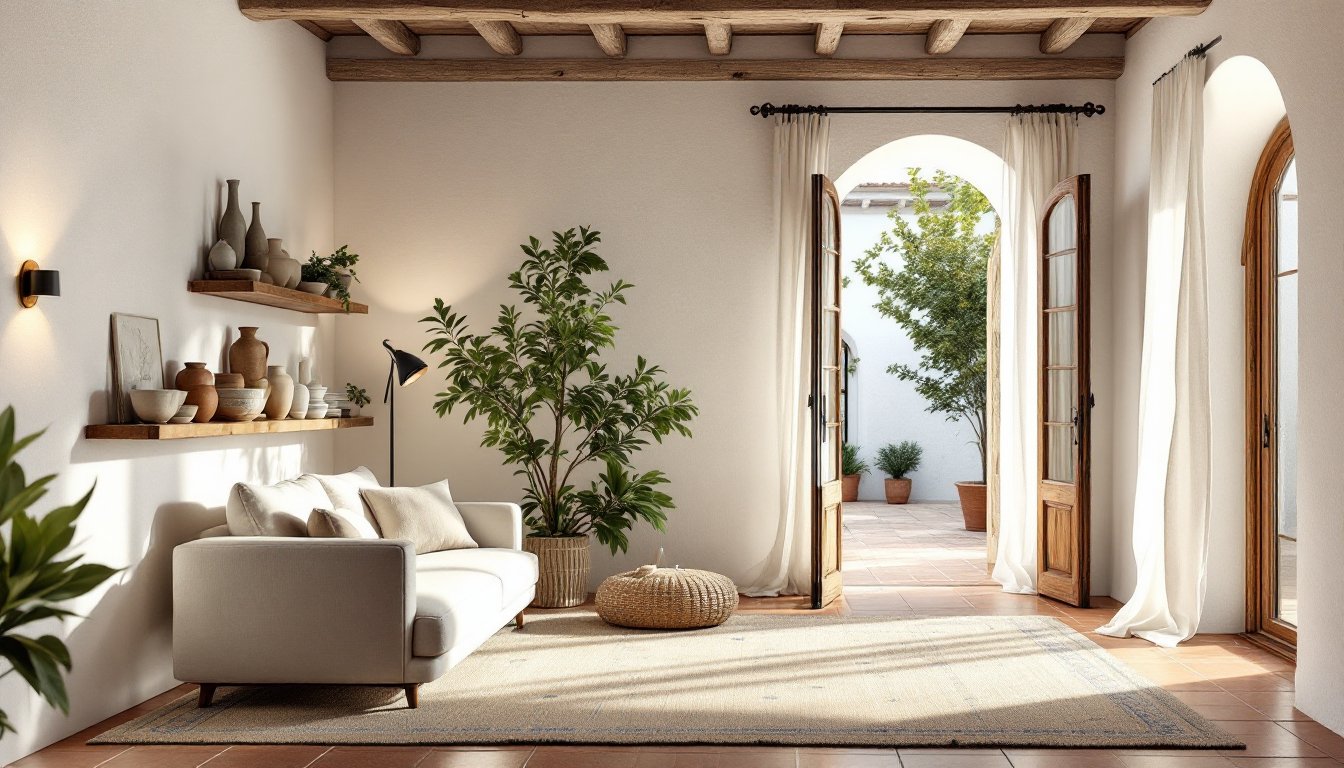
The style emphasizes a few non-negotiables: natural light, organic materials, and indoor-outdoor flow. Arched doorways, exposed ceiling beams (often rough-sawn or reclaimed wood), and thick stucco walls aren’t just decorative, they reflect traditional building methods designed for hot climates. Modern Mediterranean interiors adapt these elements to contemporary floor plans, substituting drywall arches or faux beams when structural changes aren’t feasible.
Color comes from the landscape itself, azure blues from the sea, warm ochres from sun-baked earth, and crisp whites reflecting intense sunlight. You won’t find busy wallpaper or high-gloss finishes here. Surfaces lean matte or distressed, with an aged patina that suggests history rather than showroom perfection. This design language rewards interior design trends that prioritize longevity over flash.
Key Elements of Mediterranean Interior Design
Color Palettes That Capture the Mediterranean Spirit
Mediterranean color schemes work in three tiers. Base neutrals, whites, creams, and warm beiges, cover walls and large surfaces, maximizing light reflection. Accent earth tones, terracotta, ochre, burnt sienna, appear in tile, pottery, and textiles. Highlight blues and greens, cobalt, turquoise, olive, punctuate spaces through smaller decor elements.
When painting walls, choose flat or eggshell finishes rather than satin. Mediterranean interiors avoid sheen on vertical surfaces, mimicking the look of lime-washed plaster. Sherwin-Williams’ Alabaster or Benjamin Moore’s White Dove serve as reliable base whites with enough warmth to avoid the clinical feel of pure white. For accent walls, consider warm terracotta tones like SW Cavern Clay.
Woodwork and trim typically stay natural or get a light whitewash rather than glossy paint. If you’re working with existing dark-stained trim, a pattern interior design approach using textiles can help bridge the gap while you plan a refinishing project.
Natural Materials and Textures
Authentic Mediterranean interiors rely heavily on materials that age well and require minimal processing. Terracotta tile, either genuine clay pavers or quality ceramic reproductions, anchors kitchens, entries, and outdoor transitions. Expect 12″×12″ or larger formats: smaller mosaics read more Moroccan than Mediterranean. Seal terracotta with a penetrating sealer (not topical polyurethane) to protect against stains while maintaining the matte surface.
Wood beams add architectural heft to flat ceilings. Real reclaimed beams offer the most character but require structural calculation if they’ll bear any load. Faux beams (hollow polyurethane boxes) install with construction adhesive and lag bolts into ceiling joists, they’re lighter and code-compliant for cosmetic applications. Aim for 6″×6″ or 8″×8″ profiles spaced 4-6 feet on center for proportional impact.
Wrought iron appears in light fixtures, stair railings, and curtain rods. Modern wrought iron is actually mild steel, but the term persists. Look for hand-forged or hammered textures rather than machine-smooth finishes. When installing iron hardware, use appropriate anchors, toggle bolts for drywall, masonry anchors for stucco or brick.
Stone and plaster define Mediterranean surfaces. Real stone costs serious money: stacked stone veneer (thin-cut natural stone or manufactured stone) provides the look at a fraction of the weight and price. It installs over cement board with thinset mortar, much like tile. For walls, consider Venetian plaster or textured joint compound techniques that mimic aged stucco. Apply with a trowel in irregular strokes, then sand lightly once dry.
How to Incorporate Mediterranean Design in Every Room
Kitchens anchor Mediterranean homes as gathering spaces. Prioritize open shelving over upper cabinets where possible, display everyday dishes, glassware, and ceramic bowls. If full open shelving feels impractical, remove doors from a few uppers and line the back panel with hand-painted tiles. Countertops should be stone or butcher block: avoid solid-surface materials that lack texture. A farmhouse sink in fireclay or copper fits the aesthetic and withstands heavy use.
Living areas need comfortable, low-profile seating, think overstuffed sofas with slipcovers in natural linen or cotton, not stiff formal pieces. Arrange furniture to encourage conversation, leaving pathways clear. Layer rugs: a large jute or sisal base with a smaller patterned wool rug on top. Avoid wall-to-wall carpet: if you have it, consider removing it to expose or install tile or hardwood underneath. Check for asbestos in older vinyl backing before demo.
Bedrooms stay simple and cool. Wrought iron bed frames or upholstered headboards in neutral fabric work well. Swap heavy drapes for linen curtains on simple iron rods, linen filters light without blocking it entirely. Nightstands can be small wooden tables or even upturned terracotta planters (seal the drainage hole). Bedding should be all-natural fibers: cotton, linen, or lightweight wool.
Bathrooms benefit from generous tile, cover walls halfway or fully in ceramic or stone. Patterned cement tile on floors adds visual interest without busy decor. If budget allows, a copper or stone vessel sink makes a strong statement. Standard undermount sinks work fine too: focus material budget on tile and fixtures. Brushed bronze or oil-rubbed bronze faucets coordinate better than chrome. Consider a curbless shower with a linear drain if you’re doing a full remodel, it’s not strictly Mediterranean but supports the open, flow-through feeling.
DIY Mediterranean Design Projects for Your Home
Install an Arched Doorway (Faux Arch)
Creating an arched passage without structural demolition involves building a false arch inside an existing rectangular opening. You’ll need:
- 1/2″ MDF or quality plywood for arch form
- 1/4″ bending plywood for curved surface
- Construction adhesive and finish nails
- Joint compound and mesh tape
- Paint or plaster finish
Steps:
- Measure the door opening width and determine your arch radius (typically half the opening width for a semicircle).
- Cut two arch profiles from 1/2″ MDF using a jigsaw. Draw the curve with a string compass or flexible straight edge.
- Install the arch profiles inside the opening, screwing into the existing jamb and header. Space them to match wall thickness.
- Cut bending plywood strips to span between the profiles, securing with adhesive and brad nails.
- Apply mesh tape along seams, then skim-coat with joint compound. Sand smooth and finish-coat as desired.
This project requires basic carpentry skills but no permits. Wear a dust mask when sanding and safety glasses when using power tools.
Build a Tiled Accent Wall
A small tile feature, behind a stove, above a vanity, or in an entry, adds Mediterranean character without the cost of whole-room tile.
Materials:
- Cement board (1/4″ for walls, 1/2″ for wet areas)
- Thinset mortar (polymer-modified for better adhesion)
- Ceramic or stone tile (plan for 10% overage)
- Grout (unsanded for joints under 1/8″, sanded for wider)
- Tile spacers, notched trowel (size matches tile, check manufacturer specs)
Steps:
- Remove existing drywall in the accent area or install cement board over it (use 1-1/4″ cement board screws into studs every 8″ in field, 6″ at edges).
- Apply thinset with the notched trowel, working in 3×3-foot sections. Press tiles firmly, using spacers for consistent joints.
- Let thinset cure per manufacturer instructions (typically 24 hours).
- Mix grout to peanut-butter consistency, spread with a rubber float at a 45° angle. Wipe excess with a damp sponge after 15-20 minutes.
- Seal grout after 72 hours with penetrating grout sealer.
This project suits intermediate DIYers. Tile work is forgiving but tedious, rent a tile saw for cuts (about $50/day). For design inspiration, check Homedit for current patterns that balance traditional and modern.
Refinish Furniture with a Distressed Finish
Mediterranean spaces often feature aged-looking wood furniture. Create this effect on new or dated pieces.
Process:
- Sand the piece with 120-grit paper to remove gloss and create tooth for paint.
- Apply a base coat in a darker color (e.g., navy, deep olive). Let dry.
- Apply a top coat in off-white or cream. Let dry until just tacky.
- Use 220-grit sandpaper or a sanding block to remove paint along edges, corners, and high-wear areas, revealing the darker layer. Work until you achieve the desired wear pattern.
- Seal with matte or satin polyurethane or paste wax for a softer sheen.
This technique works on solid wood or quality veneered pieces. Avoid particleboard furniture, it won’t sand well. Always work in a ventilated area and wear a respirator if using oil-based products.
Add Texture with DIY Plaster Walls
Venetian plaster requires skill and specialty materials, but a simplified textured finish using drywall joint compound achieves a similar rustic effect.
Materials:
- All-purpose joint compound (not lightweight)
- 6″ and 10″ drywall knives or plastering trowels
- Paint tinted to desired color (add before application for integrated color)
Steps:
- Prep walls by filling holes and sanding smooth. Prime if applying over bare drywall.
- Mix joint compound with latex paint (roughly 4:1 compound to paint) to tint it. Or apply compound plain and paint after.
- Apply compound in random, overlapping strokes with the trowel, varying pressure and direction. Keep the layer thin, about 1/16″.
- Let dry completely (4-8 hours), then lightly sand any sharp ridges with fine-grit paper.
- If compound is untinted, apply two coats of matte paint. If tinted, seal with matte acrylic sealer.
This project is beginner-friendly but labor-intensive. Practice on a closet wall first. Budget considerations often drive interior design costs higher than DIY efforts, but textured finishes can bridge that gap affordably.
Conclusion
Mediterranean interior design succeeds because it prioritizes livability, spaces that breathe, materials that last, and details that improve with age. Whether you’re installing faux beams, tiling a backsplash, or simply swapping out hardware, each project moves you toward a home that feels grounded and intentional. Start with one room, master the techniques, then expand. The style’s flexibility means you don’t need a villa in Tuscany to make it work, just honest materials and a willingness to let things look a little imperfect.