

If you’re ready to turn your design ideas into paid projects, you’ll need more than a mood board and good taste. An interior design proposal is your blueprint for landing clients, it outlines what you’ll do, how much it costs, and when it’ll get done. Whether you’re a freelance designer starting out or a homeowner hiring help, understanding what goes into a solid proposal saves time, avoids miscommunication, and keeps everyone on the same page from demo day to final styling.
Key Takeaways
- An interior design proposal is a formal document that protects both designer and client by setting clear expectations on scope, budget, timeline, and deliverables before work begins.
- Define your project scope with specific deliverables such as floor plans, 3D renderings, material boards, and site visits to prevent scope creep and miscommunication.
- Separate design fees (your time and expertise) from project costs (materials, furniture, labor) and choose a fee structure that works for your business—flat fee, hourly, percentage-based, or hybrid.
- An interior design proposal should include realistic timelines that account for procurement lead times, construction phases, and buffer time for approvals and revisions.
- Avoid common pitfalls like vague scope definitions, underestimating timelines, ignoring budget constraints, and skipping terms and conditions that protect both parties.
- Format your proposal cleanly with headers, bullet points, and white space to make it scannable and professional, then proofread carefully before sending to clients.
What Is an Interior Design Proposal and Why Do You Need One?
An interior design proposal is a formal document that lays out the details of a design project before work begins. It’s not a contract, it’s more like a detailed pitch that shows a potential client exactly what they’re getting, what it’ll cost, and how long it’ll take.
Think of it as the handshake before the deal. It protects both parties by setting clear expectations. For designers, it filters out tire-kickers and establishes professional credibility. For homeowners, it’s a roadmap that prevents scope creep, surprise fees, and miscommunication down the line.
A good proposal covers the project scope, design concept, deliverables (like floor plans, 3D renderings, or presentation boards), budget, timeline, and payment terms. It might also include examples of past work, references, or a breakdown of how revisions are handled.
Without a proposal, you’re flying blind. Clients might assume you’re providing full furniture procurement when you’re only offering design consultation. Or they expect a finished room in four weeks when material lead times alone are eight. A proposal nails down these details before anyone picks up a paintbrush or orders tile.
Essential Elements Every Interior Design Proposal Must Include
Project Scope and Design Vision
The scope section is where you define what’s included, and just as importantly, what’s not. Be specific. Are you designing three rooms or just the living room? Does the project include space planning, furniture selection, paint consultation, or full project management during construction?
List deliverables clearly:
- Floor plans (to scale, showing furniture placement)
- Elevation drawings (if built-ins or millwork are involved)
- Material and finish boards (samples of paint, fabric, flooring)
- 3D renderings (optional, but helpful for clients who can’t visualize)
- Procurement services (are you ordering and receiving furniture, or just specifying it?)
- Site visits (how many, and at what project milestones?)
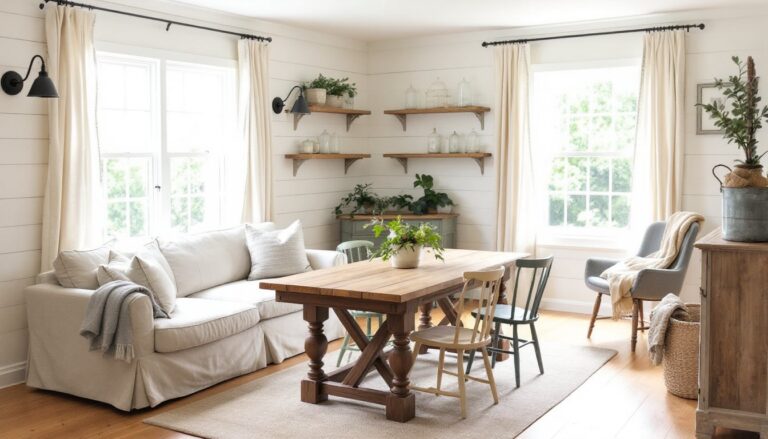
Your design vision should summarize the aesthetic direction in a few sentences. Skip the flowery Pinterest language, clients want to know if you’re doing modern farmhouse, mid-century minimal, or transitional. Reference specific materials: “white oak cabinetry with matte black hardware and honed marble countertops” beats “a warm, inviting kitchen.”
If the project involves structural changes, removing walls, relocating plumbing, or adding electrical, note that these require licensed contractors and building permits in most jurisdictions. Designers can specify finishes and furniture, but unless you’re also a licensed contractor, you’re not the one demoing studs or roughing in outlets.
Budget Breakdown and Timeline
The budget section should separate design fees from project costs. Design fees are what the client pays you for your time and expertise. Project costs are materials, furniture, labor, and contractor fees.
Break down your design fee structure:
- Flat fee (common for small projects like a single room)
- Hourly rate (typically $75–$250/hour depending on experience and market)
- Percentage of project cost (usually 10–30% of total spend)
- Hybrid model (flat fee for design, hourly for procurement or project management)
Be upfront about what triggers additional charges: extra revisions beyond two rounds, change orders, or rush timelines. If you’re procuring furniture, note whether you’re charging retail, trade-plus (your cost plus a markup), or a flat procurement fee.
For project costs, provide ranges rather than exact numbers unless you’ve already sourced every item. “Kitchen cabinetry and installation: $12,000–$18,000 depending on material grade and hardware selections.” This accounts for market fluctuations, regional pricing differences, and the client’s final choices.
Your timeline should include:
- Design phase (concept development, revisions, client approval, typically 2–4 weeks)
- Procurement and ordering (furniture lead times can range from 2 weeks for in-stock items to 16+ weeks for custom upholstery)
- Construction or installation (if applicable, depends on scope and contractor availability)
- Final styling and walkthrough (1–2 days)
Be realistic. If it’s November and you’re ordering custom sofas, don’t promise installation before the holidays. Supply chain delays are real, and managing expectations now prevents angry calls later. Many designers incorporate considerations of spatial proportion during the planning stage to ensure furniture scale works within the room.
Step-by-Step Guide to Writing Your Interior Design Proposal
1. Start with a brief introduction. Address the client by name, reference your initial consultation, and summarize what they’re looking for. “Following our meeting on March 12, this proposal outlines design services for your primary bedroom and en-suite bathroom remodel.”
2. Define the project scope. Use the deliverables list from the previous section. Be explicit about what’s included and any exclusions. “This proposal does not include architectural or structural engineering services, which will need to be contracted separately.”
3. Describe your design approach. Give a high-level overview of the aesthetic direction and functional goals. “The design will maximize natural light, incorporate durable materials suitable for young children, and create visual interest through layered patterns in textiles and tile.”
4. Outline the timeline. Break it into phases with estimated durations. Be clear about dependencies: “Installation phase begins once all materials are received and contractor schedule is confirmed.”
5. Present the budget. Separate your design fees from estimated project costs. Provide a payment schedule, common structures include a deposit (often 50%) upon signing, a midpoint payment after design approval, and a final payment upon project completion.
6. Include terms and conditions. Cover revision limits, cancellation policy, ownership of design documents, and how you handle changes to scope. “Design concepts and drawings remain the property of [Designer Name] until final payment is received.”
7. Add a call to action. Make it easy for the client to say yes. “To move forward, please sign and return this proposal with the initial deposit of $X by [date]. I’m excited to bring this project to life.”
Platforms like Houzz offer proposal templates and project management tools that streamline this process, especially if you’re managing multiple clients. Keep your proposal formatted cleanly, use headers, bullet points, and white space. Clients are more likely to read (and sign) a crisp, scannable document than a wall of text.
Common Mistakes to Avoid When Creating Your Proposal
Vague scope definitions. “Full-service interior design” means different things to different people. Spell out every deliverable, down to the number of site visits and revision rounds.
Underestimating timelines. Clients remember the deadline you promise, not the caveats. If custom millwork takes 12 weeks, say 14. Buffer time for delays, approvals, and the inevitable “can we see one more option?”
Ignoring the budget conversation. If the client’s budget is $30,000 and their wish list is $60,000, address it in the proposal. Present a tiered approach: “Option A delivers the full scope at $58,000. Option B prioritizes paint, lighting, and key furniture pieces within $32,000.”
Skipping the fine print. What happens if the client cancels halfway through? Who owns the CAD files? How many revisions are included before hourly fees kick in? These aren’t fun to discuss, but they prevent disputes. Understanding typical design costs helps you set realistic fee structures.
Not showcasing your value. Include a portfolio section or case study that’s relevant to the project. If you’re proposing a kitchen remodel, show a past kitchen, not your best styled bookshelf. Platforms like Homedit and Homify can be great sources of inspiration for visual examples.
Forgetting to proofread. Typos and formatting errors undermine your credibility. Have someone else review it, or read it out loud to catch awkward phrasing.
Overcomplicating it. A proposal for a single-room refresh shouldn’t be 20 pages. Match the document’s complexity to the project size. Sometimes a two-page summary with a clear scope, budget, and timeline is all you need.
Conclusion
A well-crafted interior design proposal sets the tone for the entire project. It shows clients you’re organized, professional, and serious about delivering results. It also protects your time by filtering out projects that aren’t a good fit. Whether you’re drafting your first proposal or refining your tenth, clarity and specificity are your best tools. Nail those, and you’ll spend less time managing expectations and more time doing the work you love.