
Starting a small cafe doesn’t mean emptying your savings on designer furniture and custom millwork. The truth is, a memorable cafe vibe comes from smart choices, not deep pockets. Whether someone’s converting a narrow storefront or carving out a coffee counter in an existing space, budget constraints can actually fuel creativity. This guide walks through practical, actionable strategies for designing a small cafe interior that feels intentional and inviting, without the price tag of a full-scale commercial buildout. From layout hacks to DIY accents, these ideas prove that resourcefulness beats budget every time.
Key Takeaways
- Low-budget small cafe interior design prioritizes intentional functionality and layout over expensive designer furniture, allowing owners to preserve capital for inventory and staffing.
- Strategic space planning with clear traffic paths (minimum 36 inches wide), vertical storage, and dual-purpose zones maximizes seating capacity in compact cafes without cramping the feel.
- Durable secondhand furniture paired with budget-friendly DIY finishes—such as reclaimed wood, painted accents, and thrifted pieces—creates authentic character that resonates more with customers than overproduced catalog designs.
- Strategic lighting using salvage pendants, string lights, and LED strips under $20 per fixture establishes ambiance while natural light amplification remains the most cost-effective approach.
- Affordable finishes like painted brick, concrete flooring (under $2/sq ft), and laminate countertops deliver professional aesthetics without the expense of high-end materials, reducing overall small cafe interior design costs by 50–70%.
Why Budget-Friendly Design Matters for Small Cafes
Small cafes operate on tight margins, and every dollar spent on build-out is a dollar that’s not going toward inventory, staffing, or marketing. Overinvesting in interiors early on can sink a business before it finds its footing.
A low-budget approach forces prioritization. Instead of chasing trends or copying high-end coffee bars, cafe owners focus on what actually drives repeat visits: comfortable seating, good lighting, and a layout that doesn’t bottleneck during rush hours. These fundamentals matter more than marble countertops.
Budget design also allows flexibility. When a business is new, needs change fast. Modular furniture, removable finishes, and DIY accents can evolve with the brand without requiring a full remodel. Locking into expensive custom work too early often leads to regret.
Finally, there’s authenticity. Customers connect with spaces that feel genuine, not overproduced. A cafe built with salvaged wood, painted brick, and thrifted chairs often has more character than one filled with catalog pieces. Constraints breed creativity, and that shows in the final product.
Smart Layout and Space Planning for Compact Cafes
In a small cafe, layout isn’t decoration, it’s infrastructure. Poor flow kills efficiency and turns a cozy space into a cramped one. Start by mapping out the service flow: order counter, pickup area, seating zones, and restroom access. Customers shouldn’t have to weave through seated guests to reach the bathroom or collide with someone waiting for their latte.
Traffic patterns dictate furniture placement. Keep a clear path at least 36 inches wide from the entrance to the counter, this is the minimum for ADA compliance and comfortable movement. If the space allows, push seating toward walls and windows, leaving the center open. Corner banquettes maximize seating without eating floor space.
Consider dual-purpose zones. A counter-height ledge along a window can serve as both a display shelf and solo seating. A low bookshelf can define the seating area without blocking sightlines. Avoid heavy room dividers in small spaces: they chop up square footage and make the room feel smaller.
Measure twice, mock up once. Use painter’s tape on the floor to outline furniture footprints before buying anything. It’s easy to overestimate how much fits. A 24-inch round table seats two comfortably: a 30-inch round pushes it. Measure table height, too, standard cafe tables run 28 to 30 inches, which pairs with 17- to 18-inch seat heights. Getting this wrong means wobbly chairs or awkward posture.
Finally, think vertical. Wall-mounted shelves, pegboards, and hanging plants pull the eye up and make low ceilings feel higher. Every square foot counts, but so does every cubic foot.
Affordable Furniture Solutions That Make an Impact
Cafe furniture takes a beating, so durability matters as much as aesthetics. That doesn’t mean spending commercial-grade money. Metal chairs from restaurant supply stores often cost half what a design shop charges and hold up better than lightweight knock-offs. Look for chairs with welded joints, not bolted, they last longer under daily use.
Mix seating types to stretch the budget. A couple of new tables paired with secondhand chairs creates visual interest and keeps costs down. Thrift stores, estate sales, and commercial liquidation auctions are goldmines for solid wood chairs that just need a coat of paint or a seat reupholstery. A can of satin enamel paint (around $15 per quart) and some outdoor fabric for cushions can transform mismatched pieces into a cohesive set.
For tables, consider DIY tops on stock bases. A butcher block countertop from a home center (often sold in 6- or 8-foot lengths) can be cut to size and mounted on affordable hairpin legs or pipe flanges. Seal it with polyurethane or tung oil for water resistance. This approach costs a fraction of custom fabrication and looks just as intentional.
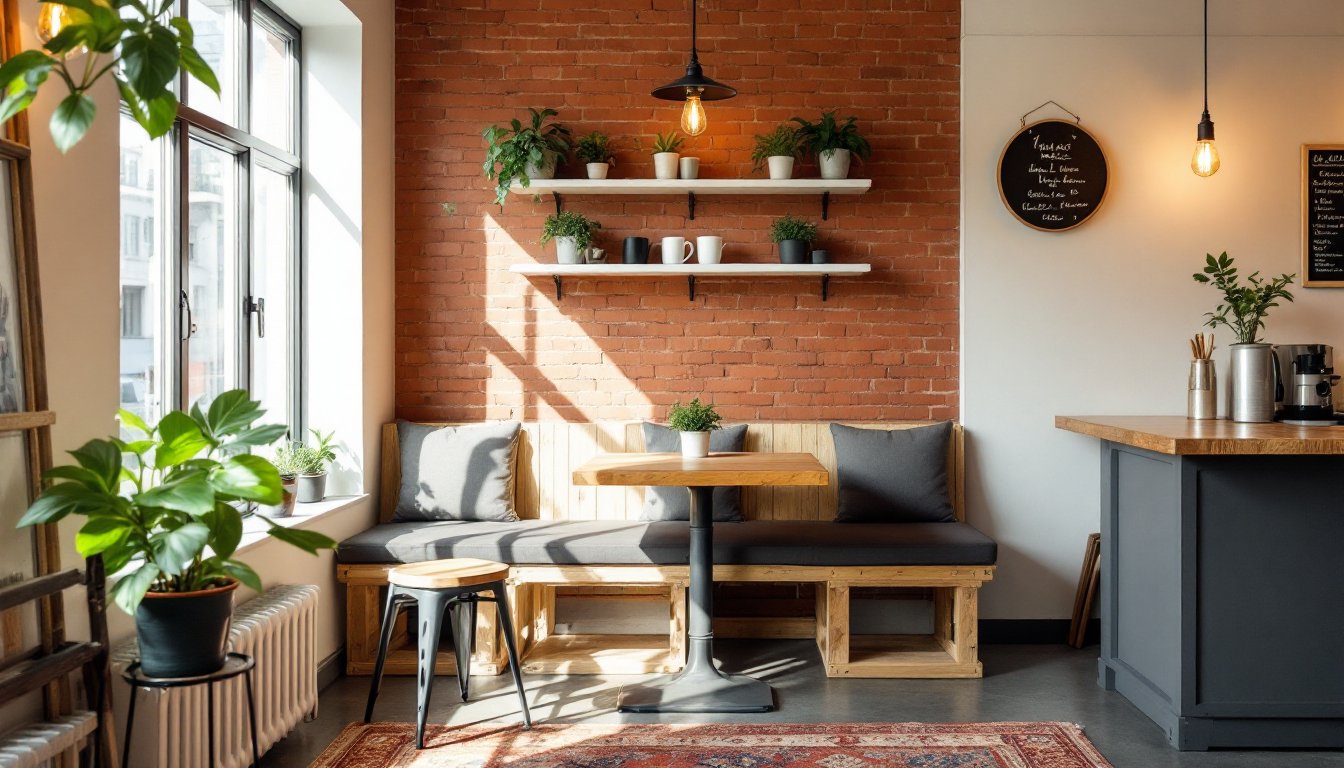
Banquette seating built along a wall saves money and maximizes seats per square foot. Frame it with 2×4 studs and ¾-inch plywood, then top with foam cushions wrapped in vinyl or canvas. Total material cost for a 6-foot banquette typically runs under $200, and it adds fixed seating that doesn’t shift or wobble.
Avoid particle board or flimsy laminate furniture marketed as “cafe style.” It won’t survive a year of use, and replacing it doubles the cost. Buy once, even if it’s secondhand and needs refurbishing.
DIY Decor and Accent Ideas to Add Character
Decor separates forgettable spaces from memorable ones, and it doesn’t require an art gallery budget. Accent walls deliver high impact for low cost. A single wall painted in a bold, matte finish (like deep green, terracotta, or charcoal) anchors the room and provides a backdrop for signage or shelving. Skip the accent wall clichés like chevron stripes: solid color reads cleaner and ages better.
Reclaimed wood brings warmth without the price tag of new hardwood. Pallet wood, old fence boards, or salvaged barn siding can be cleaned, sanded, and mounted as wainscoting, a feature wall, or open shelving. Seal it with a clear coat to prevent splinters and make cleaning easier. Check local classifieds or demolition sales, many contractors give away or sell scrap lumber cheap.
Wall-mounted planters and hanging greenery soften hard surfaces and improve air quality. Pothos, philodendron, and spider plants thrive indoors with minimal care and cost under $10 per plant. Mount them in galvanized buckets, mason jars, or simple terracotta pots. For a polished look, keep the containers consistent in style or color.
DIY signage beats generic prints. Hand-painted menus on chalkboard panels (made from MDF and chalkboard paint) look intentional and allow for easy updates. Alternatively, print large-format designs at an office supply store for under $5 per square foot and mount them on foamcore or in thrifted frames.
Textiles add softness and absorb sound, which is critical in small spaces with hard floors. Thrifted rugs, curtains, or even fabric hung as tapestries warm up the room. Stick to natural fibers like cotton or wool, they’re easier to clean and don’t trap odors like synthetics. Budget-conscious room makeovers often use layered textiles to add depth without permanent commitment.
Lighting on a Budget: Creating Ambiance Without High Costs
Lighting makes or breaks a cafe’s mood, and it’s one of the easiest places to save money without sacrificing quality. Skip the designer pendant fixtures and hunt for industrial-style or vintage pendants at salvage shops or online marketplaces. Old warehouse lights, cage pendants, or simple drum shades wired to basic cords create ambiance for a fraction of retail price.
For DIY pendant lights, buy bare bulb sockets and fabric-covered cord from a hardware store or lighting supplier. Pair them with Edison-style LED bulbs (which use less power than incandescent and last longer). Hang them at varying heights over tables or the counter for a relaxed, layered look. Total cost per fixture: under $20.
String lights aren’t just for patios. Draped along a wall or across a ceiling beam, they add warmth and fill in dark corners. Choose warm white (2700K) bulbs for a cozy glow, cool white feels too clinical for a cafe. Make sure the wiring is rated for indoor use and doesn’t overload circuits.
Task lighting matters as much as ambiance. Under-counter LED strip lights illuminate the service area and make the space feel cleaner and more professional. They’re easy to install with peel-and-stick backing and cost around $15 for a 16-foot roll. Connect them to a dimmer switch for control over brightness throughout the day.
Natural light is free, maximize it. Clean windows, skip heavy curtains, and position seating near daylight. If privacy is a concern, use window film (frosted or decorative) on the lower half of windows instead of blocking them entirely. Many successful budget makeovers rely on amplifying natural light rather than adding fixtures.
Low-Cost Materials and Finishes That Elevate Your Cafe
Finishes define a cafe’s style, but high-end materials aren’t the only option. Painted brick or drywall costs pennies compared to tile or paneling and delivers a clean, modern look. Use eggshell or satin finish paint for walls, it’s easier to wipe down than flat paint and doesn’t show scuffs as badly as gloss. A gallon covers about 350-400 square feet and runs $25-$40 for quality paint.
Concrete floors are durable, low-maintenance, and budget-friendly if the existing slab is in decent shape. Grind the surface smooth, fill any cracks with concrete patching compound, then seal with a penetrating sealer or epoxy coating. This approach costs under $2 per square foot in materials and holds up better than cheap vinyl or laminate. It also works with radiant heating if that’s in the plan.
For walls that need texture, consider board and batten or simple plywood paneling. Both add dimension without the cost of shiplap or beadboard. Board and batten uses 1×2 or 1×3 furring strips spaced evenly over painted drywall. Plywood panels (like birch or oak veneer) can be stained or painted and mounted directly to studs. They’re tougher than drywall and age well in high-traffic areas.
Countertops don’t need to be granite. Butcher block is affordable, repairable, and warm-looking. Seal it properly with food-safe finish for water resistance. Laminate has come a long way, modern patterns mimic stone or concrete convincingly and cost under $30 per linear foot. For a custom look on a budget, pour a DIY concrete countertop using pre-mixed bags and melamine forms. It’s labor-intensive but delivers a high-end finish for under $100 in materials.
Ceiling treatments are often overlooked. If drop ceiling tiles look dated, remove them and expose the joists or ductwork, then paint everything one color (black or white works). It opens up the space and costs only paint. Understanding broader interior design costs helps prioritize where to spend and where to save.
Safety note: When working with concrete grinders, sealers, or any dust-generating tools, wear respirators rated for fine particulates (N95 or better), safety goggles, and hearing protection. Concrete dust is hazardous, and grinders are loud. Ventilate the space well.
Conclusion
Designing a small cafe on a budget isn’t about cutting corners, it’s about making intentional choices that prioritize function, durability, and character over flash. Smart layout planning, affordable furniture, DIY decor, and low-cost finishes can create a space that feels personal and polished without draining startup capital. The best cafe interiors aren’t the most expensive: they’re the ones that feel authentic and invite customers to stay a while.