

Country French decor brings the warmth and charm of rural French farmhouses into modern homes, blending rustic textures with refined details that feel both inviting and elegant. This style, rooted in the countryside of Provence, Normandy, and the Loire Valley, has remained a favorite among homeowners for decades, and it’s experiencing renewed interest as people seek authentic, lived-in spaces over sterile minimalism. Whether you’re drawn to weathered furniture, soft color palettes, or the casual sophistication that defines French country style decor, this guide walks you through the elements you need to create a cohesive, beautiful home that celebrates both comfort and craftsmanship.
Key Takeaways
- Country French decor blends rustic textures with refined details by mixing casual comfort with ornate elements, creating warmth that feels both inviting and elegantly sophisticated.
- A soft, earthy color palette of creams, warm grays, sage greens, and dusty tones combined with layered natural textures like linen, wool, and reclaimed wood defines authentic country French style decor.
- Invest in substantial, solid wood furniture pieces with visible grain and hand-finished details that show graceful wear, then arrange them in conversational groupings rather than rigid, symmetrical layouts.
- Accessorize gradually with vintage finds, botanical prints, and functional antiques gathered over time from thrift stores and estate sales, avoiding the appearance of curated shopping trips.
- Start your country French decor transformation with one priority room, establish a neutral base color palette first, then layer textiles and architectural elements that celebrate authentic, lived-in character over perfection.
What Defines Country French Style
Country French style decor is fundamentally about authenticity and history. Unlike formal Parisian design, which emphasizes symmetry and grandeur, country French celebrates imperfection, faded paint, uneven patinas, and mixed-era furnishings tell a story of a home lived in over generations.
The style emerged from practical necessity in rural France, where families furnished homes with whatever materials they had on hand. Over time, this approach became a design philosophy: prioritize comfort, durability, and natural materials, and let age and use create character. A weathered oak table isn’t trying to look old: it is old, and that authenticity is the point.
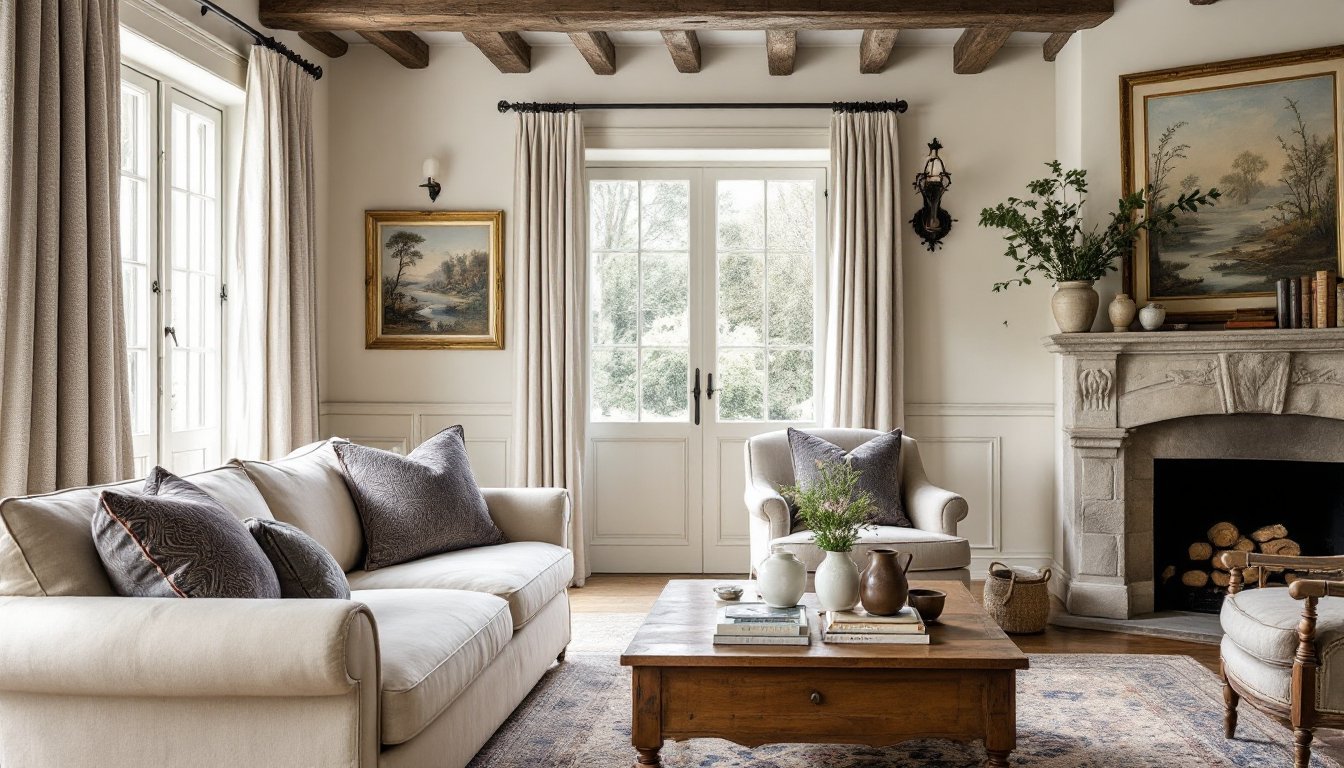
Key to understanding country French is recognizing it sits between casual and refined. You’ll see ornate carved details on a hutch alongside rough-hewn beams. Silk fabric drapes from wrought-iron rods in a room with a stone hearth. This duality, mixing luxury with rusticity, gives the style its distinctive warmth. It’s approachable but never cheap-looking.
Key Design Elements and Characteristics
Color Palettes and Textures
Country French relies on a soft, earthy palette drawn from the landscape: creams, soft whites, warm grays, sage greens, dusty blues, and terracotta tones. These colors feel natural because they mimic the clay, stone, and weathered wood you’d find in a Provençal farmhouse.
Texture is just as important as color. Expect to see linen, wool, rough plaster, reclaimed wood, and stone woven throughout. A guide to bringing Parisian elegance into your home explains how even formal French interiors borrow country French’s emphasis on tactile, natural materials.
When choosing paint, consider chalk-based or matte finishes over gloss, they echo the flat, chalky quality of aged lime plaster found in European farmhouses. For walls, a neutral base lets furnishings shine: for accents, soft jewel tones (deep lavender, muted gold) work without overwhelming.
Layered textiles are essential. Mix woven throws, linen curtains, wool upholstered chairs, and quilted cushions. A bedroom might combine a linen duvet with a handwoven blanket draped over a wrought-iron bed frame. These layers create visual interest and genuine comfort.
Incorporate architectural salvage when possible: exposed ceiling beams (real or convincingly faux-finished), stone tile flooring, or a whitewashed brick accent wall. These elements anchor the style and require minimal additional decoration.
Furniture and Layout Ideas
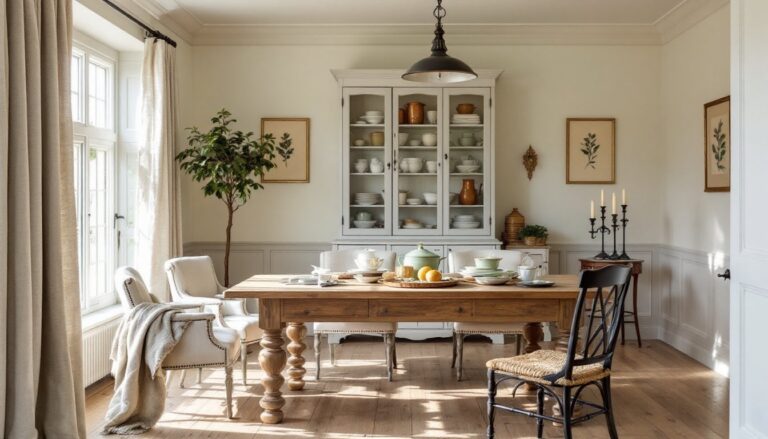
Country French furniture prioritizes solid construction and timeless forms over trends. Think heavy tables with turned legs, armoires with panel doors, upholstered bergère chairs, and rush-seat dining chairs, pieces that could last centuries and show graceful wear rather than deterioration.
When selecting furniture, look for wood with visible grain and knots: maple, oak, and walnut are traditional choices. Finishes should range from honey-toned to gray-washed, never high-gloss. If you’re buying new, seek makers specializing in reproduction farmhouse pieces using traditional joinery and hand-finishing techniques.
Layout should feel organic, not rigid. Avoid pushing all furniture to room edges: instead, create conversational groupings. A seating area might anchor a living room corner with two upholstered chairs angled toward each other, a side table between them, and a sofa perpendicular, inviting and functional rather than symmetrical.
Key storage pieces, armoires, dressers, hutches, should be substantial and beautifully finished. These anchor a room and reduce visual clutter by providing closed storage. A French country French style decor overview emphasizes mixing periods: a 19th-century pine armoire pairs naturally with mid-20th-century dining chairs.
Cape Cod or farmhouse-style kitchens work well here: open shelving for pottery and glassware, a substantial wood island, and vintage-style hardware. Avoid wall-to-wall cabinetry: leave space for breathing room and visual softness.
Accessorizing Your Space
Accessories in country French decor should feel gathered over time, not curated in one shopping trip. Display collections of pottery, vintage glassware, botanical prints, and small sculptures on open shelves or mantels. A photo-rich guide to French country decor suggests grouping similar items, three ceramic pitchers, a series of framed botanical engravings, stacked leather-bound books, for impact without clutter.
Lighting is crucial. Forgo modern recessed fixtures: instead, use table lamps with linen shades, wall sconces with candle-shaped bulbs, and vintage-style chandeliers. Wrought iron is traditional for light fixtures and hardware throughout.
Art should lean toward European landscapes, still-life studies, and botanical imagery rather than abstract work. Frames matter: gilded wood, dark stained timber, or distressed painted finishes suit the style. Avoid anything shiny or plasticky.
Incorporate functional antiques: a vintage scale in the kitchen, old botanical cards framed in a bedroom, a decorative ladder leaning in a corner for draping textiles. These pieces add authenticity and subtle visual interest without feeling staged.
Plants and fresh flowers are essential. A maximalist home decor approach works here, group potted herbs on a kitchen windowsill, fill a vintage urn with branches, place a wildflower arrangement on a side table. This softness offsets heavier wood furnishings and brings life indoors.
Country French Decor by Room
Living Rooms: Anchor the space with a substantial wood-frame sofa upholstered in linen or linen-blend fabric, typically in cream or soft neutral tones. Add a mix of throw pillows in complementary textiles, perhaps one in a vintage floral print, one in plain linen, one in a woven check. A wood coffee table with carved details or turned legs grounds the arrangement. Include at least one upholstered armchair with exposed wood frame, and layer in a wool area rug with subtle pattern.
Bedrooms: A wrought-iron or wood bed frame with a linen duvet and layered quilts creates the focal point. Nightstands should be sturdy wood pieces with drawers for practical storage. Hang linen curtains from a decorative rod, and consider a painted accent wall in soft lavender or dusty blue. Keep nighttime lighting soft: bedside table lamps rather than overhead fixtures.
Kitchens: Open shelving displays everyday pottery and glassware. A large wood island or table serves as gathering spot and work surface. Hardware on cabinet doors should be traditional metal pulls or knobs, never sleek chrome. Consider a vintage or reproduction range, and incorporate natural wood elements like a drying rack or open shelving for cookbooks.
Bathrooms: A simple pedestal sink or salvaged vanity, antique-style fixtures with cross handles, and vintage-looking tile work (think subway tile or small hexagons in cream or soft blue) suit the style. Display rolled linen towels in a vintage basket, and include framed botanical prints or vintage apothecary jars for storage and decor. Avoid wall-to-wall tile: focus on accent walls or shower surrounds.
An inspiration guide to French country decorating demonstrates how the same design principles, natural materials, soft palettes, layered textures, adapt beautifully across different rooms while maintaining cohesion throughout a home.
Getting Started With Your Country French Transformation
Start by defining your priority area, perhaps a single bedroom or kitchen, rather than overhauling the entire house at once. This prevents decision fatigue and lets you refine the look as you go.
Step 1: Establish your color palette. Choose a neutral base (cream, soft white, or warm gray) for walls and large upholstered pieces, then select 3–4 accent colors from the soft French palette. Paint swatches on your wall and observe them in natural and artificial light before committing.
Step 2: Source key furniture. Invest in one or two substantial anchor pieces, a dining table, armoire, or sofa, that you genuinely love and that will last. Quality wood construction matters here: check for solid joints and hand-finishing. New reproduction pieces work well if authentic vintage is outside your budget, but ensure construction is solid.
Step 3: Layer in textiles. Add linen curtains, wool area rugs, and upholstered pieces gradually. Thrift stores, online marketplaces, and estate sales offer affordable options. Don’t match everything: varied ages and subtle pattern mismatches are authentic to the style.
Step 4: Accessorize thoughtfully. Build collections over time rather than buying all decorative items at once. Visit antique markets, flea sales, and local artisans for pottery, prints, and vintage finds that feel special.
Step 5: Address architectural elements. If your home has good bones (original trim, hardwood floors, or existing character), highlight them with paint colors and simple finishes. If you’re starting from a blank slate, consider adding crown molding, wainscoting, or exposed shelving to mimic period farmhouse details, but keep these updates simple and authentic, not overly fussy.
Country French decor rewards patience and restraint. The goal isn’t perfection or matching sets: it’s creating a warm, welcoming home that tells your story and celebrates quality materials and thoughtful design.