

A cozy farmhouse bedroom doesn’t need a sprawling acreage or a budget that requires a second mortgage. Whether you’re starting from scratch or refreshing what you’ve got, farmhouse decor bedroom ideas center on authentic materials, warm textures, and a lived-in aesthetic that feels intentional, not staged. The appeal is straightforward: farmhouse design strips away the unnecessary, layers in natural elements, and creates a sanctuary where you actually want to spend time. This guide walks you through seven concrete design moves, from rustic wood selections to lighting and accessories, that anchor a farmhouse bedroom without requiring a complete gut renovation.
Key Takeaways
- Farmhouse bedroom design centers on authentic rustic wood elements, neutral palettes, and lived-in textures that create a cozy retreat without requiring expensive renovations.
- Anchor your room with substantial wooden furniture from estate sales or reclamation yards, and add visual depth through board-and-batten walls or distressed finishes.
- Layer neutral whites and earth tones in bedding, throw blankets, and linens using natural fibers like linen and cotton to build a tactile, restful environment.
- Choose simple, warm-toned lighting fixtures with vintage appeal—Edison bulbs, wrought iron sconces, and dimmable options—rather than bright or polished finishes.
- Select intentional farmhouse decor accessories like curated artwork, distressed mirrors, and fresh botanicals, prioritizing quality over quantity to avoid visual clutter.
Embrace Rustic Wood Elements
Wood is the backbone of any farmhouse interior. Visible wood, whether on walls, ceilings, or furniture, gives a space that authentic, grounded feeling that synthetic materials can’t replicate.
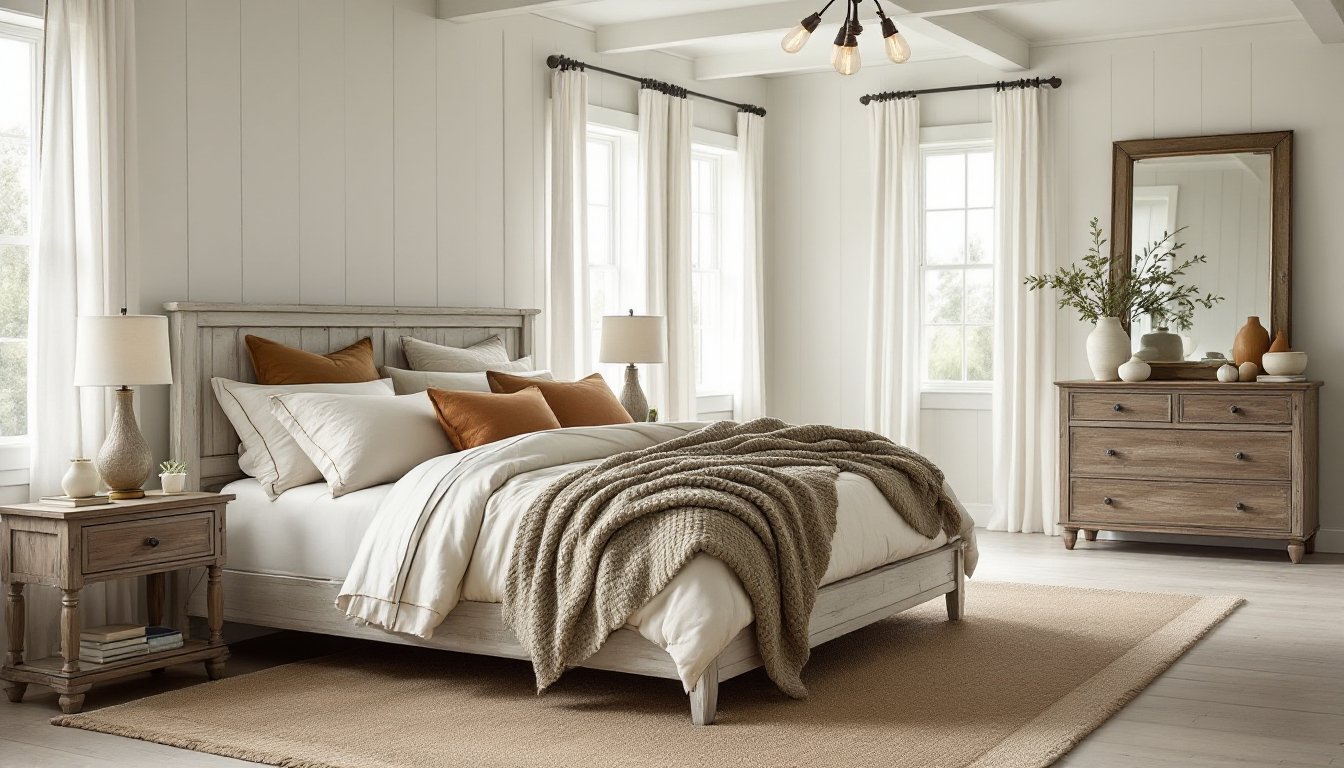
Start with your bed. A wooden bed frame with a distressed, whitewashed, or natural finish becomes an instant focal point. If you’re building or refinishing one, aim for substantial posts (4×4 material) and a simple, sturdy headboard. Reclaimed or salvaged wood headboards work even better, they carry history. Distressing new wood takes time but pays off: sand edges lightly, use a wire brush on the face, then apply a weathered stain or whitewash. Always test on scrap wood first.
Board-and-batten walls are a classic farmhouse move. Running 1×6 or 1×8 boards horizontally, anchored with 1×2 battens at regular intervals (typically 16 to 24 inches), creates visual rhythm without major structural work. Paint the walls soft white or cream, then stain or paint the boards to match or contrast slightly. This is a finish-carpentry job, you’ll need a miter saw for clean cuts and a level to keep everything square.
Wooden furniture throughout the room, nightstands, dressers, benches, should feel substantial but not heavy. Pieces with a visible patina or natural grain are better than perfectly uniform finishes. If you’re sourcing furniture, local estate sales and reclamation yards often yield genuinely aged pieces at better prices than reproduction versions. New furniture with hand-applied distressing can work too, but watch for the overly sanded, plastic-looking finish that signals factory treatment.
Choose A Neutral, Earthy Color Palette
Farmhouse bedrooms thrive on restraint. A neutral, earthy palette creates the calm, cohesive backdrop that lets textures and materials shine.
Whites and off-whites are your anchor. Use them on walls and major surfaces, they reflect light, keep the room feeling open, and let wood and textiles take the lead. Cream, ivory, and soft linen shades work well too: pure white can feel institutional, so lean toward warm whites with slight undertones of gray or yellow.
Build depth with earth tones in textiles and accents. Think clay, terracotta, burnt umber, and warm browns. These colors appear in throws, pillows, rugs, and artwork without overwhelming the space. A single accent wall in a muted tone, warm sage, dusty taupe, or even a soft charcoal, adds interest without clashing.
Muted greens and soft blues echo the natural world. Olive green, deep forest green, and cornflower blue work beautifully as secondary colors in bedding, curtains, or a painted barn door. Navy can anchor the palette without darkening the room if used sparingly.
The psychology here is straightforward: these colors are restful. They don’t compete for attention, which means your eye settles rather than bounces. When you’re designing a bedroom, that calm matters more than visual pizzazz. Collect paint samples and tape them to your wall for a few days, watch how light changes them at different times. Most people find that what looks perfect in the store needs adjustment in their actual room.
Layer Textures With Linens And Bedding
A farmhouse bed is built in layers. Start with quality basics, linen or cotton sheets in solids or subtle plaids and stripes. Linen wrinkles intentionally, which feels authentic, but it takes a few washes to soften. Cotton is more forgiving and just as appropriate.
Add a quilt or heirloom-style blanket as your second layer. Quilts carry visual weight and texture: they’re also practical for temperature shifts. Look for natural fiber fills (cotton, wool) rather than synthetic polyester. Hand-stitched quilts or vintage finds add character: machine-made reproducing the heirloom aesthetic work fine too if the stitching and color palette feel right.
Throw a chunky knit blanket or wool throw across the foot of the bed or draped over a wooden bench. This adds visual interest and genuine coziness. Jute or wool rugs on the floor ground the space and add warmth underfoot, essential in a farmhouse room. A wool rug resists staining better than jute but costs more: jute is budget-friendly and durable for bedrooms where foot traffic is lighter.
Incorporate poufs, pillows in varying textures, and fabric wall hangings if the room feels sparse. The goal is a layered, tactile environment where textures invite touch. When shopping, run your hand over the fabric. Farmhouse linens should feel natural, slightly rough linen, soft cotton, nubby weaves. Synthetic blends or overly smooth finishes undermine the authentic look. Budget-wise, linen is expensive but lasts: affordable cotton is fine, but check the weight (measured in thread count or grams per square meter). Heavier fabrics feel more substantial and durable.
Incorporate Vintage And Reclaimed Furniture
Farmhouse design is fundamentally about restraint and character. Every piece should earn its place.
Start with a bed frame and nightstands, these anchor the room and set the tone. Antique or vintage-inspired pieces work better than mass-produced farmhouse reproductions because they carry genuine age or are genuinely built to last. Reclaimed wood furniture from architectural salvage yards, estate sales, and local craftspeople feels more authentic than new distressed pieces from big-box retailers. Yes, it costs more upfront, but you’re buying durability and story.
A dresser or chest of drawers in dark wood or painted finishes adds storage and visual grounding. Paint vintage dressers in soft whites or muted colors if the original finish is worn or mismatched. Use quality primer and furniture paint (not wall paint) for a finish that holds up to daily use. Two coats of primer, two coats of paint, and a clear topcoat create a durable surface.
Built-in elements elevate a farmhouse bedroom. A window seat with storage, floating shelves, or a bookcase built into an alcove creates the sense of an older home with intentional design. These projects require basic carpentry, framing, scribing to fit walls, and finishing, but they don’t require structural changes. An enclosed window seat cushion (built from 2×8 lumber with plywood and a hinged top) provides seating and hidden storage. Sketch it out, measure twice, cut once, and leave room for the hinges and cushion thickness.
The rule: if a piece doesn’t serve a function or hold visual interest, it doesn’t belong. Farmhouse rooms avoid clutter masquerading as decoration.
Add Farmhouse-Style Lighting Fixtures
Lighting shapes mood. Farmhouse lighting is simple, often distressed, and warm rather than clinical.
Lamp bases should feel authentic: vintage metal with patina, wood, or industrial materials like wrought iron. Avoid shiny brass or chrome: reach for black, oil-rubbed bronze, or rust finishes. Linen or cotton shades in cream or off-white work better than white or synthetic materials. A bedside lamp with a simple, sturdy base (roughly 18 to 24 inches tall so the shade sits at eye level when seated) is essential for reading and mood lighting.
Wall sconces flanking the headboard or next to a dresser add ambient light and visual balance. Look for fixtures with black or rustic finishes: Edison-style bulbs (warm, visible filament) enhance the period feel. These require wiring, if you’re not comfortable running new circuits or junction boxes, hire a licensed electrician. Depending on your room’s existing electrical layout, this could be straightforward (adding to existing circuits) or require a permit (new circuits). Local codes vary, so check with your jurisdiction.
Pendant fixtures or a simple farmhouse chandelier above a reading nook or at the ceiling centerpoint add architectural interest. Avoid ornate crystal: choose wrought iron, wood, or simple metal frames with linen or paper shades. These often require ceiling junction box installation and circuit work, again, a licensed electrician is the right call if you’re unsure.
Layer your lighting: overhead fixtures for task work, wall sconces for ambient mood, and table lamps for flexibility. Avoid bright LED bulbs (2700K or 3000K color temperature is warmer and more flattering than 5000K+ daylight). Dimmers are invaluable in a bedroom, they let you adjust intensity from energetic morning light to dim, restful evening ambiance.
Decorate With Intentional Accessories And Wall Art
Accessories anchor a farmhouse bedroom’s personality. Every item should reflect the aesthetic and feel earned rather than impulse-bought.
Wall art sets the visual tone. Curated vintage oil paintings, botanical prints, or black-and-white photography in rustic or matte-black frames work beautifully. Avoid matted posters or busy gallery walls: instead, select a few meaningful pieces and give them breathing room. A single large-scale landscape or portrait above a dresser or in a main viewing spot creates impact without visual noise. Frame sizes typically range from 16×20 inches to 30×40 inches depending on wall space, measure and use painter’s tape to mock up placement before hanging.
Distressed mirrors reflect light and expand the sense of space. A large leaning mirror against a wall (propped securely, not hung) or a smaller ornate vintage mirror hung at eye level add function and farmhouse character. Mirrors in black, dark wood, or whitewashed frames fit the palette better than shiny gold or silver.
Nightstand styling matters. A table lamp, a small vase with fresh flowers or dried botanicals, a woven basket for essentials, and a favorite book create a curated vignette. Handmade pottery, vintage glassware, or antique boxes add tactile interest. Avoid digital clocks and devices: if you need a bedside clock, choose one with a simple face and muted finish.
Nature elements ground the space. Fresh flowers in a simple vase (weekly refreshes), potted greenery like eucalyptus or ferns, and botanical motifs in art and textiles connect the room to the outdoors. A lidded woven basket under a side table stores blankets or extra linens while maintaining the aesthetic.
Curtains or lightweight fabric panels frame windows softly. Linen or cotton in white or cream, hung from simple rods (black or natural wood), diffuse light without heavy draping. Avoid heavy velvet or patterned fabrics: clean, understated window treatments let natural light and views be the focus. Modern farmhouse inside design emphasizes simplicity, so resist the urge to layer accessories. One strong piece, a statement mirror, artwork, or vintage dresser, draws the eye and prevents the room from feeling cluttered.
When sourcing farmhouse decor ideas and accessories, quality matters more than quantity. A single curated piece lasts longer and looks better than five trendy items bought at discount. Vintage and rustic farmhouse decor sourced from estate sales, local artisans, and antique shops supports authenticity and often costs less per item than new farmhouse reproductions. Check Better Homes & Gardens and similar design resources for inspiration on styling your own pieces effectively.
Conclusion
A farmhouse bedroom comes together through intentional choices, not decoration overload. Rustic wood, neutral palettes, layered textures, vintage furniture, simple lighting, and carefully selected accessories create a cohesive retreat that feels both timeless and livable. Start with one anchor piece, a wooden bed frame or a quality dresser, then build outward. Move slowly, test colors and styles in your actual room, and resist the urge to fill every corner. The best farmhouse rooms breathe. They feel like they’ve evolved, not been assembled. Your bedroom should invite you to slow down, rest, and enjoy the quietness of thoughtful design.