

Farmhouse interior design has evolved from rural necessity to one of the most sought-after aesthetics in modern homes. It’s not about recreating a museum piece, it’s about blending the warmth of traditional country living with the comfort and function today’s homeowners need. Think shiplap that’s properly installed, reclaimed wood beams that can actually bear a load, and vintage fixtures that meet current electrical codes. This guide walks through the core principles, material choices, and room-by-room strategies to help anyone build a genuine farmhouse look, without the guesswork or the Pinterest fails.
Key Takeaways
- Farmhouse interior design prioritizes function and natural materials over perfection, blending traditional elements with modern comfort through reclaimed wood, neutral palettes, and vintage accents.
- Authentic farmhouse style requires quality materials and proper installation—wide-plank hardwood flooring, kiln-dried reclaimed lumber, and fixtures that meet current building codes ensure durability and safety.
- Each room application (kitchen, bedroom, bathroom, living spaces) follows core principles: clean lines, sturdy furniture, muted colors with warm accents, and exposed structural elements like shiplap or ceiling beams.
- Critical prep work and DIY safety are essential—measure twice before cutting, acclimate wood materials for 48-72 hours before installation, pull permits for structural changes, and hire licensed professionals for electrical or plumbing work beyond basic replacements.
- Farmhouse interior design success depends on honest craftsmanship and attention to details: proper fasteners, correct grout widths, level surfaces, and quality textiles that age well and resist trending fads.
What Is Farmhouse Interior Design?
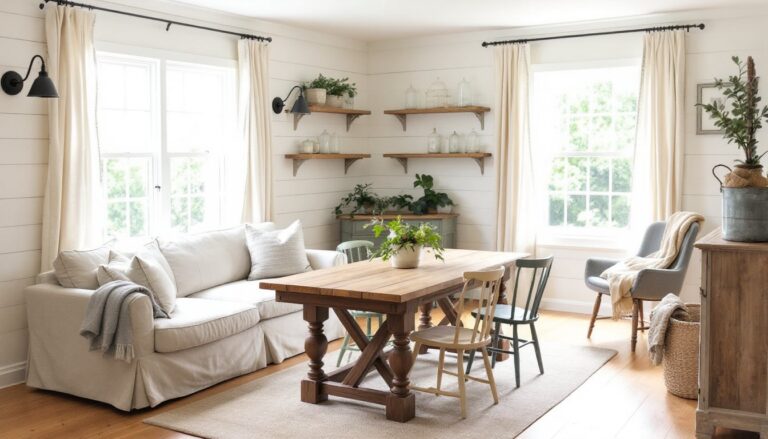
Farmhouse style strips away the excess. It centers on function, natural materials, and a lived-in feel that doesn’t rely on perfection. The roots trace back to working farmhouses where every piece served a purpose, tables built to last generations, open shelving for daily dishes, wide-plank floors that could handle muddy boots.
Today’s farmhouse interiors keep that practical backbone but adapt it for modern living. Expect clean lines, uncluttered surfaces, and a mix of old and new. A farmhouse kitchen might pair subway tile backsplash with a vintage apron-front sink and modern appliances. The goal isn’t to fake age, it’s to honor simplicity and durability.
Key characteristics include:
- Exposed structural elements: ceiling beams, floor joists, brick or stone
- Functional furniture: sturdy wood tables, open storage, benches
- Vintage or salvaged accents: barn doors, wrought iron hardware, antique lighting
- Minimal ornamentation: no heavy drapes or fussy trim
This isn’t shabby chic or cottage style. Farmhouse design skips the ruffles and pastels in favor of raw textures and straightforward forms. If a piece can’t pull its weight, literally or visually, it doesn’t belong.
Essential Elements of Farmhouse Style
Natural Materials and Textures
Farmhouse interiors rely on materials that age well and show their origins. Reclaimed wood is the workhorse, salvaged barn siding, old growth pine, or Douglas fir with visible grain and knots. When sourcing reclaimed lumber, verify it’s been kiln-dried and inspected for nails or metal fasteners. Actual dimensions matter: a nominal 2×6 measures 1.5″ × 5.5″, and warped antique boards may need planing before installation.
Hardwood flooring in oak, maple, or hickory works best. Wide planks (5″ to 7″) feel more authentic than narrow strips. If the budget allows, look for engineered hardwood with a thick wear layer (at least 3mm), it handles moisture better than solid planks in kitchens or basements. Finish with a matte or satin polyurethane: high-gloss reads too modern.
Stone and brick bring texture to walls, backsplashes, and fireplace surrounds. Thin brick veneer (about ½” thick) installs over existing drywall with mastic adhesive and doesn’t require a structural ledger like full-thickness brick. For countertops, butcher block (hard maple or walnut) suits prep areas but needs regular oiling with food-grade mineral oil. Soapstone and honed granite offer more durability with a softer, less polished look than standard granite.
Metals should look lived-in. Wrought iron, oil-rubbed bronze, and matte black finishes suit cabinet pulls, light fixtures, and curtain rods. Avoid shiny chrome or brushed nickel, they skew too contemporary. When installing heavy iron hardware on cabinet doors, reinforce with backing plates or ensure screws hit solid wood, not just particleboard.
Neutral Color Palettes with Warm Accents
Farmhouse color schemes start with whites, grays, and earth tones. Pure white (not cool or blue-tinted whites) works for trim, ceilings, and shiplap. For walls, consider warm off-whites like Benjamin Moore’s Swiss Coffee or greiges (gray-beige blends) that read neutral in natural light.
Accent colors come from nature: deep barn red, sage green, navy, or charcoal. Use them sparingly, on a single accent wall, interior doors, or built-in cabinetry. A gallon of quality paint covers about 350-400 square feet with one coat: farmhouse walls often need two coats for even coverage, especially over darker existing colors.
Wood tones add warmth without color. Leave beams, floors, and furniture in natural or lightly stained finishes. Whitewashing or liming darkens wood grain while lightening overall tone, mix one part white latex paint with four parts water, brush on, then wipe back with a rag before it dries.
Textiles layer in softness: linen curtains, cotton throw pillows, wool or jute rugs. Patterns stay simple, ticking stripes, buffalo check, or small florals. Heavyweight fabrics like 12-oz cotton duck or linen-cotton blends drape better and last longer than cheap poly-blends. For farmhouse interior design budgets, investing in quality textiles pays off in longevity.
How to Design Your Farmhouse Living Spaces
Living Room
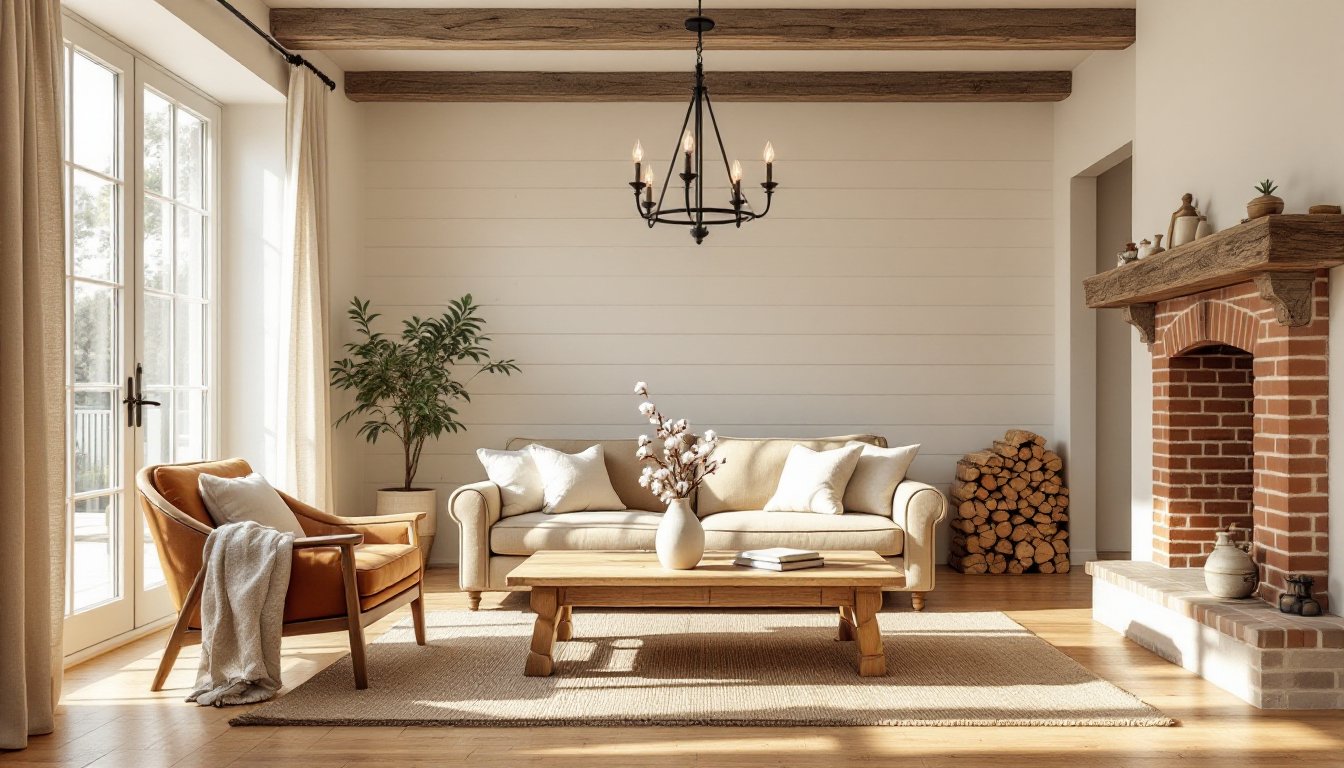
Start with a solid foundation. Install wide-plank flooring or, if existing floors are damaged, lay luxury vinyl plank (LVP) in a wood-look finish, it’s waterproof and installs as a floating floor over most subfloors. Ensure the subfloor is level within 3/16″ over 10 feet: use floor leveler if needed.
Exposed ceiling beams add character, but they’re not always structural. Faux beams made from hollow polyurethane or wood veneer install with construction adhesive and screws into ceiling joists (locate with a stud finder). Real reclaimed beams require engineering analysis if they’ll carry load. Always check local building codes, some jurisdictions require permits for ceiling modifications.
Furniture should be sturdy and unfussy. A solid wood coffee table with a thick top (1.5″ to 2″) and chunky legs grounds the space. Look for joinery, mortise-and-tenon or dovetail, not just screws and staples. Upholstered pieces work in linen, cotton duck, or leather. Avoid tufting, nailhead trim, or ornate carved details.
Lighting makes or breaks the look. Wrought iron chandeliers, barn-style pendant lights, or cage fixtures suit farmhouse spaces. Wire them to a dimmer switch for flexibility. If replacing a ceiling fixture, turn off power at the breaker, verify with a non-contact voltage tester, and ensure the junction box is rated for the fixture’s weight (most standard boxes handle up to 50 lbs: heavier fixtures need a fan-rated or bar hanger box).
Kitchen
Farmhouse kitchens emphasize function over flash. Shaker-style cabinets with inset or overlay doors provide clean lines. Paint them white, cream, or a muted gray. If refacing existing cabinets, replace doors and drawer fronts but keep the cabinet boxes, it’s cheaper than a full tear-out and keeps the project DIY-friendly.
An apron-front (farmhouse) sink is the signature element. These sinks are heavy, fireclay models weigh 80-100 lbs empty, and require a modified cabinet base with extra support. The cabinet face frame is cut away to expose the sink’s front panel. If installing one yourself, have a helper: dropping a fireclay sink means buying a new one.
Open shelving replaces upper cabinets on one or two walls. Use 1.5″ thick solid wood shelves or ¾” plywood with hardwood edge banding. Mount with heavy-duty brackets rated for at least 200 lbs per pair, screwed into wall studs (nominal 2×4 studs are actually 1.5″ × 3.5″). Shelves over 36″ long may sag: add a third bracket at the center.
Backsplashes run white subway tile (3″ × 6″) in a running bond or herringbone pattern, or beadboard paneling painted to match trim. Subway tile installs with thinset mortar over cement board or directly on drywall (if the wall is sound). Grout lines should be 1/8″ wide: use unsanded grout for tight joints. Seal grout with a penetrating sealer after it cures (7-10 days) to resist stains.
Many farmhouse design trends incorporate vintage or reproduction light fixtures. Gooseneck barn lights or industrial pendant lights over an island provide task lighting. Wire gauge matters: most kitchen circuits are 12-gauge wire on a 20-amp breaker. Follow NEC guidelines, if you’re not comfortable working with electrical, hire a licensed electrician. Kitchens often require GFCI outlets, especially near sinks.
Bedroom
Farmhouse bedrooms lean simple and serene. Shiplap accent walls behind the bed add texture without overwhelming the space. Real shiplap is tongue-and-groove pine boards (typically ¾” thick), installed horizontally with a small reveal. Nail through the tongue at a 45° angle into studs with a finish nailer or hand-nail with 6d finish nails. Many DIYers use nickel-gap shiplap with a consistent ⅛” gap for a cleaner look.
If shiplap feels like overkill, board-and-batten wainscoting (vertical boards with trim strips covering the seams) works on lower walls. Install 1×6 or 1×8 boards vertically, then cover joints with 1×2 or 1×3 battens. Paint everything the same color for a unified look.
Bedding keeps it simple: white or neutral linen duvet covers, cotton quilts, and minimal throw pillows. A wrought iron bed frame or wooden platform bed with visible joinery suits the style. For ideas on layering textures and vintage finds, resources like Country Living’s farmhouse bedroom gallery showcase practical applications.
Bathroom
Farmhouse bathrooms mix vintage fixtures with modern function. A clawfoot tub or freestanding soaking tub becomes the focal point. If installing a clawfoot tub on an upper floor, verify the floor can support the weight, a cast iron tub plus water and occupant can exceed 800 lbs. Floor joists (typically 2×10 or 2×12 on 16″ centers) should be evaluated by a structural engineer if there’s any doubt.
Vanities made from repurposed furniture (a dresser or sideboard) add character, but they need modification. Cut out the back for plumbing access, seal all wood surfaces with polyurethane to resist moisture, and install a vessel sink or drop-in basin. Ensure the countertop material is waterproof, sealed butcher block, marble, or quartz all work.
Wall treatments include beadboard wainscoting (36″ to 42″ high), subway tile, or painted shiplap. In wet areas (shower surrounds), use cement board backer behind tile, not moisture-resistant drywall (“green board”). Standard shower tile is porcelain or ceramic, set with thinset and grouted with sanded grout for joints wider than ⅛”.
Lighting should be task-focused: sconces flanking the mirror provide even light for grooming. Mount them 60″ to 65″ from the floor (at eye level) and 28″ to 36″ apart. Use LED bulbs in warm white (2700K-3000K), they last longer and won’t yellow fixtures.
General Tips Across Rooms
- Prep work matters. Sand, prime, and patch walls before painting. Skipping primer on raw wood or dark colors leads to blotchy finishes.
- Measure twice, cut once. Double-check dimensions before cutting trim, shelving, or shiplap. Mistakes in material waste time and money.
- Acclimate materials. Store wood flooring, trim, and lumber in the installation room for 48-72 hours before installing. This prevents expansion or contraction after installation.
- Use the right fasteners. Drywall anchors for hollow walls, screws into studs for heavy loads, construction adhesive plus nails for trim and paneling.
- Wear PPE. Safety glasses for cutting and nailing, dust masks for sanding, gloves for handling rough lumber, ear protection when using power saws.
Design platforms like HGTV and Southern Living offer room-specific inspiration, but always adapt ideas to your home’s structure and your skill level. If a project involves moving walls, electrical work beyond replacing fixtures, or plumbing relocation, pull permits and consider hiring pros. Farmhouse style is about honest craftsmanship, doing it right beats doing it fast.
Conclusion
Farmhouse interior design isn’t a shortcut or a trend, it’s a return to building spaces that feel solid, functional, and welcoming. The materials, colors, and layouts covered here provide a framework, but the real work is in the details: straight cuts, level shelves, properly finished surfaces. Start with one room, learn the techniques, and expand from there. The result is a home that feels both timeless and genuinely lived-in.