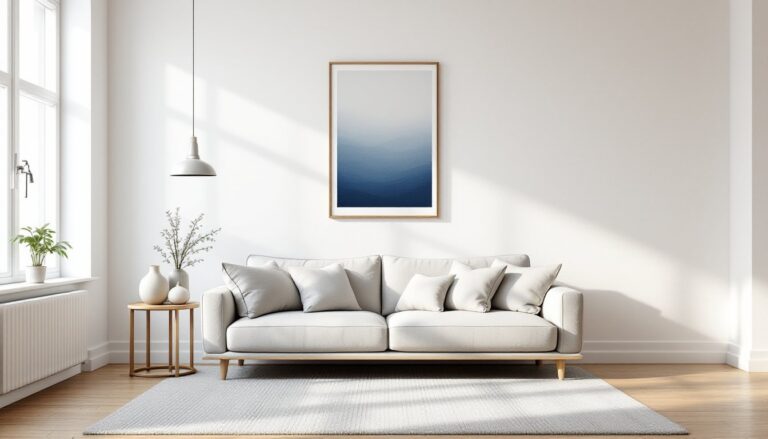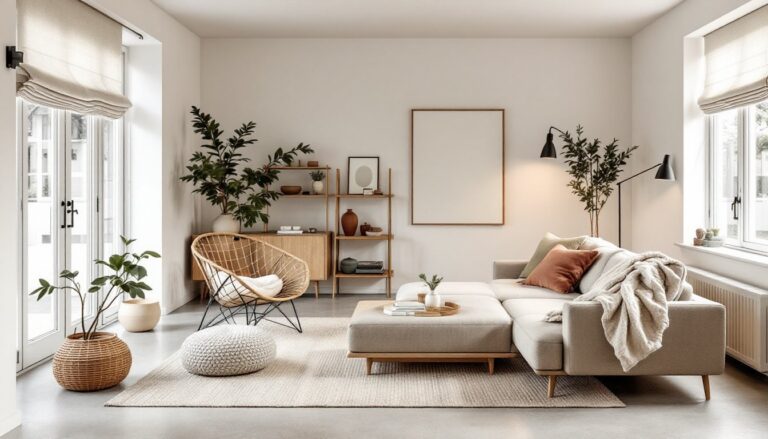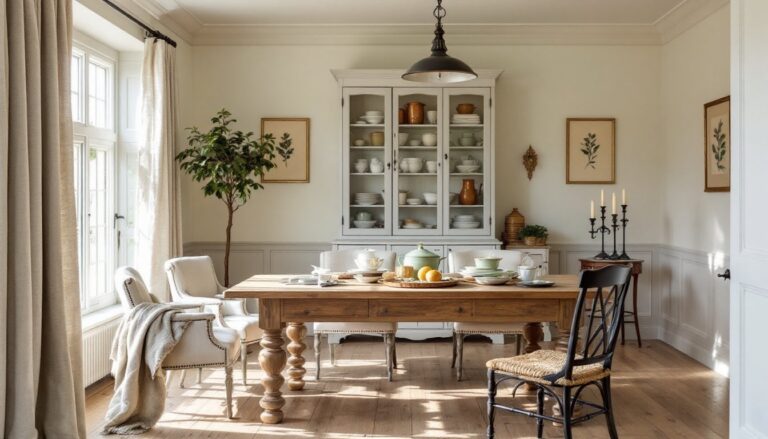


Modern farmhouse decor has become the sweet spot for homeowners who love rustic character but don’t want their spaces to feel dated or overly themed. It’s a style that honors the raw, honest aesthetic of farmhouse design while incorporating clean lines, minimalist principles, and contemporary functionality. Unlike pure farmhouse, which leans heavily into vintage reproductions and nostalgic pieces, modern farmhouse weaves together the best of both worlds. You’ll see weathered wood paired with sleek metals, soft linens paired with industrial fixtures, and vintage finds sitting comfortably beside modern furnishings. This balanced approach makes it accessible for DIYers and design-minded homeowners who want character without the fuss, and it translates beautifully across every room in your home.
Key Takeaways
- Modern farmhouse decor blends rustic character with clean lines and contemporary functionality by pairing weathered materials like reclaimed wood with sleek metals and minimalist design principles.
- Unlike traditional farmhouse, modern farmhouse emphasizes restraint and intentional curation, selecting pieces for both aesthetic and purpose rather than filling spaces with ornate or vintage reproductions.
- Layered texture and material contrast—such as rough-hewn beams against smooth walls and linen textiles beside industrial hardware—create visual interest without relying on bold colors.
- Functional design elements like open shelving, exposed beams, and honest displays of everyday items showcase the authentic bones of your home and are central to the modern farmhouse aesthetic.
- Success in farmhouse and modern decor requires balancing rustic and contemporary elements in every room, from neutral kitchen cabinetry paired with industrial pendants to bedrooms with simple shiplap and layered, naturally textured fabrics.
- The style works across all spaces by starting with neutral foundations, incorporating authentic materials, and choosing every piece with intention to create homes that feel both timeless and comfortable for contemporary living.
Understanding Modern Farmhouse Style
What Sets It Apart From Pure Farmhouse
Traditional farmhouse design draws from rural American and European aesthetics, think heavily distressed furniture, ornate details, and a “lived-in” look that celebrates imperfection. It’s nostalgic by design, often referencing a specific era or region. Modern farmhouse strips away the heavy ornamentation and thematic excess while keeping the soul: genuine materials, handcrafted details, and functionality.
The key difference lies in proportion and restraint. Where old-school farmhouse might feature carved moldings, ornate mirrors, and abundant vintage pieces, modern farmhouse curates carefully. You’re selecting pieces for both aesthetic and purpose, not filling a space because it “looks farmhouse.”
Color palettes shift too. Traditional farmhouse gravitates toward rich creams, forest greens, and deep reds. Modern farmhouse favors neutral bases, whites, soft grays, warm beiges, and natural wood tones, with accent colors introduced sparingly through textiles or artwork. Think of it as farmhouse design filtered through a contemporary lens, where every element earns its place.
The style also borrows heavily from country French decor and French countryside aesthetics, blending that European sophistication with American practicality. Shiplap appears, but it’s painted clean white rather than heavily stained. Barn doors slide into modern floor plans without clashing. Vintage quilts drape casually over neutral sofas. It’s intentional eclecticism, not accident.
Essential Design Principles for Modern Farmhouse Spaces
Texture, Contrast, and Functional Elements
Modern farmhouse lives and dies by layered texture. Without the color drama of traditional farmhouse, you’re building visual interest through material contrast and tactile variety. Rough-hewn beams sit against smooth drywall. Raw wood shelving holds ceramic vessels and galvanized metal containers. Linen curtains frame windows beside industrial-style hardware. These contrasts prevent the space from feeling flat or sterile.
Functional elements are honestly displayed, not hidden. Open shelving showcases your everyday dishes and glassware. Exposed ceiling joists or structural beams become design features. A ladder leans against a bookcase not because it’s vintage, but because it’s actually useful and visually interesting. This honesty, showing the bones of how you live, is fundamental to the style.
Material selection drives everything. Reclaimed or reclaimed-look wood (distressed but not ornately carved) anchors spaces. Wrought iron, black steel, and matte black finishes provide contrast against light neutrals. Concrete, shiplap, and exposed brick or stone work as accent walls. Textiles lean toward natural fibers: linen, cotton, wool, and jute. These materials age gracefully and feel authentic without requiring constant fussing.
Balance is critical. For every rustic element, pair something contemporary. A farmhouse decor modern aesthetic means pairing that reclaimed wood dining table with sleek mid-century chairs, or coupling shiplap walls with minimalist lighting fixtures. The interplay keeps spaces from feeling costume-like. You’re not creating a museum exhibit, you’re designing a home where contemporary comfort meets rustic character.
Creating Your Modern Farmhouse Look: Room-by-Room Inspiration
The Kitchen: Function Meets Rustic Character
Kitchens showcase modern farmhouse exceptionally well because the style prioritizes both aesthetics and workflow. Start with cabinetry: white or soft gray painted wood (shaker style or flat-panel doors are more contemporary than ornate framing). Pair these with butcher-block or reclaimed wood countertops, which soften the look while remaining practical. Open shelving above the sink or in a corner displays everyday dishes, vintage glassware, and cookbooks, items you actually use.
Hardware matters. Ceramic knobs with brushed-nickel backplates, oil-rubbed bronze handles, or wrought-iron pulls feel farmhouse without looking costume-y. Lighting is where contemporary sensibility shines: industrial-style pendants over an island, or simple dome fixtures rather than ornate vintage reproductions. A farmhouse decor modern kitchen works because it doesn’t apologize for being modern, it simply borrows farmhouse’s honesty.
The Bedroom: Softness and Simplicity
Bedrooms in this style favor calm, layered comfort. White or cream bedding provides the base, then layer with linen throws, quilted coverlets in muted tones, and naturally textured pillows. A wood headboard (whether reclaimed or reproduction) anchors the bed. Nightstands can be mismatched, perhaps one vintage piece and one modern, because the restraint elsewhere prevents the space from feeling chaotic.
Wall treatment might be shiplap or simple paint. If you go the shiplap route, keep it white or very pale gray and leave it unadorned. Avoid heavy patterns: instead, introduce visual interest through texture: a woven wall hanging, a simple gallery of framed botanical prints, or a single large piece of rustic wood art. Bedroom lighting should be warm and soft, think bedside lamps with linen shades or a simple pendant fixture, not crystal chandeliers.
The Living Room: Where Styles Converge
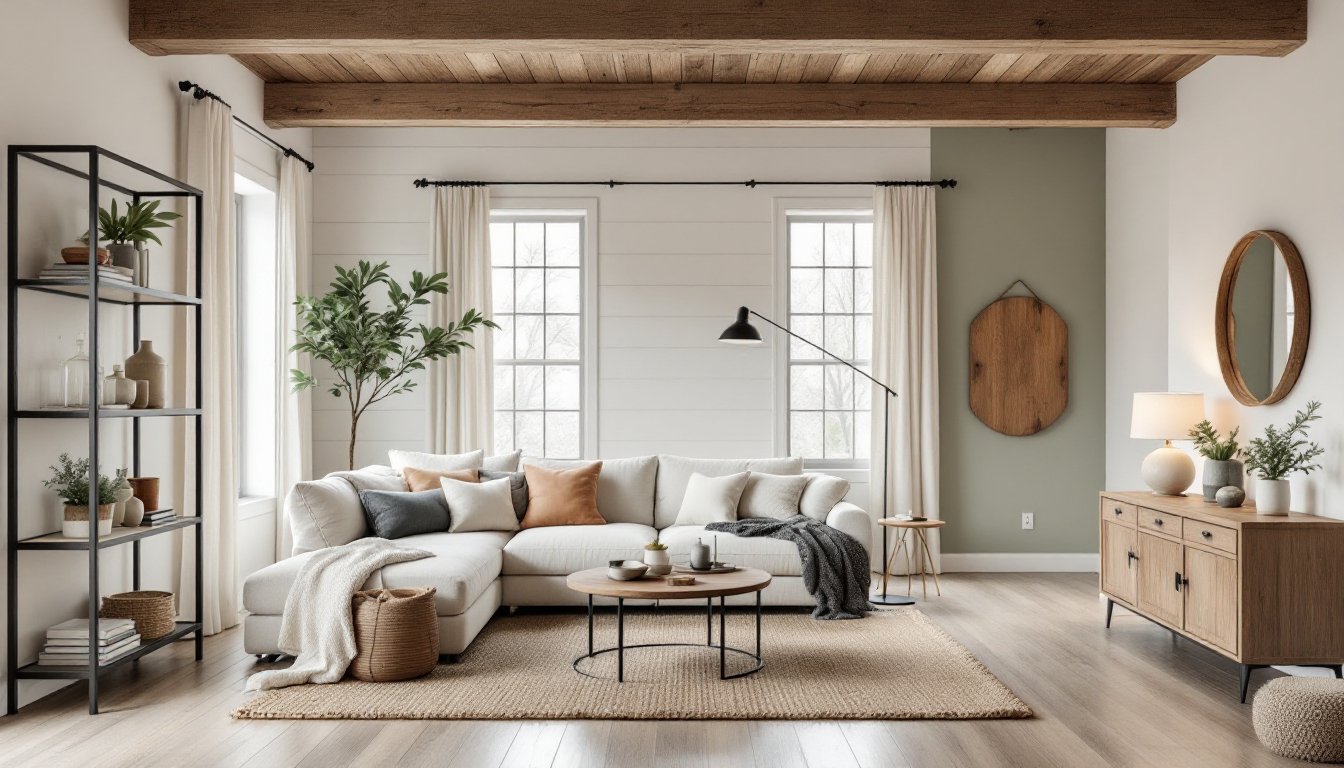
Living rooms are where the blend becomes most visible. Start with a neutral sectional or sofa in a natural fabric (linen or performance upholstery). Layer with throw blankets, pillows in coordinating solids and subtle patterns, and a larger-scale area rug in natural fibers, jute, sisal, or wool.
Furniture can mix eras and styles: a midcentury modern sideboard pairs with a farmhouse-style coffee table: a contemporary floor lamp stands beside a reclaimed-wood bookshelf. The key is restraint in quantity. Modern farmhouse isn’t about filling shelves with every vintage find, it’s about choosing pieces intentionally. Decor should include live plants, simple glassware, and a few well-chosen accessories, not clutter.
Accent walls work if kept subtle. A soft sage, warm gray, or creamy off-white can differentiate a space without competing for attention. If you prefer pattern, choose something with country French decor influences, a subtle toile or gingham, but keep it minimal. Industrial elements appear naturally: maybe visible ceiling beams, a metal bookshelf, or a black steel fireplace surround. The French countryside decor aesthetic blends in beautifully here, bringing European sophistication without excess.
Entryways and Gathering Spaces
Entryways set the tone immediately. A simple bench in wood or painted white, paired with neutral cushions and hooks for coats, feels both functional and inviting. A narrow console table (wood or with metal legs) holds a simple tray, a vessel for keys, and maybe a small potted plant. Flooring might be original hardwood, reclaimed-look tile, or concrete polished smooth, all support the aesthetic. Lighting should be warm and welcoming, achieved through simple sconces or a small pendant fixture.
Gathering spaces, whether a dining room or breakfast nook, benefit from the bold statement of a large wood table (either genuine reclaimed or a quality reproduction) paired with contemporary seating. Benches on one side, upholstered chairs on the other, mix materials and keep formality low. A simple rug anchors the space: a pendant fixture or cluster of small industrial lights hangs above. Wall decor stays minimal: perhaps an oversized mirror in a simple frame, or open shelving displaying platters and serveware.
Conclusion
Modern farmhouse decor works because it respects both heritage and contemporary life. You’re not pretending to live in a 19th-century homestead, you’re borrowing its honesty and pairing it with the comfort and function your actual life demands. Start with neutral bones, layer in authentic materials, embrace texture through contrast, and choose every piece with intention. The result is a home that feels both timeless and completely present, comfortable for how you actually live now.