

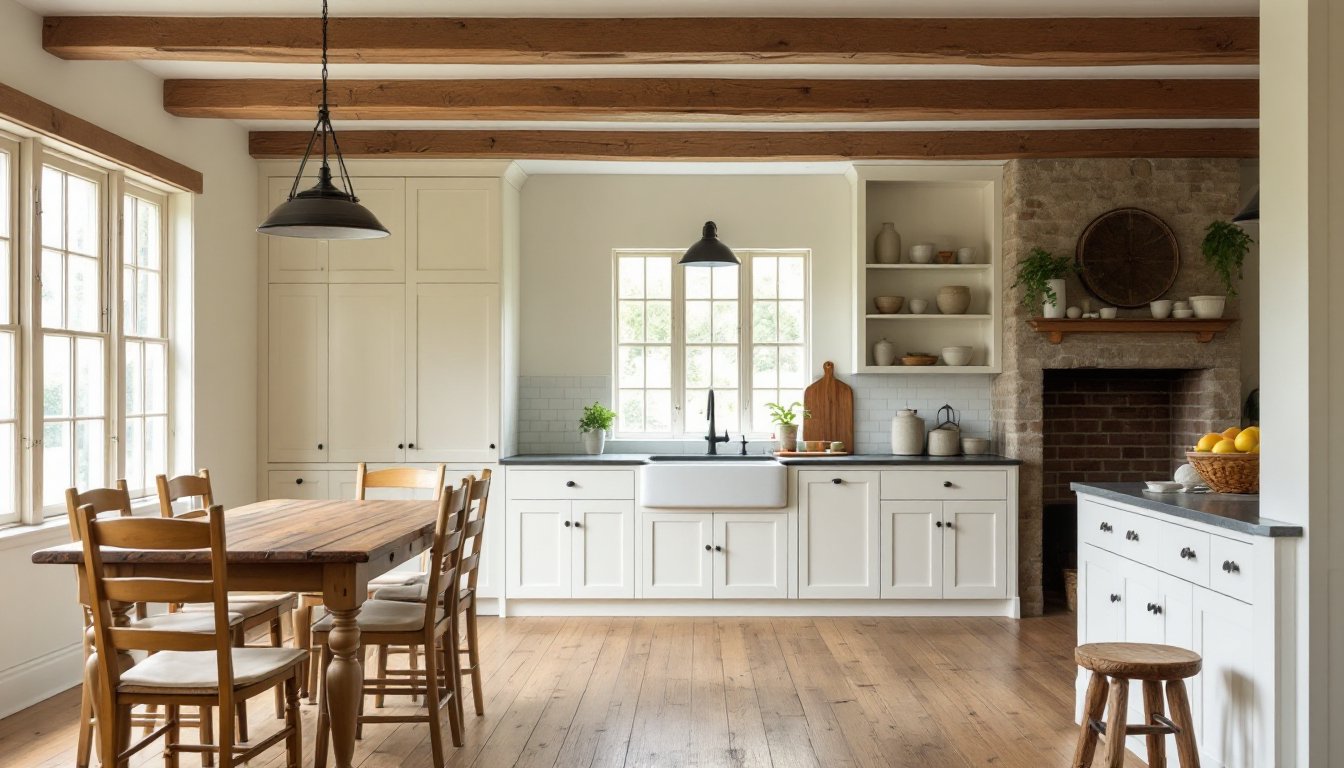
Old farmhouse interiors carry a quiet confidence, they don’t chase trends, they set the tone. Worn plank floors, exposed beams, and furniture that’s earned its patina create spaces that feel both grounded and welcoming. Whether you’re restoring a century-old structure or building farmhouse character into a newer home, the approach stays consistent: honor natural materials, embrace imperfection, and let function guide form. This isn’t about distressing every surface or hanging a “Gather” sign. It’s about understanding the bones of the style and making deliberate choices that deliver warmth without veering into theme-park territory.
Key Takeaways
- Old farmhouse interior design prioritizes honest materials and authentic details over trendy aesthetics, honoring the style’s working-home origins rather than creating theme-park imitations.
- Natural materials like wide-plank wood flooring, stone, reclaimed lumber, and aged metal finishes form the foundation of farmhouse style, with imperfections and patina adding character rather than detracting from it.
- Vintage and reclaimed pieces unified by visible joinery and honest construction create authentic farmhouse spaces far better than new reproductions, with at least 30–40% of a room’s furnishings ideally being genuine older pieces.
- Farmhouse kitchen design balances utilitarian functionality with gathering-space appeal through features like apron-front sinks, open shelving with proper weight support, and durable countertops like butcher block or soapstone that age naturally.
- Living room layouts should anchor around a fireplace or wood stove with substantial, low-profile seating in durable fabrics, layered lighting that avoids modern recessed cans, and restrained wall treatments that let architectural details shine.
What Defines Old Farmhouse Interior Design?
Authentic farmhouse design grew from necessity, not nostalgia. The style emerged in rural working homes where every piece served a purpose and materials came from nearby sources, local lumber, stone fieldwork, hand-forged hardware. That pragmatic foundation still informs the aesthetic today.
Core characteristics include:
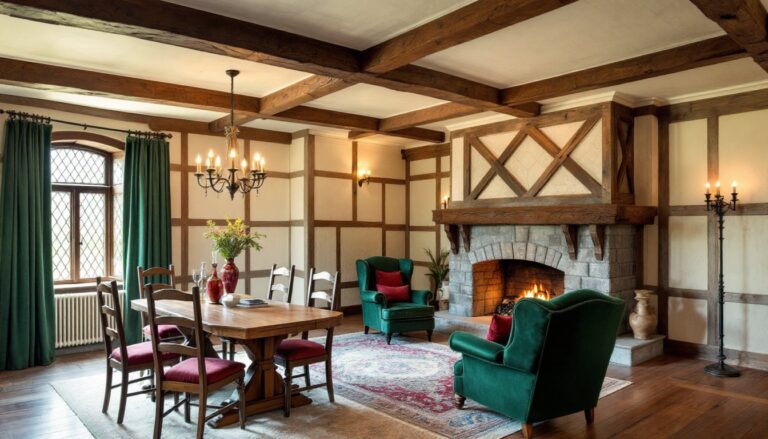
- Visible structure: Exposed ceiling joists, load-bearing posts, and shiplap walls aren’t decorative choices, they’re the building showing its work.
- Muted, earthy palettes: Whites, creams, soft grays, and weathered wood tones dominate. Accent colors pull from nature, sage, rust, navy.
- Utilitarian fixtures: Farmhouse sinks, simple cabinetry with inset or shaker-style doors, and hardware that prioritizes grip over ornament.
- Imperfection as character: Uneven plaster, nail holes in reclaimed boards, and slightly off-square doorways aren’t flaws to hide.
Modern farmhouse design often leans too clean, losing the lived-in quality that makes the style work. Authentic old farmhouse interiors show age without looking neglected. Think patina, not decay.
If you’re working with an actual older structure, respect existing architectural details, original trim profiles, window casings, door hardware. Replacing these with big-box reproductions strips away the specific history that gives a farmhouse its soul. When updates are necessary, match profiles and proportions to what’s already there. Many regional millwork shops can replicate historic trim if you provide a sample.
Essential Elements of Farmhouse Style
Natural Materials and Textures
Farmhouse interiors rely on materials you can see, touch, and identify. No synthetic finishes trying to mimic wood grain, the real thing, with its knots and variations, does the heavy lifting.
Wood forms the foundation. Wide-plank flooring (6″ to 12″ face width) in oak, pine, or reclaimed barn wood sets the stage. If original floors exist but are damaged, consider a sand-and-refinish rather than replacement. You’ll preserve the wear patterns and nail holes that tell the home’s story. For new installations, skip polyurethane in favor of penetrating oil finishes or hard wax oils, they let the wood breathe and age naturally. Expect to reapply every few years, but the matte, hand-rubbed look is worth the maintenance.
Stone and brick add textural weight. Fieldstone fireplace surrounds, brick hearths, or soapstone counters bring thermal mass and visual heft. If your home lacks these features, a salvaged mantel or limestone sink can deliver similar impact without major construction.
Textiles soften hard surfaces, linen curtains, wool throws, cotton ticking fabric for upholstery. These aren’t delicate materials. They’re workhorses that get better with washing. Avoid high-sheen fabrics like satin or anything with a chemical stiffness.
Metals lean toward aged finishes: oil-rubbed bronze, unlacquered brass (which develops patina over time), black iron, or brushed nickel. Chrome and polished brass read too contemporary. If you’re updating light fixtures or cabinet hardware, match the finish across the room but don’t obsess over perfect uniformity, farmhouses accumulated pieces over decades.
Vintage and Reclaimed Pieces
Authentic farmhouse style doesn’t come from a single shopping trip. It’s a mix of eras and sources, unified by honest construction and visible wear.
Reclaimed lumber works well for open shelving, ceiling beams, or accent walls. Verify the source, barn siding and industrial timbers often carry lead paint or chemical treatments. Kiln-dried, denailed stock costs more upfront but avoids the headache of prepping raw salvage. Standard reclaimed boards run 1″ thick (actual ¾”) to 2″ (actual 1½”), so plan fastening methods accordingly. Structural beams used decoratively can span 6×6 to 8×10 nominal.
When shopping pattern interior design elements, look for pieces with joinery you can see, dovetails, mortise-and-tenon, hand-cut dados. Mass-produced furniture with stapled joints and veneer won’t hold up or contribute the right character.
Vintage furniture to prioritize:
- Farm tables: Solid tops (not veneer) with breadboard ends or cleated construction. Expect 1½” to 2″ thickness.
- Pie safes and cupboards: Punched-tin panels, simple rail-and-stile doors. Confirm the piece is structurally sound, wobbly joints won’t survive daily use.
- Wooden chairs: Ladder-backs, Windsors, or simple spindle designs. Refinishing isn’t necessary if the existing finish is intact.
- Benches and stools: Three-legged milking stools, church pews, or schoolhouse benches add flexible seating.
Mixing vintage with new is fine, most people do. But the ratio matters. A room filled with new furniture plus one “vintage” sign reads forced. Aim for at least 30–40% actual older pieces or quality reproductions with honest joinery.
Architectural salvage yards and estate sales beat big-box “farmhouse collections” for authenticity and price. Bring a tape measure, check for active pests (look for exit holes and frass), and budget time for cleaning and minor repairs.
Room-by-Room Farmhouse Design Tips
Creating a Cozy Farmhouse Living Room
Living rooms in old farmhouses centered around the hearth, both for warmth and as a literal gathering point. Even if you’re working with electric or gas, the fireplace (or a wood stove) should anchor the layout.
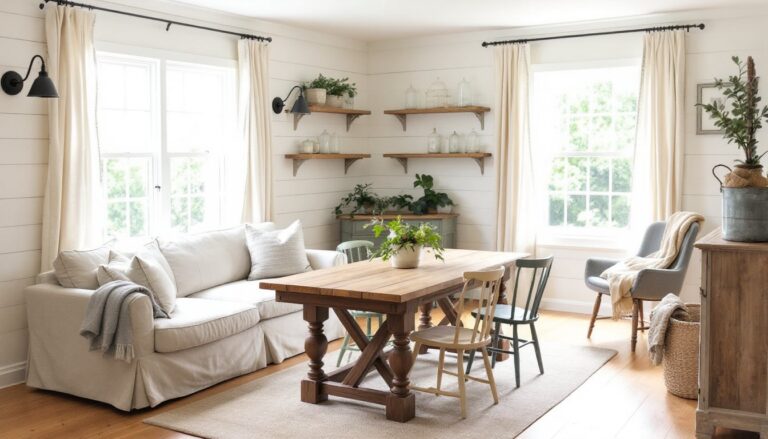
Seating should be low-profile and substantial. Deep-seat sofas (36″ to 40″ depth) upholstered in durable fabrics like canvas duck or linen work better than delicate settees. Slipcovers are practical, they’re washable and let you swap textures seasonally. Pair the sofa with vintage armchairs or a church pew for additional seating.
Many farmhouse living room designs incorporate oversized coffee tables, often reclaimed door tops or factory cart conversions. These need to be sturdy enough to handle feet, drinks, and stacks of books. A 2″ thick top and solid base aren’t just aesthetic choices: they’re functional requirements.
Lighting layers in stages. Start with ambient light from a ceiling fixture, wrought iron chandeliers, industrial pendants, or simple drum shades. Add task lighting with swing-arm sconces or table lamps near reading chairs. Skip recessed cans if possible: they’re a modern intrusion that disrupts the ceiling plane. If you’ve got exposed beams, consider running visible conduit or fabric-wrapped cord for fixtures, it respects the structure’s honesty.
Wall treatments in farmhouses show restraint. Flat or eggshell paint in warm whites (look for undertones of cream or gray, not stark blue-whites) lets architectural details stand out. Shiplap or beadboard wainscoting adds texture below the chair rail, typically installed 32″ to 36″ from the floor. If walls are plaster, don’t skim-coat out every imperfection, slight irregularity catches light and adds depth.
Window treatments should be simple. Linen or cotton panels on iron rods, café curtains on lower sashes, or no treatment at all if privacy allows. Farmhouses were built to maximize daylight: heavy drapes work against that intent.
Designing a Warm and Inviting Kitchen
Farmhouse kitchens balance work-surface utility with the reality that they’re gathering spaces. Layout follows classic work-triangle principles, but finishes and fixtures depart from contemporary trends.
Cabinetry leans toward unfussy profiles, shaker doors (flat center panel with square inside edge) or simple frame-and-panel construction. Inset doors (where the door sits inside the frame rather than overlaying it) deliver a more refined, period-appropriate look but require tighter tolerances and cost more to build or install. If budget’s tight, overlay shaker doors in a matte painted finish work fine.
Open shelving on at least one wall showcases everyday dishes and adds visual breathing room. Use 2″ thick wood shelves (actual dimension) on heavy-duty brackets rated for the load, dishes are heavier than most people estimate. A 36″ span of stoneware can hit 50–60 lbs. Mount brackets into wall studs (16″ on center in most construction), not just drywall anchors.
The farmhouse sink, an apron-front design that sits proud of the cabinet face, is iconic but requires planning. The apron width (typically 33″ to 36″) means you’ll lose drawer or door space in that base cabinet. Undermount or drop-in sinks offer similar capacity without the installation complexity. Fireclay and cast iron are traditional materials: both are heavy (60–100 lbs), so confirm your base cabinet can support the weight. Many modern farmhouses prioritize renovation principles aligned with interior design costs that balance authenticity with budget realities.
Countertops should be durable and simple. Butcher block (1½” to 2″ thick, edge-grain maple or walnut) ages beautifully and can be sanded and refinished. Seal it with food-safe mineral oil or a hard wax blend: skip polyurethane, which traps moisture and eventually fails. Soapstone and honed granite offer stone durability without the high-gloss finish of polished surfaces. Avoid quartz, it reads too engineered for the style.
Backsplashes stay minimal: white subway tile (3″ x 6″) in a running bond or brick pattern, beadboard panels painted to match trim, or no backsplash if walls are brick or stone. Grout should be unsanded for tile joints under ⅛” and sanded for wider spacing. Choose a neutral gray or buff color, bright white grout shows every spill.
For flooring, wide-plank wood remains the gold standard, but it’s not always practical in kitchens. If moisture or wear is a concern, consider large-format (12″ x 24″) porcelain tile in a matte finish that mimics wood or stone. Luxury vinyl plank is a budget alternative but doesn’t age the way real materials do, it just wears out.
Lighting in farmhouse kitchens mixes function and character. Pendant lights over an island should hang 30″ to 36″ above the counter (measure to the bottom of the fixture). Look for metal shades, clear glass globes, or simple wire cages. Under-cabinet lighting is practical but should be LED strip or puck lights on a dimmer, not glaring halogens.
Appliances present a challenge. Vintage ranges (restored O’Keefe & Merritt or Chambers models) look the part but may lack modern safety features and even heat distribution. If you go this route, budget for professional restoration, these aren’t plug-and-play. Most people compromise with modern ranges in neutral finishes (white, black, or stainless) and add character elsewhere.
Many rural renovation projects benefit from guidance found through resources on classic home restoration, especially when dealing with older structures that require careful updates. Open shelving, vintage hardware, and a well-worn farm table as an island alternative deliver authenticity without requiring a museum-piece stove.