
Every room you walk into tells a story through shapes, whether it’s the square corners of a dining table anchoring the space, the arc of a pendant light drawing your eye upward, or the triangular pitch of a vaulted ceiling creating drama. Shape isn’t just what furniture looks like: it’s the underlying geometry that dictates how a room feels. Get the shapes right, and even mismatched hand-me-downs can feel intentional. Ignore them, and a professionally decorated space can still feel off. This guide breaks down how to read, balance, and deploy shape in any room you’re tackling.
Key Takeaways
- Shape in interior design acts as the skeleton of a design scheme, influencing how your brain processes a room before you consciously notice color or texture.
- Circles and curves create flow and softness, encouraging movement and social interaction, while rectangles provide structure and stability—balancing both prevents spaces from feeling either rigid or chaotic.
- Triangles inject energy and movement when used as intentional accents, but should be deployed sparingly to avoid visual chaos.
- Apply the 60-30-10 rule to shape balance: let one shape dominate 60%, a secondary shape support 30%, and accent shapes punctuate 10% of your design.
- Practical shape adjustments like swapping to round rugs, choosing curved lighting, or adding arched mirrors are low-commitment ways to immediately improve room cohesion.
- Shape interacts with proportion and scale—respect your room’s dimensions to avoid visual weight that feels oppressive or elements that disappear entirely.
Why Shape Matters in Interior Design
Shape does the heavy lifting in how your brain processes a room. Before you consciously notice color, texture, or even style, your eye is mapping geometry, edges, curves, repeating forms. It’s instinctive.
Think of shape as the skeleton of a design scheme. Rectangular furniture grounds a space and signals order. Circular elements soften transitions and encourage movement through a room. Triangular forms inject energy or direct attention. When shapes clash without intent, say, a room full of hard rectangles with one random organic blob of a chair, the space feels unfinished or confusing.
Shape also affects function. A round dining table fits more people in a tight space and eliminates sharp corners in a high-traffic kitchen. A low-profile rectangular sofa maximizes seating in a narrow living room. Designers and architects rely on these geometric principles when drawing floor plans, but DIYers can use the same logic when arranging furniture or choosing decor.
One more thing: shape interacts with proportion and scale. A massive square coffee table in a small room creates visual weight that can feel oppressive. A delicate round side table in a cavernous great room disappears. Getting the geometry right means respecting the dimensions you’re working with.
The Five Essential Shapes and Their Impact
Circles and Curves: Creating Flow and Softness
Circular and curved shapes introduce movement and approachability. They guide the eye around the room rather than stopping it at a corner. Use them to soften spaces dominated by architectural hard lines, think arched doorways, round mirrors, or curved-back dining chairs.
Round elements also encourage social interaction. A circular dining table has no “head,” which changes the dynamic compared to a rectangular one. Curved sectionals wrap around a conversation area, creating intimacy without walls.
In practice, circles and curves are forgiving in high-traffic areas. No sharp corners means fewer bruised shins and safer navigation for kids or older adults. Rounded furniture edges, bullnose countertop trim, and arched niches are classic examples. Contemporary designers often use freeform organic shapes, like a kidney bean coffee table or a sculptural pendant light, to add visual interest without the rigidity of geometric forms. Modern design blogs like Design Milk regularly showcase these flowing, contemporary pieces.
Squares and Rectangles: Building Structure and Stability
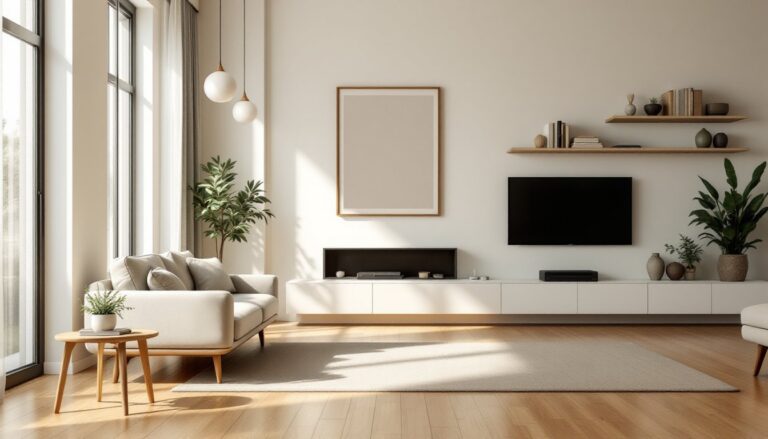
Squares and rectangles are the workhorses of interior design. Most rooms are rectangular. So are windows, doors, cabinetry, sofas, beds, and rugs. They’re efficient, stackable, and psychologically grounding.
Rectangular furniture reads as orderly and predictable, which is why it dominates traditional, transitional, and modern styles alike. A grid of square wall art, a bank of rectangular windows, or a run of shaker-style cabinet doors all reinforce structure.
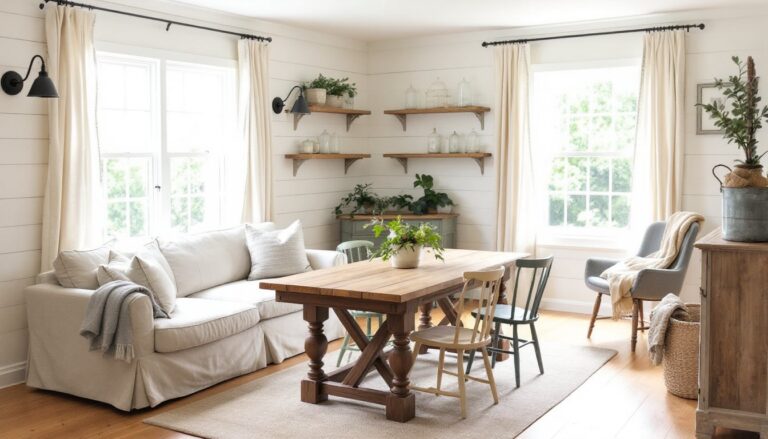
But too many right angles can feel sterile or institutional. Balance is key. If your built-ins, baseboards, door casings, and furniture are all rectilinear, introduce curves or softer shapes through textiles, lighting, or decor. A round rug under a rectangular dining table, for example, breaks up the grid without losing function.
One DIY-friendly application: picture ledges or floating shelves. Installing a series of narrow rectangular shelves creates strong horizontal lines that visually widen a room. Pair them with round vases or curved picture frames to keep the look from feeling too boxy.
Triangles: Adding Energy and Movement
Triangles are dynamic. They point. They create tension. And they’re less common than circles or rectangles, which makes them attention-grabbing when used intentionally.
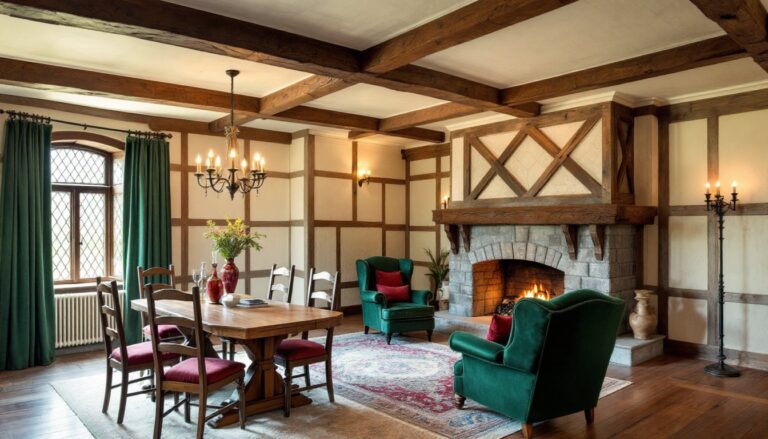
In architecture, triangular shapes appear as gabled roofs, A-frame structures, or cathedral ceilings. Those upward-pointing triangles draw the eye and create a sense of height and aspiration. Inverted triangles can feel precarious or edgy, useful if you want to inject a little risk into a safe space.
Triangular furniture and decor work best as accents. A tripod floor lamp, a tiered triangular shelf unit, or geometric wall art with strong diagonal lines all activate a room. Use them sparingly: too many competing diagonals can feel chaotic.
Triangular arrangements also matter. The classic design rule of grouping decor in triangular clusters, say, three candlesticks of varying heights, creates visual movement and balance. Your eye naturally tracks the points of the triangle, which feels more interesting than a flat, linear arrangement.
How to Balance Shapes for a Cohesive Look
A well-balanced room mixes shapes without letting any single geometry dominate to the point of monotony. Start by identifying your room’s dominant shape, usually defined by architecture. Rectangular room? Boxy furniture? You’ve got a rectilinear foundation. Now layer in contrast.
If the space is overwhelmingly angular, bring in curves through rugs, mirrors, upholstered pieces, or lighting. If it’s too soft and flowing, anchor it with structured rectangular furniture or strong horizontal lines like wainscoting or picture rails.
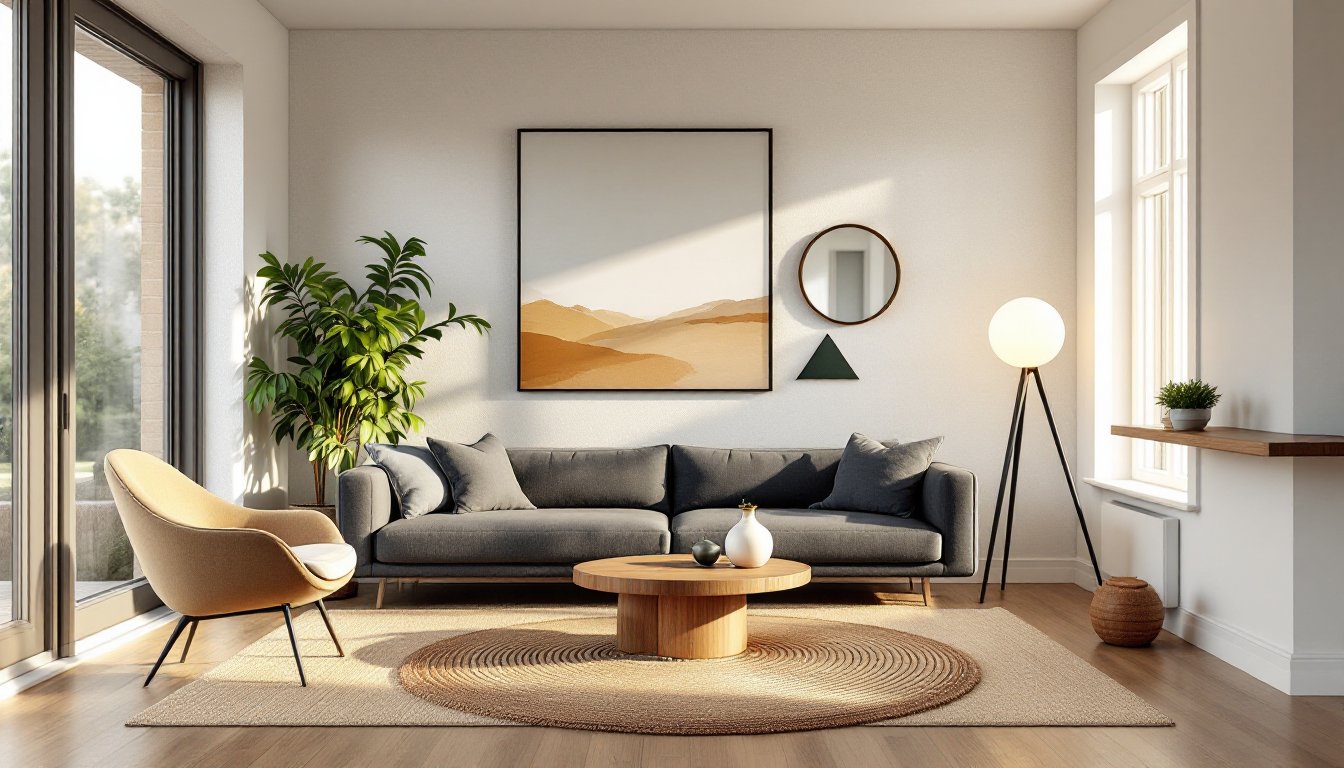
One reliable approach: the 60-30-10 rule applied to shape. Let one shape dominate (60%), a secondary shape support (30%), and an accent shape punctuate (10%). For example, rectangles might make up most of your furniture and architecture, circles appear in mirrors and a round coffee table, and a few triangular accents, like a geometric pendant or angled shelving brackets, add energy.
Watch for unintentional repetition. Rooms can accidentally become echo chambers of one shape. A living room with a rectangular sofa, rectangular coffee table, rectangular rug, rectangular TV console, and rectangular wall art starts to feel flat. Break it up. Swap the coffee table for a round one, hang an arched mirror, or introduce a curved floor lamp.
Another strategy: visual weight and placement. Heavier, denser shapes like squares feel grounded, so place them lower in the room, think a chunky rectangular ottoman or a wide credenza. Lighter, airier shapes like circles or open triangular forms can float higher, pendant lights, wall-mounted round mirrors, or a triangular wall shelf. This creates a natural vertical balance that feels stable without being static.
For spaces that need asymmetrical balance, mixing shapes is a powerful tool. A large rectangular sofa on one side can be balanced by a cluster of round side tables and a curved floor lamp on the other.
Practical Ways to Incorporate Shape into Your Space
Start with area rugs. A round rug under a square dining table immediately introduces contrast. A rectangular rug grounds a seating area but can feel predictable: try layering a smaller geometric or circular rug on top for dimension.
Choose lighting intentionally. Pendant lights, chandeliers, and sconces come in every shape imaginable. A drum pendant (cylindrical) feels neutral. A globe pendant (spherical) softens. A geometric cage pendant (angular) adds edge. Mix shapes across different fixtures in the same room, say, a round ceiling fixture with angular wall sconces.
Rethink mirrors. Mirrors are one of the easiest swaps. Rectangular mirrors are safe and architectural. Round mirrors add softness and work especially well over rectangular vanities or consoles. Arched mirrors bring in elegance and verticality. An oversized geometric mirror can become a room’s focal point.
Use architectural elements. If you’re renovating or have some carpentry skills, consider adding curved or angled elements. A barrel-vaulted ceiling or an arched pass-through transforms a boxy layout. Even simpler: swap standard door casings for arched or eyebrow trim. Install a curved shower rod instead of a straight one. Add a half-round window or transom.
Layer in decor and textiles. Throw pillows, artwork, and accessories are low-commitment ways to test shape. Circular throw pillows on a rectangular sofa. Triangular or hexagonal wall art in a gallery arrangement. Sculptural vases with organic, curved silhouettes on a rectilinear shelf. Many interior design trends highlight these layered, shape-forward styling techniques.
Play with furniture silhouettes. A curved sectional or a round ottoman makes a bigger statement than swapping out small decor. If buying new furniture isn’t in the budget, reupholster an old chair with a more interesting shape, or DIY a slipcover that softens angular lines. Modern spaces often feature surprising shapes that blend function and sculptural form.
Think about pattern as shape. Stripes are repeating rectangles. Polka dots are repeating circles. Chevron is a chain of triangles. The pattern on your wallpaper, upholstery, or rug reinforces geometric themes just as much as the physical form of an object.
Consider built-ins and millwork. Custom cabinetry lets you control shape at an architectural level. Shaker-style cabinet doors are rectangles within rectangles. Arched cabinet doors add curves. Open shelving with triangular brackets introduces angles. Even baseboard and crown molding profiles contribute to the room’s overall geometry.
Finally, don’t overthink it. Walk into the room, take a photo, and look at it on your phone. Your eye will quickly tell you if the space feels too busy, too flat, or unbalanced. Adjust one or two shapes at a time, and the room will start to click.