

When a family walks into an animal shelter, they’re making one of the biggest decisions they’ll make all year, choosing a new family member. But too many shelters still feel more like concrete bunkers than inviting spaces where connections happen. The physical environment directly impacts adoption rates, animal stress levels, and volunteer retention. This isn’t about making shelters look pretty for Instagram. It’s about designing functional spaces that reduce noise, minimize disease transmission, and create moments where a dog’s tail wag or a cat’s purr can seal the deal. Whether renovating an existing facility or planning a new build, thoughtful interior design choices make measurable differences in outcomes.
Key Takeaways
- Animal shelter interior design directly impacts adoption rates, animal stress levels, and volunteer retention by creating functional, welcoming environments.
- Strategic use of visual barriers, acoustic treatments, and proper ventilation in kennels significantly reduces stress and prevents disease transmission.
- Adoption areas should feature warm lighting (2700-3000K), clear sight lines to animals, and durable antimicrobial materials to create inviting spaces that facilitate human-animal connections.
- Multi-level cat housing and appropriately sized dog kennels with separate sleeping and elimination areas improve animal welfare and reduce behavioral issues.
- Well-designed shelter spaces with natural light, noise control, and ergonomic layouts reduce staff burnout, lower operating costs, and support volunteer retention.
- Thoughtful temperature zones, smell management through design, and accessible storage solutions ensure both animal comfort and efficient daily operations.
Why Thoughtful Interior Design Matters in Animal Shelters
Animal shelters operate under constraints most commercial spaces don’t face. They need to house animals safely, prevent disease spread, withstand daily cleaning with industrial disinfectants, and still feel welcoming enough that potential adopters want to spend time there.
Research shows that shelter design directly affects adoption rates. Brightly lit spaces with visible animals see higher foot traffic than facilities where kennels hide in back hallways. Color psychology matters too, warm, inviting tones in public areas create emotional connections, while calming blues and greens in animal housing reduce stress indicators like barking and pacing.
The financial case is equally compelling. Well-designed shelters reduce operating costs through better ventilation (fewer respiratory infections), durable materials (less frequent replacement), and efficient layouts (staff can monitor more animals with less walking). Improved home design concepts applied to shelters translate to animals spending fewer days in care, which means lower costs per adoption.
Beyond the numbers, shelter design affects staff morale and volunteer retention. Working in a loud, depressing environment leads to burnout. Spaces with natural light, acoustic treatments, and dedicated break areas keep teams healthier and more committed to the mission.
Essential Design Principles for Shelter Spaces
Balancing Functionality with Comfort
Shelter spaces must serve dual masters: animal welfare and human experience. Start with flooring choices, sealed concrete with epoxy coating provides durability and easy sanitization, but adding rubber mats or kennel decks in sleeping areas gives animals relief from cold, hard surfaces. These mats should be removable for pressure-washing.
Wall finishes need similar thinking. Fiberglass-reinforced panels (FRP) handle repeated disinfecting better than painted drywall, but they can feel institutional. Break up large FRP sections with painted accents in public corridors, or use sound-absorbing panels in strategic locations. Many modern shelters now use acoustic ceiling tiles rated for high-humidity environments, which dramatically cut noise without compromising cleanability.
Lighting deserves special attention. Animals need natural circadian rhythm support, aim for full-spectrum LED fixtures that can be dimmed to simulate day/night cycles. In adoption areas, use warmer color temperatures (2700-3000K) to create inviting atmospheres. Avoid flickering fluorescents: they stress both animals and humans.
Ventilation isn’t glamorous, but it’s critical. Follow HVAC guidelines requiring 10-15 air changes per hour in animal housing areas to control odors and airborne pathogens. Place supply vents to create gentle air movement without direct drafts on kennels.
Creating Stress-Free Environments for Animals
Visual barriers between kennels significantly reduce stress. Dogs housed where they can’t make constant eye contact with other dogs show calmer behavior. Use frosted panels, strategic half-walls, or even fabric curtains that staff can adjust based on individual animal needs.
Noise control requires a multi-pronged approach:
- Install acoustic baffles or cloud panels on ceilings in kennel areas
- Use solid-core doors instead of hollow-core to contain barking
- Add rubber gaskets to kennel gates to eliminate rattling
- Consider white noise or calming music systems, but keep volume low
Kennels should provide hiding spots. This seems counterintuitive in adoption facilities, but anxious animals need retreat options. A simple raised platform or cardboard box gives cats crucial control over their environment, which paradoxically makes them more adoptable by reducing fear behaviors.
Temperature zones matter more than many realize. Keep adoption areas at comfortable human temperatures (68-72°F), but animal housing can run slightly cooler, especially for dogs with thick coats. Provide heat lamps or heated beds for individual animals who need them rather than overheating entire rooms.
Smell management starts with design, not just cleaning protocols. Ensure floor drains have proper traps, use exhaust fans near litter areas, and choose porous materials sparingly. Materials with design patterns incorporated into facilities should prioritize air quality alongside visual appeal.
Key Design Elements for Different Shelter Zones
Reception and Adoption Areas
The front desk sets first impressions. Use durable commercial-grade materials but avoid the DMV aesthetic. A solid-surface countertop (Corian, quartz) withstands cleaning products and scratches better than laminate. Mount hand sanitizer dispensers at eye level, not on the counter where they get knocked over.
Create a clear sight line from reception to adoption rooms. Potential adopters should see or hear animals immediately upon entering. If that’s not possible architecturally, use large-format photos or digital displays showing current residents.
Seating in waiting areas should be commercial-grade with antimicrobial upholstery. Skip fabric: go with vinyl or faux leather that can be quickly wiped down between visitors. Anchor furniture to prevent rearrangement, traffic flow matters when people are walking nervous dogs.
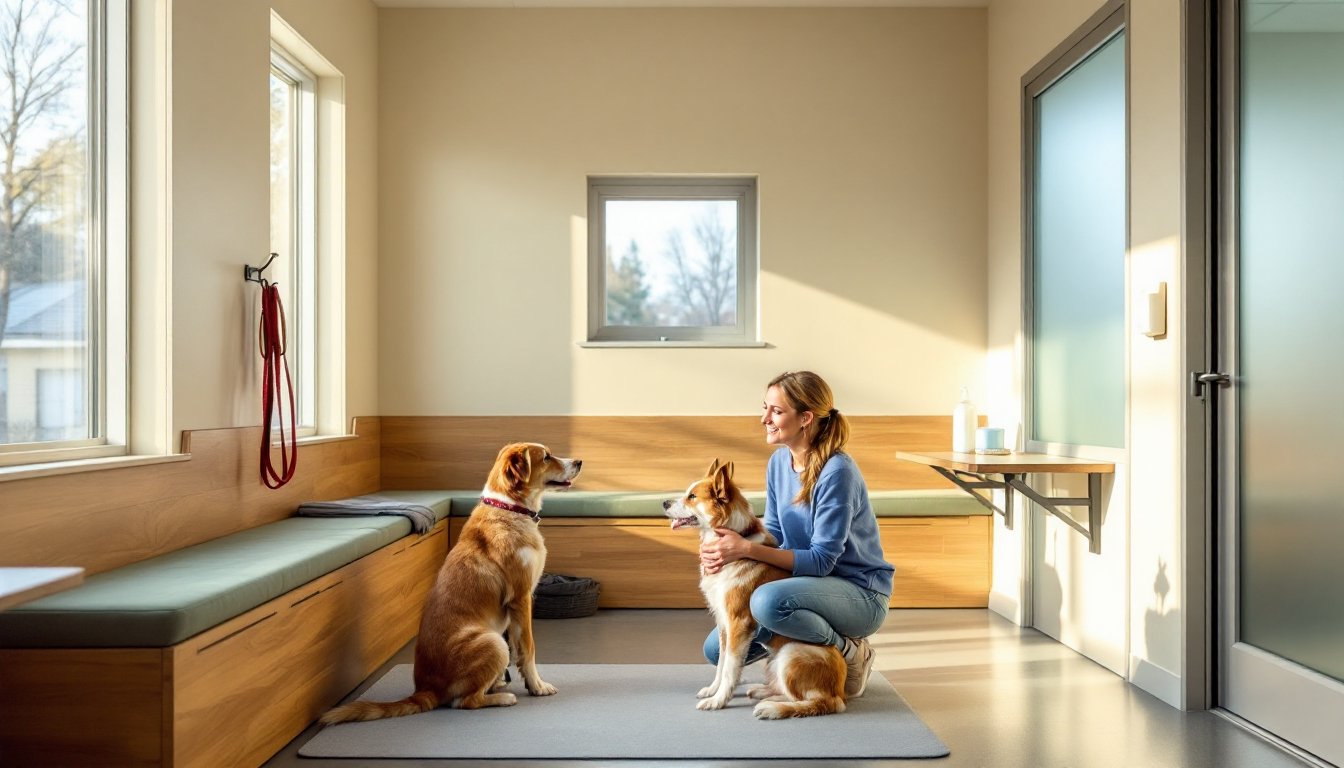
Meet-and-greet rooms need specific features:
- 6×8-foot minimum for small dogs or cats: 8×10 for large dogs
- Non-porous flooring that extends 4 inches up walls (integral cove base)
- Separate doors for humans and animals to prevent escapes
- Built-in benches along one wall (easier to clean than chairs)
- Hooks at 5 feet for leashes and belongings
- Neutral paint colors, grays or soft tans that don’t photograph poorly
Adoption counseling desks should have locking storage for paperwork and payment processing. If space allows, use low partitions rather than floor-to-ceiling walls, which improves staff sight lines for safety monitoring.
Kennel and Housing Spaces
Kennel sizing follows local codes, but bigger is always better when budget allows. Minimum dog kennel dimensions typically start at 4×6 feet for small dogs, scaling up to 5×10 feet for large breeds. Provide separate spaces for sleeping and elimination whenever possible.
Guillotin-style kennel gates work well for security, but fully welded construction outlasts bolted assemblies. Look for powder-coated finishes rated for animal use, cheaper paint chips quickly. Gates should have smooth edges and no gaps larger than 2 inches to prevent paw injuries or escapes.
Cat housing needs different thinking. Multi-level condos with hiding boxes on lower shelves and perches above create vertical territory, which reduces stress in group housing situations. Use 18-gauge stainless steel for longevity, it’s expensive upfront but outlasts everything else.
Waste management infrastructure often gets shortchanged. Install floor drains every 10-12 feet in kennel runs, with at least 2% floor slope toward drains. Use commercial-grade hose reels mounted 4-5 feet high to prevent trips. Include a dedicated mop sink and chemical storage in each housing area.
Lighting in kennels should be on separate circuits so staff can adjust brightness in different rows without affecting all animals. Include dimmer switches or multi-level switching to support varied schedules.
Storage within animal areas prevents clutter. Wall-mounted bins for toys and supplies keep floors clear for cleaning. Use clear containers so staff can identify contents without opening everything. Avoid storing food in animal areas, it attracts pests and intensifies smells.
Learning principles from professional interior design training helps shelter planners understand how spatial layouts affect behavior and emotion. Similarly, working with designers experienced in creating functional spaces ensures shelters meet both practical and psychological needs. Resources covering interior trends increasingly include animal welfare facilities as these spaces gain recognition for their specialized design requirements.
The most successful shelter designs put animals and adopters on equal footing. When someone can comfortably imagine their life with a pet they’ve met in a calm, clean environment, adoption becomes the natural next step.