

Country French style decor has become a go-to aesthetic for homeowners seeking warmth, sophistication, and a touch of Old World charm. Unlike the pristine, formal interiors of Parisian apartments, country French design celebrates lived-in elegance, think weathered wood, soft textiles, and a layered approach to furnishings that feels inviting rather than rigid. This style blends French refinement with rustic practicality, making it approachable for DIYers and seasoned decorators alike. Whether you’re drawn to maximalist home decor or prefer a more measured approach, country French principles adapt beautifully to any space. In this guide, you’ll learn how to source authentic materials, apply timeless color schemes, and tackle DIY projects that bring this European aesthetic to your home without the price tag of imported antiques.
Key Takeaways
- Country French style decor blends rural French aesthetic with lived-in elegance, emphasizing natural materials, muted colors, and layered textures that feel inviting rather than formal.
- Build your foundation with warm, earthy neutrals like cream, soft whites, and pale yellows, then layer in secondary muted tones such as sage green, dusty rose, and terracotta for personality without harshness.
- Prioritize natural, aged finishes in reclaimed wood, stone, wrought iron, and natural textiles like linen and wool to create authentic country French interiors that develop patina gracefully.
- DIY projects like distressing furniture, stenciling details, and building whitewashed headboards cost significantly less than antiques while building genuine connection to your space.
- Apply country French principles room-by-room starting with one space: use open shelving in kitchens, layered linen bedding in bedrooms, and curated vintage collections in living areas that feel organic to your lifestyle.
- Success with country French style comes from balancing intentional design with comfort and livability—avoid making your home feel like a museum installation by choosing pieces and finishes that serve both function and beauty.
What Is Country French Style?
Country French style decor draws from the rural estates and farmhouses of Provence, Brittany, and the French countryside rather than urban design centers. It’s characterized by a relaxed formality, structured enough to feel intentional, casual enough to live in comfortably. The aesthetic emphasizes natural materials, muted color palettes, and a curated mix of vintage and new pieces that tell a story.
Unlike maximalist home decor, which layers patterns and colors boldly, country French design uses restraint. But, it’s still abundant in texture and detail. Think whitewashed shutters paired with cream linens, terracotta tiles next to stone accents, and wrought-iron hardware softened by worn upholstery. The key is that every element serves both function and visual interest, nothing feels purely decorative or out of place. Farmhouse bedroom decor ideas often lean heavily on country French principles: simple wooden bed frames, botanical prints, layered bedding, and soft ambient lighting create a serene sleeping space that’s anything but bland.
Essential Color Palettes and Materials
The country French palette centers on warm, earthy neutrals: cream, soft whites, pale yellows, warm grays, and warm browns. These serve as your base, allowing textures and secondary accent colors to shine without overwhelming the space.
Secondary colors, muted blues, sage greens, dusty roses, and terracotta, add personality without harshness. These aren’t bright or saturated: they’re the colors you’d see in a Provençal sunset or an aged garden gate. Accent colors appear sparingly through textiles, pottery, or painted furniture pieces.
For materials, prioritize natural, aged finishes. Reclaimed or distressed wood dominates, from flooring to ceiling beams to furniture. Stone, whether limestone, travertine, or slate, appears in kitchen counters, hearths, or accent walls. Wrought iron, cast iron, and aged brass hardware are essential. Textiles should be natural fibers: linen, cotton, wool, and occasionally jute. These materials weather gracefully, developing patina rather than appearing worn out. When sourcing farmhouse bedroom decor, look for linen bedding in ivory or soft taupe, wool throws, and cotton curtains that filter light softly rather than block it completely.
Key Furniture and Lighting Elements
Country French furniture prioritizes function and longevity over trend. Pieces are often substantial, heavy wooden tables, upholstered chairs with turned legs, and storage that serves daily life. Look for farmhouse bedroom decor ideas centered on simple bed frames in oak or cherry, often with decorative (but functional) carved details rather than ornate carving.
Upholstered seating should be relaxed: slipcovers in natural linen, button-tufted backs that soften over time, and legs that show wood rather than hide it. A good country French sofa looks comfortable enough to nap on, not precious enough to discourage use.
Lighting sets mood through layering. Overhead fixtures should be understated, wrought-iron chandeliers, simple pendant lights with cream or frosted shades, or restored vintage pieces. Avoid anything too shiny or contemporary. Table lamps with linen shades, wall sconces, and candlelight round out the scheme. The goal is warm, flattering ambient light rather than bright task lighting. In living areas and bedrooms, dimmer switches let you adjust intensity throughout the day.
DIY Tips for Authentic Accents and Accessories
Authenticity comes through small, handcrafted or vintage-sourced touches. Here’s where DIY effort pays dividends.
Painted Furniture: Distressing wooden pieces creates instant patina. Sand edges and high-traffic surfaces of a dresser or small cabinet with 120-grit sandpaper to reveal base color beneath topcoat. Use latex or chalk paint in soft colors (warm white, sage, dusty blue) and apply two thin coats rather than one thick coat to avoid brush marks. This technique works on anything from nightstands to kitchen chairs.
Stenciled Details: Apply simple botanical or geometric stencils to furniture fronts, wall borders, or even fabric pillows. Stencil cream paint or stain over linen or canvas for custom throw pillows that coordinate with your palette. Fix the stencil with painter’s tape and use a stencil brush (short bristles, stippled application) to avoid paint bleeding underneath.
Repurposed Textiles: Source antique linen napkins, tablecloths, or grain sacks and repurpose them as pillow covers or table runners. Hand-stitch seams using thread in complementary colors for visible, intentional detail. This isn’t about hiding imperfection: it’s about celebrating craftsmanship.
Ironwork Accents: Install simple wrought-iron curtain rods, corbels, or towel bars. These often require basic mounting into studs: use heavy-duty anchors if mounting between studs. This is straightforward with a power drill and the right fasteners.
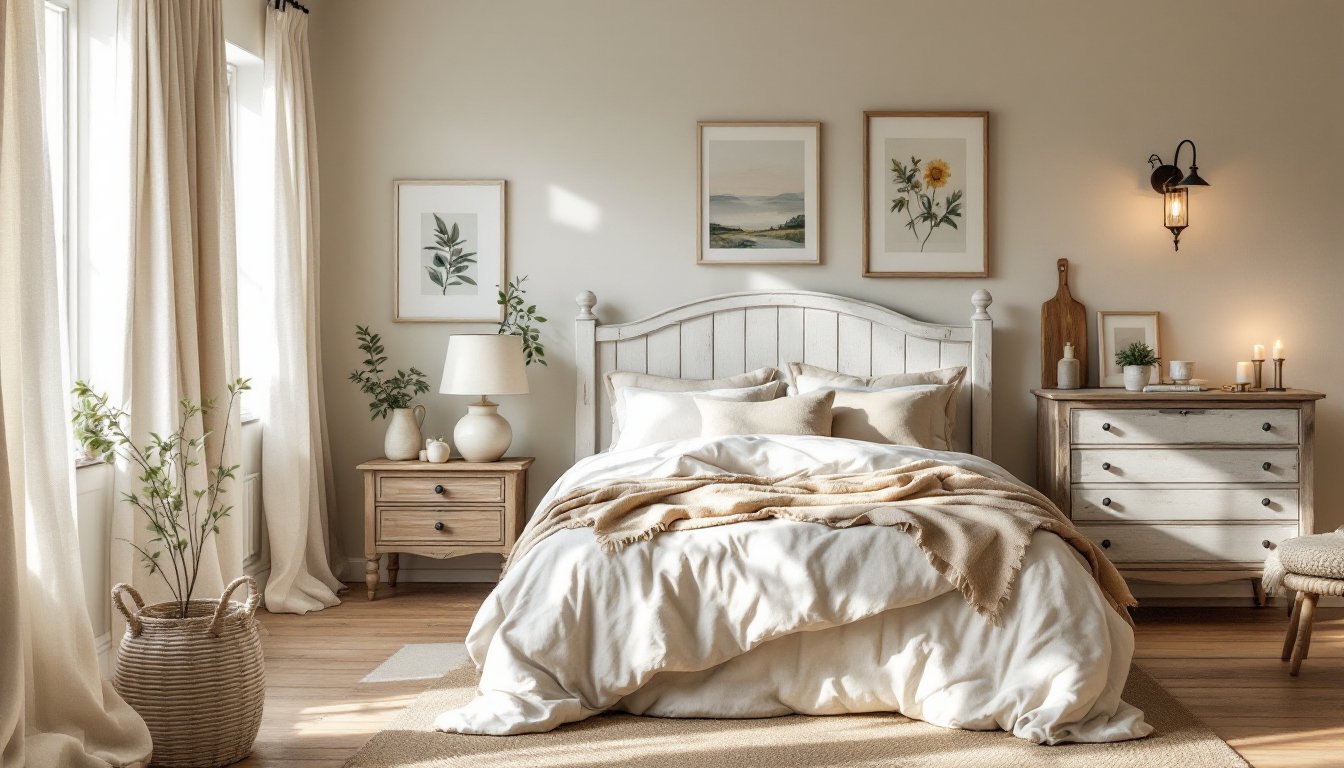
When tackling farmhouse bedroom decor, incorporate a simple headboard built from whitewashed tongue-and-groove boards. Frame an outline in 1×4 lumber, fill with 1×6 or 1×8 tongue-and-groove boards primed and painted cream, and mount directly to the wall studs using 2.5-inch screws into the framing. Finish with soft linen bedding and layered throws in natural fibers.
Room-by-Room Application Ideas
Kitchen and Dining Spaces
Country French kitchens center on open shelving displaying dishware, glass jars of dried goods, and vintage pottery. Install open shelves (or convert upper cabinets) at a comfortable height, typically 15 to 18 inches below eye level, using floating shelf brackets rated for your load. Pair open shelving with lower cabinetry in soft whites or warm creams, often with raised-panel doors or glazed finishes that show age gracefully.
Countertops should be stone, butcher block, or aged tile. Backsplashes often use individual subway tiles in cream or soft terra-cotta, laid in running bond (offset) pattern. Lighting over a kitchen island works best with multiple pendant fixtures in aged brass or iron, think 12 to 18 inches above counter height for visual proportion. A French country kitchen draws inspiration from rural French design where function meets understated beauty.
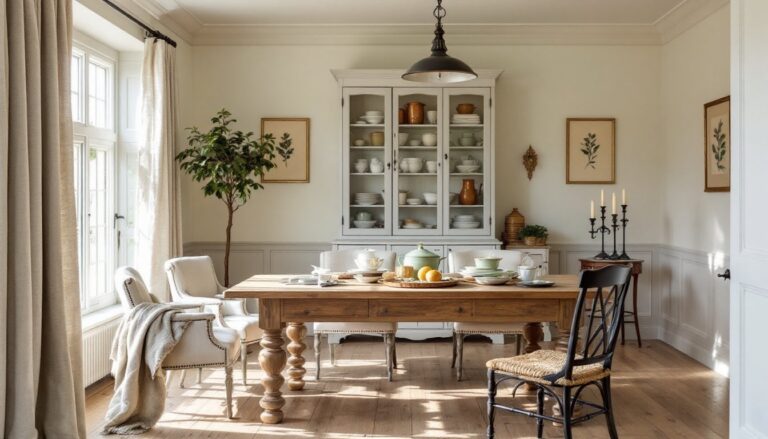
Dining tables are substantial, often farmhouse-style with turned legs and natural wood tops that show grain. Pair with mismatched but coordinated chairs, a mix of upholstered and rush-seat styles feels authentic and livable. Use a simple runner or layered linens as table covering rather than a formal tablecloth.
Bedrooms and Living Areas
Bedrooms anchor comfort with quality linen bedding in creams, soft whites, or pale grays, layered with wool blankets or quilts in muted tones. A simple wooden bed frame, or the DIY whitewashed headboard mentioned earlier, creates a focal point without demanding attention. Nightstands are typically low-profile wooden tables with a single drawer and a shelf below, topped with a simple lamp and small pottery vessel.
Living areas benefit from Southern Living’s approach to regional design, which shares country French principles: layered seating, multiple light sources, and natural textures. An area rug in jute or a soft wool blend grounds the seating arrangement. Walls remain largely neutral, with visual interest from artwork, botanical prints, vintage maps, or soft watercolor landscapes in simple wooden frames.
Accessories should tell a story: a collection of blue-and-white pottery on a shelf, vintage books stacked on a side table, fresh or dried flowers in a ceramic pitcher. Avoid clutter, but embrace visible, organized collections that speak to your interests. MyDomaine offers practical decorating strategies for balancing these layered compositions in any room. The goal is a space that feels curated yet comfortable, beautiful without being precious.
<h2 id="” data-id=””>Bringing It All Together
Country French style decor succeeds when it feels organic to your home and life, not like a museum installation. Start with your foundation: commit to a neutral base, invest in quality wood and natural textiles, and add aged finishes intentionally. DIY projects, distressed furniture, custom headboards, stenciled details, cost far less than purchasing finished pieces and build genuine connection to your space.
The style adapts to any climate, architectural style, or budget. Whether you’re decorating a bedroom, kitchen, or entire home, the principles remain consistent: authenticity, natural materials, warm colors, and a relaxed formality that invites daily living. Begin with one room, learn the fundamentals, and expand from there. Your country French home will develop its own character over time.