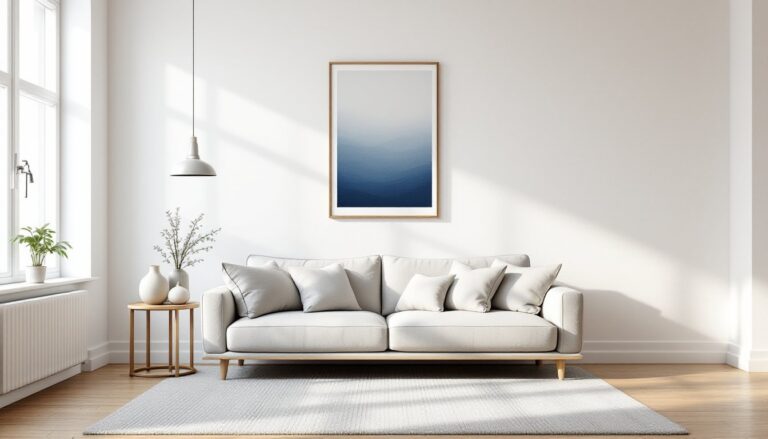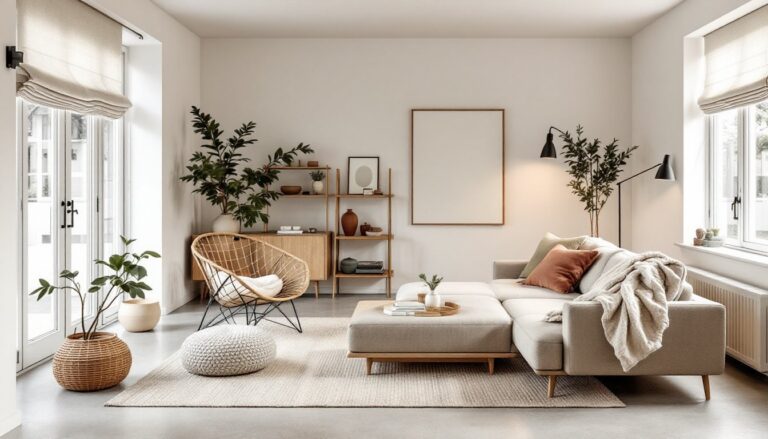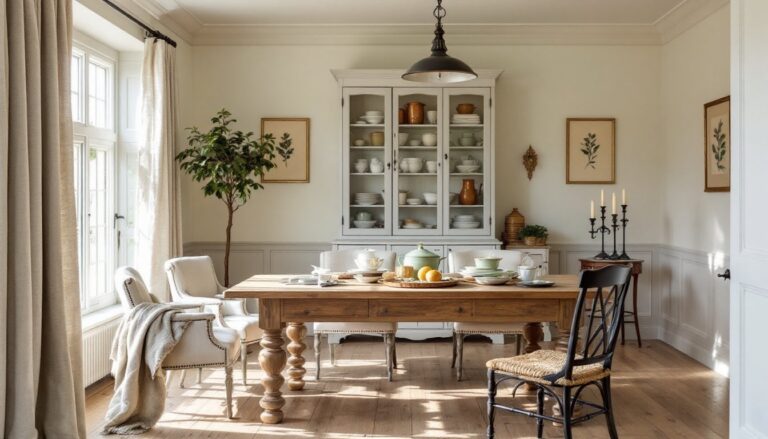


Modern farm decor blends the warmth and authenticity of farmhouse style with clean, contemporary design principles. This evolving aesthetic appeals to homeowners tired of overly ornate interiors and searching for spaces that feel both lived-in and intentional. Whether you’re renovating a country property or bringing rural character into an urban apartment, modern farmhouse offers practical solutions that don’t sacrifice style. By combining rustic elements with streamlined furniture and neutral palettes, you can create a home that’s genuinely inviting rather than Pinterest-perfect. This guide walks you through the fundamentals and practical steps to achieve modern farm decor in your own space.
Key Takeaways
- Modern farm decor combines honest, rustic materials like reclaimed wood and natural fabrics with clean contemporary design to create spaces that are both authentic and intentional.
- Neutral color palettes of whites, creams, grays, and warm blacks form the foundation, with accent colors applied sparingly to prevent visual clutter in your modern farmhouse.
- Texture and contrast—such as smooth walls against rough wood or light cabinetry against dark countertops—prevent modern farm decor from feeling sterile or monotonous.
- Prioritize functional, quality pieces with clean lines and solid construction, ensuring every item serves a purpose rather than existing purely for decoration.
- Edit ruthlessly by displaying curated collections and removing items you cannot justify, as modern farmhouse design thrives on intentionality and restrained styling.
What Is Modern Farmhouse Style?
Modern farmhouse style emerged as a reaction against overly designed, fussy interiors. It takes the honest simplicity of traditional farmhouses, think weathered wood, vintage finds, and functional layouts, and strips away the antiquated trappings. The result is a home that feels authentic without looking like a museum exhibit or a thrift store.
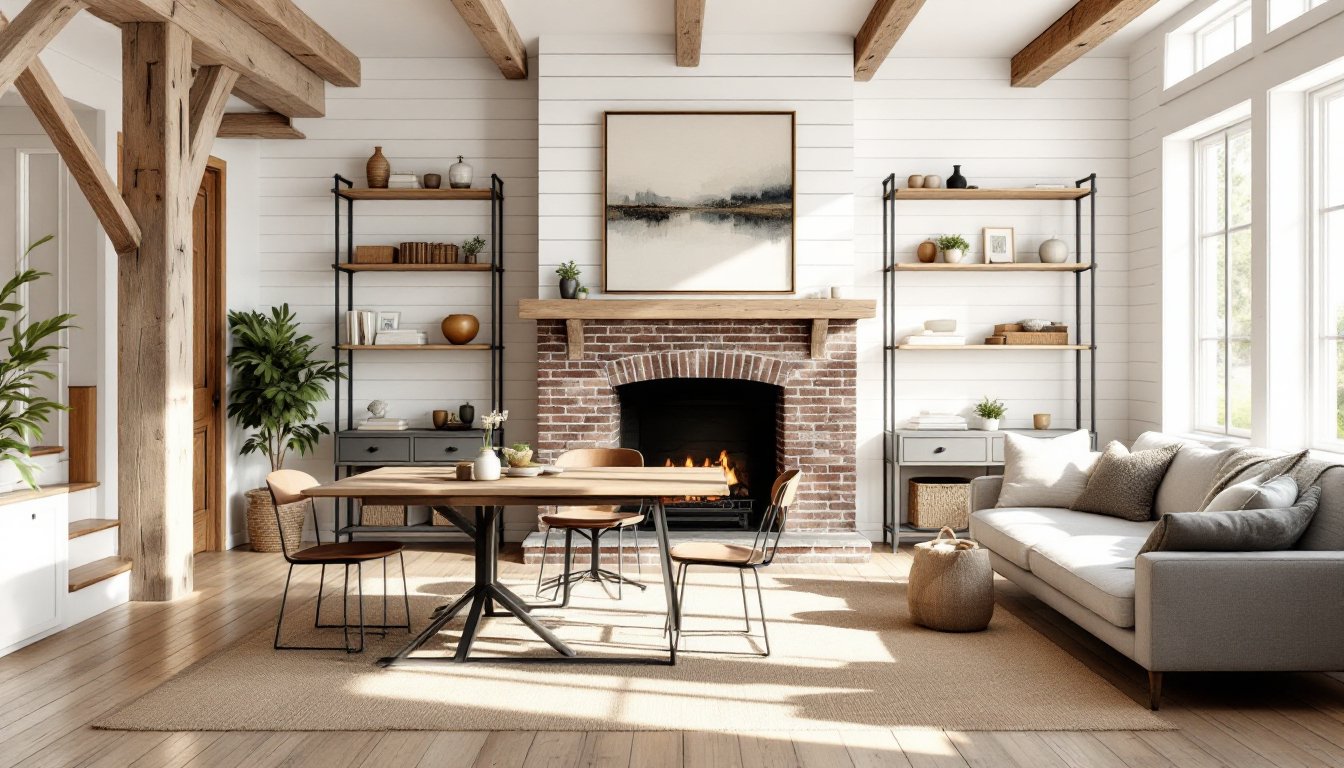
At its core, modern farm decor respects the bones of a building. Exposed beams, original hardwood, stone fireplaces, and large windows stay visible and celebrated rather than hidden. Simultaneously, it introduces contemporary elements: minimalist hardware, open shelving without clutter, and a restrained color story. The farmhouse and modern decor blend works because both prioritize function over flash.
Country French decor influences modern farmhouse, too, think toile fabrics, soft blues, and provincial charm, but modern versions edit out the heavy pattern-mixing. The farmhouse decor modern aesthetic cuts through nostalgia and delivers spaces where you’d actually want to cook dinner or sit with a book, not just photograph for social media. Modern industrial interior design shares this respect for honest materials, though it leans harder into metal and concrete where farmhouse leans into wood and textiles.
Key Design Principles And Elements
Several principles anchor modern farm decor and keep it from looking either too trendy or too dated.
Materiality and Authenticity form the foundation. Real wood, not laminates, should dominate. This includes reclaimed barn wood, wide-plank flooring, and chunky timber beams. Metal appears as hardware, lighting fixtures, and accents, but in matte black or oil-rubbed bronze finishes, not shiny or ornamental. Stone, brick, and natural fabrics (linen, cotton, wool) reinforce that honest, touchable quality.
Neutral Color Palettes keep rooms feeling calm and cohesive. Whites, creams, soft grays, and warm blacks form the backbone. Accent colors appear sparingly, a sage green wall, a rust-toned textile, a muted blue in a kitchen, but they never overwhelm. This restraint is what separates modern farm decor from the chaotic “farmhouse” look that clutters every surface.
Negative Space and Intentional Styling matter enormously. Open shelves should display only items you use or genuinely love, not every pottery barn find you own. Farmhouse interior design guides emphasize curated collections over abundance. Walls should breathe: rooms shouldn’t feel packed.
Symmetry and Proportion bring visual order. A fireplace flanked by built-ins, symmetrical pendant lights over a kitchen island, matching nightstands, these grounding elements make spaces feel stable and intentional rather than collected haphazardly.
Essential Design Tips For Success
Texture, Color, And Contrast
Texture prevents modern farmhouse from feeling sterile. Layer different finishes: smooth plaster walls against rough-hewn wood shelving, soft linen upholstery beside leather accents, matte paint next to glossy hardware. A fireplace surround of reclaimed brick, whitewashed shiplap, or stacked stone adds visual interest without pattern.
Color introduces personality through restraint. Rather than painting all walls white (which reads as blank, not intentional), choose one accent wall or pick a soft, warm neutral like warm white or greige. A modern home decor approach often uses a single secondary color, muted blue-gray, soft sage, or warm taupe, applied to built-ins, exterior trim, or a single room. This signals purpose without chaos.
Contrast creates visual hierarchy. Pair light walls with dark-stained wood flooring. Use white cabinetry against dark countertops. Display dark-framed artwork on light walls. This interplay keeps rooms dynamic and prevents the “all beige” flatness some farmhouse interiors suffer.
Furniture, Rugs, And Functional Pieces
Furniture should prioritize clean lines and solid construction over ornamental details. A wooden dining table with a simple apron (the framework beneath the top) works better than one with turned legs or carved edges. Metal-frame beds, straight-leg sofas, and understated case goods anchor the room without visual clutter.
Rugs add warmth and define zones without overwhelming. A neutral jute or wool rug under the kitchen table, a soft natural-fiber runner down a hallway, or a cream-colored rug in the living room softens hard floors and grounds furniture groupings. Avoid busy patterns: let texture do the work instead.
Functional pieces serve double duty. Open shelving in the kitchen stores cookbooks and everyday dishware stylishly. A wooden ladder leans against a wall for display or blanket storage. Metal bins organize mudroom clutter while looking intentional. This is where modern farmhouse truly shines, nothing exists just for looks: everything earns its place through use.
Decorative Accents And Artwork
Accents should feel collected, not decorated. Vintage finds, an old watering can, a wooden breadbox, galvanized steel buckets, add character if grouped intentionally. Display three or four objects together on a shelf rather than scattering one here and one there. This curation signals confidence and intention.
Artwork keeps things contemporary. Black-and-white photography, simple line drawings, or abstract pieces in muted tones work far better than fussy botanical prints. A single statement piece, a large abstract canvas or a series of three matched frames, above a sofa or mantel anchors the room. Modern design inspiration often features minimalist or monochromatic art that complements rather than competes.
Lighting balances ambiance with function. Pendant lights with simple metal shades, lantern sconces, and understated chandeliers fit modern farmhouse perfectly. Edison-style bulbs add warmth without kitsch. Task lighting over kitchen islands and reading areas proves these fixtures do real work, not just decoration.
Textiles introduce softness without pattern overload. A chunky knit throw draped over a sofa, linen curtains, a faded kilim pillow (one, not five), and a wool area rug create comfort without visual cacophony. Stick to a tight color palette, creams, grays, soft whites, perhaps one accent color, and let texture variations drive visual interest.
Bringing It All Together
Modern farm decor succeeds when every element serves a purpose. Start by identifying your room’s bones: existing wood tones, natural light, architectural features. Build your design around these constants rather than against them. If you have honey-toned hardwood, lean into warm neutrals and natural wood tones. If light floods the room, darker accents won’t feel heavy.
Prioritize structural elements, flooring, paint, major furniture, before accessorizing. Commit to your neutral palette first, then layer in secondary colors and textures incrementally. It’s easier to add a sage green wall or rust-toned lamp than to repaint everything later.
Edit ruthlessly. Modern farmhouse thrives on restraint. If you can’t articulate why an item belongs, it probably doesn’t. Quality pieces that last decades matter more than trendy fills. A solid wood dresser, a genuine leather armchair, real plaster walls, these feel intentional and age beautifully.
The farmhouse and modern decor blend works because it respects both authenticity and clarity. You’re not fighting your home’s character or drowning it in styling: you’re amplifying what’s honest and useful about it. That’s the promise of modern farm decor, a home that’s genuinely livable, effortlessly stylish, and unmistakably yours.