

Farmhouse decor is no longer just for rural properties, it’s become a go-to aesthetic for homeowners who crave warmth, authenticity, and a break from polished minimalism. Whether you’re drawn to the weathered charm of an actual old farmhouse or the clean lines of modern farmhouse style, this look rewards smart planning and honest material choices. The key difference between farmhouse decor that feels genuine and Pinterest-perfect fantasy comes down to understanding the fundamentals: your color story, the right textures, and functional pieces that earn their space. This guide walks you through defining your farmhouse style, sourcing materials on a real budget, and tackling DIY projects that actually deliver the cozy, lived-in aesthetic without the renovation debt.
Key Takeaways
- Farmhouse decor thrives on authentic materials—real wood, natural fabrics, and vintage-inspired pieces—rather than polished perfection, making thrifted items and DIY finishes more valuable than brand-new furnishings.
- Define your farmhouse style upfront by choosing between modern farmhouse (clean lines, minimal accents) and traditional farmhouse (pattern-rich, layered abundance) to guide your color palette and material choices.
- Prioritize functional, quality basics like solid wood tables and durable sofas over decorative excess, and let intentional negative space and restrained accents define the warm, lived-in farmhouse aesthetic.
- Budget-friendly DIY projects—including shiplap accent walls, refinished thrifted furniture, and barn door installations—transform a room’s character for under $200 while cementing the authentic farmhouse look.
- Layer textures and materials deliberately: mix matte and polished finishes, pair old with new, and source accents from thrift stores and antique markets to avoid a showroom appearance.
Define Your Farmhouse Style
Farmhouse decor spans a spectrum, and nailing your version upfront saves time and money later. The two main branches are modern farmhouse and traditional farmhouse, and they pull in different directions aesthetically.
Modern Farmhouse Versus Traditional Farmhouse
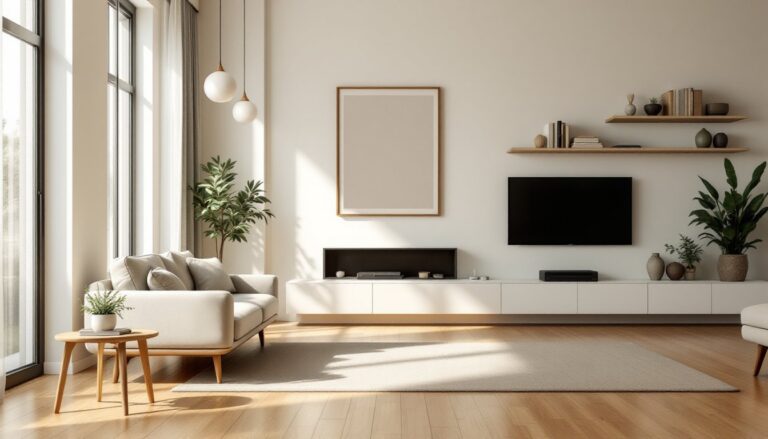
Modern farmhouse blends rustic elements, think exposed shiplap, reclaimed wood, vintage finds, with contemporary lines and minimalist restraint. You’ll see clean furniture silhouettes, neutral backgrounds, and intentional negative space. This style plays well with minimalist interior decor principles: less clutter, fewer colors, and a focus on material quality over ornament. Modern farmhouse suits homeowners who want the cozy factor without the visual chaos.
Traditional farmhouse, by contrast, embraces pattern, color, and collected-over-time abundance. It leans on gingham, florals, vintage kitchen accessories, and lived-in layering. The farmhouse house decor here feels like it evolved naturally rather than being curated. Both approaches are valid: pick the one that matches how you actually want to live, not Instagram aesthetics.
Your first step: walk through your home and note which elements already align with either direction. Do you own vintage kitchen tools that spark joy, or do white walls and breathing room make you relax? Honest answers steer you toward the right palette and furnishings.
Essential Color Palettes And Materials
Farmhouse color schemes work because they echo natural, time-worn materials. The traditional palette revolves around whites, creams, soft grays, and warm neutrals, the colors of whitewashed wood, aged plaster, and linen. Accent colors stay muted: dusty blues, sage greens, warm terracotta, or soft reds borrowed from barn paint traditions.
Modern farmhouse pushes toward ultra-neutral territory: crisp whites, pure grays, and natural wood tones without heavy stain. Accents are minimal and architectural rather than decorative. The farmhouse decor house aesthetic here relies on material texture, not color variety, for visual interest.
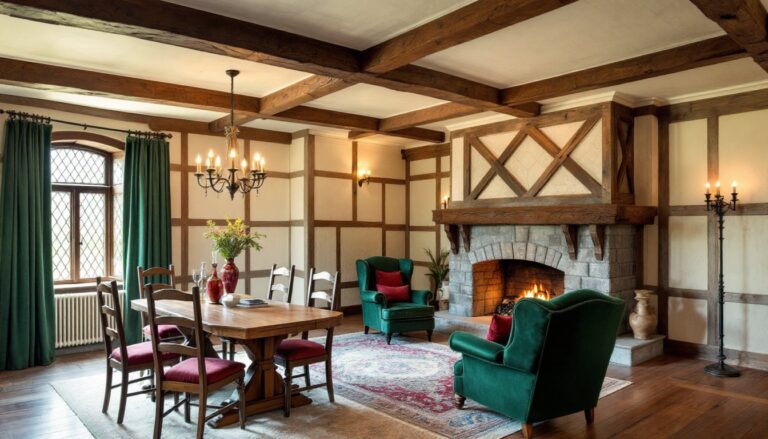
Materials anchor the whole look. Real wood (reclaimed or new distressed pieces) is non-negotiable: laminate pretenders read as budget theater. Old farmhouse interior design, exposed beams, and hand-forged hardware. If reclaimed wood costs more than your budget allows, buy new solid wood and age it: sand edges, stain it custom, or leave it raw and let time do the weathering.
Other key materials: wrought iron or vintage-look hardware, natural fabrics (linen, cotton, burlap, wool), stone or brick accents, and unfinished metals. Mix finishes intentionally, matte and polished together, old and new side by side, to avoid the showroom look. Modern farmhouse style often, creating visual depth without overload.
Furniture And Layout For Farmhouse Spaces
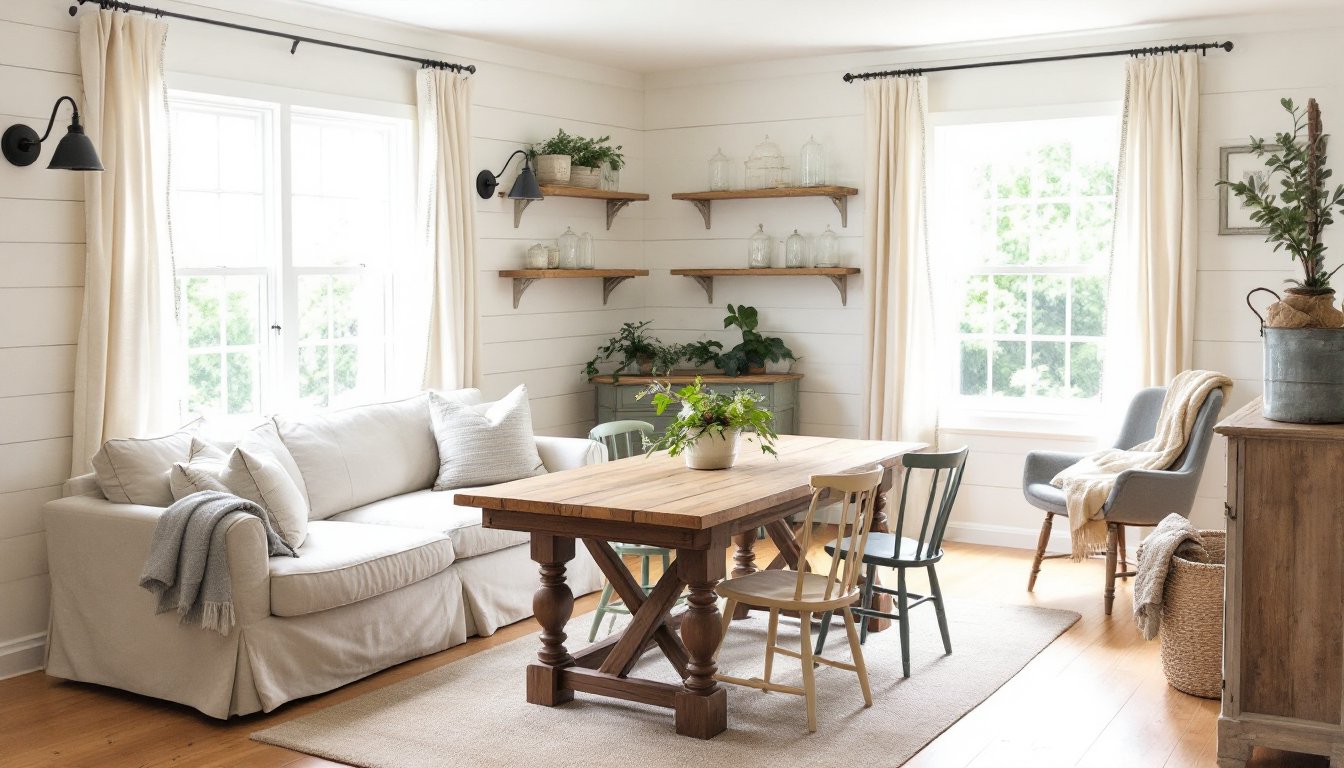
Farmhouse furniture prioritizes function and comfort over ornament. A solid wood table with turned legs, mismatched chairs painted in soft colors, and a worn upholstered sofa are farmhouse staples because they’re built to last and improve with age. Avoid furniture with high gloss, too-modern silhouettes, or obviously new veneers: they clash with the aesthetic.
Layout matters more than you’d think. Farmhouse spaces breathe, they’re not cramped with accent tables and decorative objects. Group seating around a focal point (fireplace, large window, or wood-burning stove). Leave floor space visible. In kitchens, open shelving displays a curated collection of dishes and glassware: don’t cram every cabinet door. This restraint mirrors minimalist interior decor principles while maintaining warmth.
When choosing pieces, ask: Does this piece have patina or the potential to age well? Can I live with it for ten years? Will it serve double duty (storage + seating, display + function)? If you’re furnishing on a tight budget, buy quality basics (a good sofa, solid dining table, sturdy chairs) and fill in the rest with thrifted or DIY finds. Farmhouse style actually rewards secondhand shopping, the irregularity and genuine wear are the whole point.
Decor Accents That Define The Look
Accents elevate farmhouse decor from bare walls and empty shelves to a finished room. The trick is restraint: a few meaningful items beat shelves packed with trinkets. Farmhouse decorating ideas often highlight vintage or vintage-inspired pieces that anchor a space without screaming for attention.
Key accents include: framed botanical prints or vintage farm signage, mason jars and vintage glassware, wrought iron wall sconces, a galvanized metal bucket or tray, woven baskets for storage, linen curtains, and a few textile layers (pillows, a throw blanket, a runner rug). In kitchens, open shelves display white ironstone dishes, vintage enamelware, or glass cloches. Bathrooms benefit from vintage mirrors, apothecary jars, and linen hand towels.
Source accents from thrift stores, antique markets, estate sales, and, yes, new items that echo the vintage look. Mixing genuine vintage with quality reproductions is smart: no farmhouse home is 100% original anyway. Hang artwork at eye level, group three to five small pieces for visual weight, and leave wall space around clusters so they don’t feel crowded.
Budget-Friendly DIY Projects For Farmhouse Charm
The best farmhouse decor projects cost under $200 and transform a room’s character. Here are three that deliver genuine results:
Shiplap or Shiplap-Style Wall Accent
True shiplap (1 × 8 tongue-and-groove solid wood boards) runs $1–2 per linear foot, plus paint and fasteners. For one accent wall in a 12 × 14 bedroom, budget $150–250 depending on your region. You’ll need a stud finder, a finish nailer (or a regular hammer, though a nailer is faster and leaves smaller holes), 2-inch finish nails, and primer plus two coats of paint.
Measure wall height and calculate linear footage. Mark studs with a pencil. Start at the bottom, leaving a small gap between boards for expansion (¼ inch is typical). Butt each board tight to the next, then fasten through the tongue with nails into studs. Fill nail holes with paintable caulk, sand lightly, prime, and paint white or cream. Wear safety glasses, you’re working overhead and with a nailer.
Refinished Thrifted Wood Table or Dresser
A $40 dresser or side table from a thrift store becomes a farmhouse statement piece in an afternoon. Sand it smooth with 120-grit sandpaper, fill gaps or damage with wood filler, then sand again with 150-grit. Apply a whitewash or diluted paint finish (one part paint to three parts water) to let wood grain show through. Add vintage-style hardware ($20–40 for a set of four pulls) and a protective topcoat of polyurethane matte finish. Wear a dust mask while sanding: sand outdoors or in a well-ventilated space.
Barn Door Hardware And Shutter Installation
A sliding barn door over a utility closet or pantry costs $80–150 for hardware and a solid wood slab door (or build one from reclaimed boards). Fasten the track to the wall studs with lag bolts, ensuring it’s level, a level that’s even slightly off throws the door bind. The look is pure farmhouse and hides mess instantly. Shutters flanking a window or mirror (purchased unfinished for $30–50 a pair) add authentic charm. Paint them to match trim or a subtle accent color.
All three projects require basic hand and power tools: drill, circular saw or handsaw, level, measuring tape, and sandpaper. Farmhouse style basics include, so plan your project with the whole room in mind rather than tackling accents in isolation.
Conclusion
Farmhouse decor succeeds when it feels earned rather than assembled. Start with your color and material foundation, choose furniture for longevity and function, and layer in accents deliberately. DIY projects, especially finishing thrifted pieces or adding architectural details like shiplap, anchor the aesthetic without breaking the budget. The beauty of this style is that it rewards slow, intentional decisions and improves as the space ages. Your farmhouse home won’t look perfect in month one, and that’s exactly the point.