

Rustic farmhouse decor has moved beyond Pinterest boards and into the homes of people who actually want to live comfortably. Unlike trendy aesthetics that feel dated in five years, farmhouse design draws from a time when homes were built to last and function well. Whether you’re starting from scratch or refreshing a few rooms, rustic farmhouse decor offers a practical, warm approach that doesn’t require a complete overhaul or a designer’s budget. This guide walks you through the core principles, essential elements, and real DIY projects that bring genuine farmhouse character into your space without the pretense.
Key Takeaways
- Rustic farmhouse decor prioritizes authenticity and function over perfection, drawing from honest design principles where homes are built to last and serve practical purposes.
- Reclaimed wood and vintage metal accents are essential to farmhouse style, with affordable alternatives like reclaimed-look lumber ($2–4 per board foot) making the aesthetic accessible without a designer’s budget.
- A neutral color palette of creams, soft grays, and warm whites allows texture—rough plaster, weathered wood, linen, and wool—to become the focal point of farmhouse interior design.
- Budget-friendly DIY projects like shiplap accent walls, floating shelves, and reclaimed-wood mantels can be completed in a weekend with basic tools, costing $50–150 per project.
- Restraint and quality over quantity prevent farmhouse spaces from feeling cluttered; store only items you use daily and display fewer decor pieces to maintain authentic charm.
- Timeless farmhouse style elements remain relevant across decades because they emphasize durability and natural materials rather than trendy aesthetics that become dated.
Define Your Rustic Farmhouse Style
Rustic farmhouse decor sits at the intersection of function and warmth. It’s not about perfection, it’s about authenticity. Real farmhouses were built to withstand use, and their interiors reflected that practicality. Think worn wood floors that tell a story, furniture that gets rearranged without ceremony, and decor that serves a purpose beyond looking good.
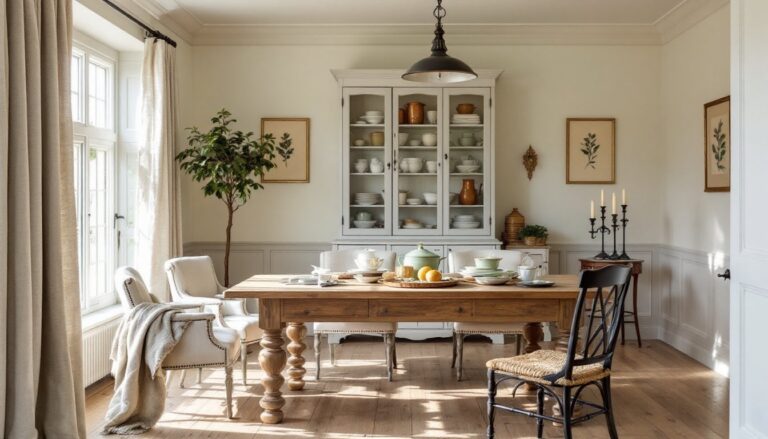
Modern farmhouse interior design takes those principles and adapts them for today’s living. You’re not trying to recreate a 1920s barn kitchen: you’re bringing the honest, stripped-down aesthetic into a home that has electricity, plumbing, and Netflix. The difference between farmhouse design that works and farmhouse design that feels like a movie set comes down to restraint. Start by asking what you actually use and love, then build from there. Reclaimed barn wood, vintage metal accents, and a focus on natural materials set the tone. The color palette stays neutral, creams, soft grays, warm whites, and muted earth tones, because those hues feel timeless and don’t compete with the textures that really drive the style.
The Essential Elements That Define Rustic Farmhouse Design
Incorporate Reclaimed Wood and Vintage Materials
Reclaimed wood is the workhorse of farmhouse decor. It brings texture, character, and genuine history to a room. You don’t need to source authentic century-old barn siding (though you can, if your budget allows). Reclaimed-look lumber, available at most home improvement stores, captures that weathered aesthetic at a fraction of the cost and weight. Real reclaimed wood runs $8–15 per board foot depending on type and source: reclaimed-look alternatives cost $2–4 per board foot.
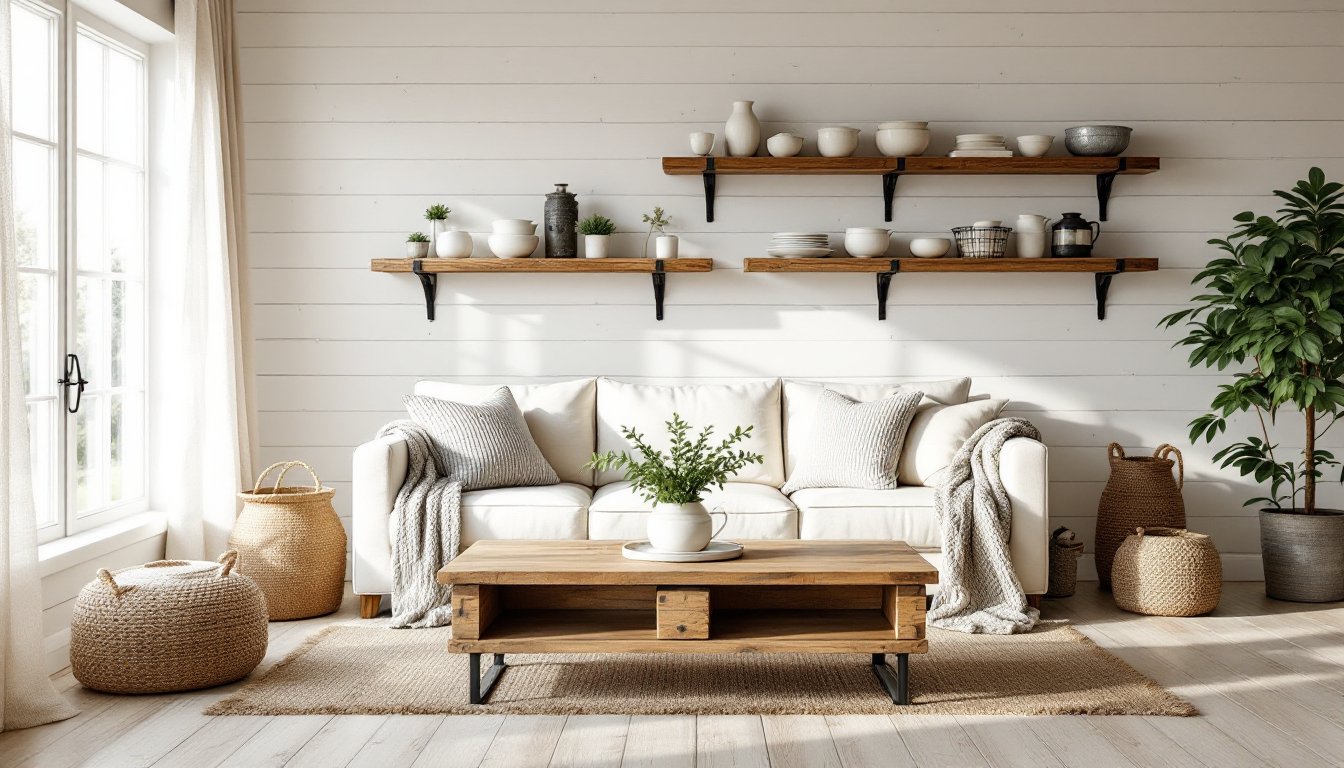
Where to use reclaimed wood: shelving, mantels, accent walls, and table surfaces. A shiplap accent wall behind a bed or sofa instantly reads “farmhouse.” If you’re installing it yourself, use construction adhesive and 16-gauge finish nails (or a pneumatic brad nailer for cleaner results). Budget 2–3 hours per wall, plus drying time for adhesive.
Vintage metals, wrought iron, galvanized steel, aged brass, layer in period authenticity without requiring actual antiques. Metal corbels supporting shelves, iron hooks for hanging coats, and galvanized buckets storing blankets all contribute to the overall palette. These pieces are inexpensive ($5–30 each from online retailers or local antique shops) and do real work while looking good doing it.
Choose a Neutral Color Palette
Farmhouse design leans heavily on neutrals because restraint is part of the charm. Walls typically stay white, cream, or soft gray, colors that recede and let wood, metal, and texture take center stage. Farmhouse interior design guides emphasize these foundational hues across the entire home.
Accent colors (if you use them at all) pull from nature: muted greens, soft blues, or warm terracottas. These appear in textiles, throw pillows, area rugs, linen curtains, rather than large wall areas. Paint is cheap to change: fabric is cheaper still. Start with neutrals on the walls and test accent colors through accessories. A gallon of quality interior latex paint covers roughly 350 square feet per coat and costs $25–45 depending on finish and brand.
Texture matters more than color in farmhouse spaces. Rough plaster, smooth concrete, weathered wood, linen, and wool create visual interest without bold hues. Layer a chunky-knit throw over a linen sofa, place a jute rug under a reclaimed-wood coffee table, and hang unbleached canvas curtains. That textural variety is what stops a neutral room from feeling sterile.
Practical DIY Projects to Add Rustic Farmhouse Character
DIY Shiplap Accent Wall, Install shiplap over existing drywall using construction adhesive and 2-inch finish nails every 16 inches. Shiplap boards come in 1×6 or 1×8 nominal sizes: measure twice, cut once with a miter saw or circular saw. For a 12-by-10-foot wall, expect to spend $80–150 on materials and 4–6 hours on installation. Finish with stain or whitewash depending on your style.
Floating Shelves with Brackets, Floating shelves showcase farmhouse decor while providing actual storage. Use ½-inch plywood for the shelf itself (cheaper than solid wood for hidden brackets) and old farmhouse interior style mounting hardware. Locate studs with a stud finder and anchor heavy-duty brackets directly into studs with ⅜-inch lag bolts rated for the weight you’re hanging. A 36-inch shelf costs $50–100 in materials and takes 90 minutes to install correctly.
Reclaimed-Wood Fireplace Mantel, If you have an existing mantel, dress it up by securing a reclaimed-wood beam across the top. Use construction adhesive and angle brackets hidden underneath. If there’s no mantel, you can build one from 1×12 reclaimed-look lumber, supported by decorative corbels. Keep it simple: the wood and its texture are the decor.
Galvanized Metal Coffee Table, Combine reclaimed wood for the top with a metal base (pipe fittings work beautifully). You can build the frame yourself using ½-inch black iron pipe and fittings from a plumbing supplier (roughly $80–120 for the frame) or source a premade base online. Pair it with a live-edge or distressed wood top, and you’ve got a statement piece that actually looks expensive but cost less than a night out.
These projects assume basic tool skills and access to a miter saw or circular saw. If you’re new to tool use, consider renting equipment from a local hardware store ($20–40 per day) rather than buying outright. Safety first: wear eye protection when cutting wood, and keep hands clear of saw blades. Pneumatic tools require hearing protection, even brief exposure to nailing at 120 decibels can damage hearing.
Budget-Friendly Decor Ideas for Every Room
Living Room, Start with a neutral sofa in linen or canvas (skip the pristine white: off-white shows less dirt). Add farmhouse home decor ideas like a chunky-knit throw, linen pillows in cream and soft gray, and a reclaimed-wood coffee table. Hang a simple shiplap accent wall behind the sofa or mantel. Gallery walls with black frames and vintage prints (thrifted or printed at home) cost under $50 and instantly pull the room together. A jute area rug anchors the seating area and adds texture.
Kitchen, Open shelving is a farmhouse staple, but only if you actually have the items to display. White ceramic bowls, glassware, and vintage serving pieces work. Install floating shelves above counters or a reclaimed-wood shelf across windows. Swap cabinet hardware for wrought-iron pulls (often $3–8 each). Paint lower cabinets white or cream and leave uppers open, or keep them as-is if they’re already light-colored. A farmhouse decoration ideas approach here means function first, store everyday items where you use them.
Bedroom, A metal bed frame (wrought iron or black steel) paired with white or cream bedding sets the tone immediately. Add a reclaimed-wood nightstand or dresser (hunt thrift stores: authentic pieces are cheaper than new). Hang simple linen curtains in an off-white. A chunky-knit throw at the foot of the bed, one or two framed botanical prints, and a potted plant complete the look without clutter.
Bathrooms, Galvanized metal baskets for towel storage, white subway tile (or shiplap if moisture isn’t an issue), and open shelving with rolled white towels create a spa-like farmhouse feel. A reclaimed-wood floating vanity top over a simple cabinet base works beautifully. Keep accessories minimal: a white ceramic soap dispenser, a wire brush holder, and that’s enough.
The common thread across all rooms is restraint. More stuff doesn’t make it more farmhouse: it makes it cluttered. Buy fewer pieces, choose quality over quantity, and let the bones of the room, wood, metal, texture, be the stars. Timeless farmhouse style elements remain relevant across decades precisely because they prioritize authenticity over novelty.
Conclusion
Rustic farmhouse decor works because it respects both your budget and your sanity. You’re not chasing trends or trying to photograph your home for Instagram: you’re creating a warm, functional space that ages well. The projects outlined here, shiplap walls, floating shelves, reclaimed-wood accents, are achievable with basic tools and honest effort. Start with one room, stick to neutral walls, layer in texture and vintage finds, and let the space evolve naturally. In six months or a year, you’ll look around and realize your home actually looks like somewhere people live. That’s the whole point.