

Farmhouse style isn’t just about slapping up some reclaimed wood and calling it done. It’s a deliberate approach to creating spaces that feel authentic, comfortable, and timeless, without looking like a museum piece. Whether you’re working with a century-old property or a suburban ranch, farmhouse decoration ideas can work in almost any home. The beauty of this aesthetic is that it rewards honesty: imperfect finishes, vintage finds, and mixed materials are features, not flaws. This guide walks you through practical ways to infuse your space with genuine farmhouse charm, from color choices to functional layout decisions that prioritize livability over Instagram aesthetics.
Key Takeaways
- Authentic farmhouse decoration ideas prioritize comfort and honest materials like reclaimed wood and vintage finds over trendy, Instagram-perfect aesthetics.
- Build your color palette around muted, earthy tones such as soft creams, weathered greens, and dusty blues, using a 60-30-10 split with neutral walls, grayed secondary tones, and subtle accents.
- Choose functional, well-worn furniture with simple lines and natural wood finishes arranged in intimate groupings that encourage gathering rather than formal showroom-perfect pieces.
- Layer lighting with warm white bulbs (2700K), natural window light, and vintage fixtures like wrought iron chandeliers and Edison bulbs to create welcoming farmhouse spaces after dark.
- Extend farmhouse style outdoors with simple furniture, native plantings, and outdoor lighting that echoes interior design for cohesive, functional spaces.
- DIY projects such as furniture refinishing, shiplap installation, and hardware swaps deliver authentic character on a budget, making thoughtful upcycling more effective than expensive purchases.
Color Palettes That Define Modern Farmhouse Style
The foundation of farmhouse decoration ideas starts with color. Forget bright whites and trending pastels, authentic farmhouse interiors rely on muted, earthy tones that feel rooted in the landscape. Think warm creams, soft grays, weathered greens, and dusty blues pulled from nature itself.
White remains a farmhouse staple, but not the stark kind. Off-whites like cream, linen, ivory, and warm gray create a calm backdrop without feeling sterile. Pair these neutrals with secondary colors inspired by barns, fields, and vintage materials: soft sage, dusty olive, warm taupe, or muted rust. Many farmhouse spaces use a 60-30-10 split, 60% soft neutral, 30% grayed secondary tone, and 10% accent color for warmth.
Wood tones anchor the palette naturally. Honey, walnut, and weathered gray wood work better than golden or honey tones that feel too polished. If you’re painting walls, flat or matte finishes read more authentically than glossy ones. Consider pulling color samples from actual materials in your space: an existing farmhouse interior design piece, reclaimed flooring, or stone veneer. Paint manufacturers often offer whole lines inspired by agricultural heritage, and these tend to photograph and live better than generic “farmhouse” colors.
Accents in black, deep charcoal, or wrought iron details create definition without harshness. A black door frame, dark cabinet hardware, or charcoal trim pulls the scheme together and prevents spaces from feeling washed out.
Furniture and Layout: Creating That Cozy, Lived-In Feel
Farmhouse furniture prioritizes function and comfort over trendy silhouettes. A well-worn sofa beats a showroom-perfect sectional every time. Wood frames, simple lines, and honest construction matter more than pristine upholstery.
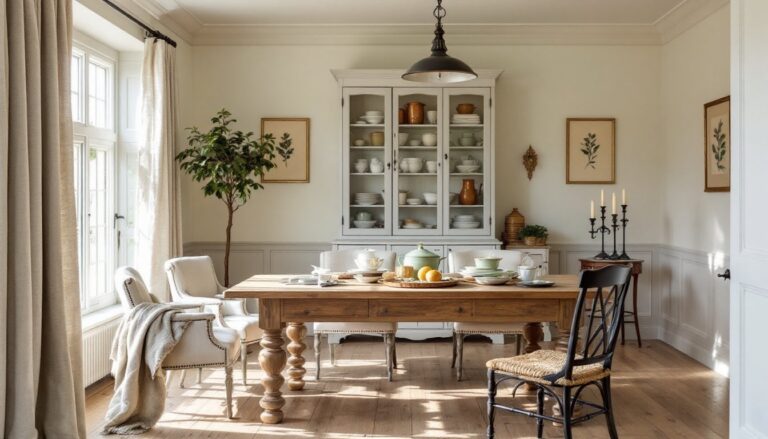
Start with anchors: a sturdy dining table where people actually gather, a generous kitchen island if space allows, and seating arranged for conversation rather than TV watching. Mixed wood finishes work, say, a darker table paired with lighter chairs, as long as the styles feel cohesive rather than random. Farmhouse interiors often combine pieces from different eras, but they should share a design language: solid construction, minimal ornamentation, and materials like wood, wrought iron, or simple fabric.
Layout should feel functional and relaxed. Don’t push all furniture to walls: instead, create intimate groupings that encourage people to linger. A fireplace becomes a focal point naturally, but in farmhouse spaces, the kitchen often takes that role. Open shelving, visible wood beams, or a large apron sink draws the eye and feels genuinely practical.
Upholstered pieces should use durable, washable fabrics, linen, canvas, or cotton blends in cream, gray, or subtle patterns. Avoid velvet and shiny synthetics: they read too formal. When selecting farm style decor ideas, remember that comfort matters more than perfection. A faded Turkish kilim, a slipcover with visible seams, or mismatched leather chairs feel more authentic than matched, pristine sets.
Lighting and Textiles: Essential Elements for Warmth
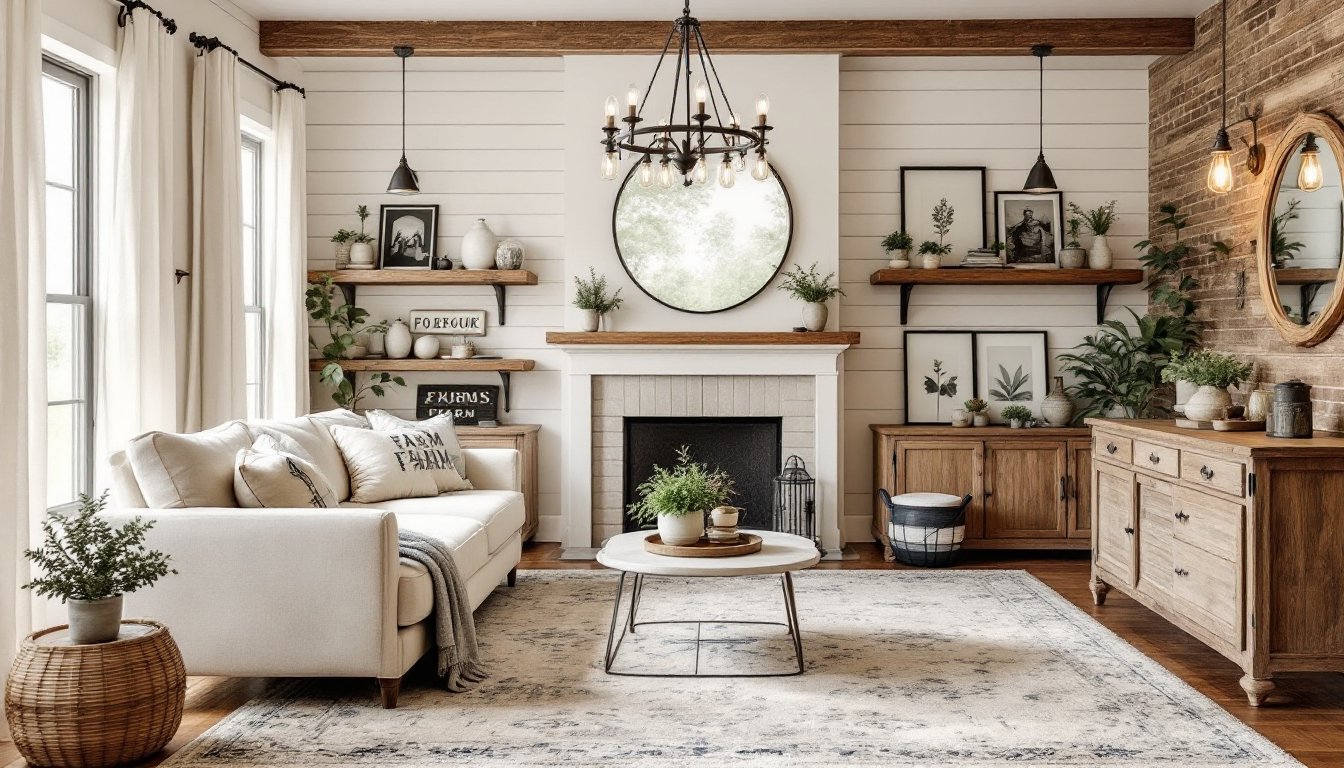
Lighting sets the emotional tone in farmhouse spaces. Natural light matters most, clean windows, sheer linen curtains, and minimal fussy drapes let daylight in. For artificial lighting, choose fixtures that feel handcrafted or vintage: wrought iron chandeliers, Edison bulbs in simple pendants, or milk glass shades. Avoid recessed lights and track lighting, which feel too modern.
Layered lighting prevents spaces from feeling cold after dark. Combine overhead fixtures with table lamps, wall sconces, and even candles. Warm white bulbs (2700K color temperature) feel more welcoming than cool or daylight tones. Dimmer switches give flexibility without adding visual clutter.
Textiles bring softness and practicality. Heavy linen curtains, wool throws, and cotton quilts invite touch and add texture. Contemporary farmhouse interior design often incorporates vintage textiles, antique quilts on walls or beds, worn rugs with faded patterns, linen table runners with frayed edges. These pieces show their age honestly rather than appearing distressed or artificially aged.
Area rugs ground furniture groupings and add warmth to hard floors. Choose natural fibers like jute, sisal, or wool in neutral tones or subtle geometric patterns. Layering rugs, a sisal base with a smaller patterned rug on top, adds depth. Bedding should feel inviting: linen sheets, a simple quilt, and layered pillows in cream, gray, or muted plaids.
Wall Décor and Accessories: Adding Personality and Authenticity
Walls in farmhouse spaces work best when they’re not overdecorated. A few well-chosen pieces feel stronger than a gallery wall of every flea market find. Consider shiplap or board-and-batten wainscoting if you want texture: both are achievable DIY projects and add genuine architectural interest rather than surface decoration.
Wall art should feel unpretentious: vintage farm signage, botanical prints in simple frames, black-and-white photography, or paintings by local artists. Groupings work better than single pieces, arrange 3-5 items in an asymmetrical cluster rather than a rigid grid. Wood frames in natural or dark finishes suit the aesthetic better than ornate or gold ones.
Accessories succeed when they serve a purpose or tell a story. Open shelving displaying vintage glassware, cookbooks, or stoneware looks more authentic than purely decorative objects. A collection of ironware or vintage kitchen tools hung on walls combines decoration with function. Mirrors in wood or wrought iron frames brighten spaces and add character.
Farmhouse style welcomes vintage and antique finds, but quantity matters. A well-worn leather armchair, a collection of ironstone dishes, or a single large vintage piece draws attention and creates focal points. A farmhouse interior design approach leans on authenticity, pieces used, faded, and genuinely old, over reproductions that mimic age artificially.
Outdoor Spaces: Extending Farmhouse Style Beyond Your Walls
Farmhouse aesthetic extends naturally to porches, patios, and yards. Outdoor spaces should feel like functional extensions of the home, not separate entertainment zones.
Porches and patios benefit from the same principles as interior spaces: simple furniture, natural materials, and layered comfort. A wooden rocking chair, a simple bench, and planters in terra cotta or galvanized metal feel right. String lights, lanterns, or simple pendant fixtures add warmth for evening use. Keep plantings practical, vegetable gardens, herb boxes, or native plantings rather than ornamental beds.
Outdoor living areas work best when they encourage gathering. A long table for outdoor meals, comfortable seating grouped around a fire pit, or a simple covered porch with rocking chairs invites people to spend time outside. Use exterior lighting and design that echoes indoor fixtures, sconces, pendants, or vintage-style post lights.
Landscaping should feel organic rather than manicured. Stone pathways, weathered fencing, and mixed plantings create authentic charm. A vegetable garden, fruit trees, or flowering fields in muted tones (white, pink, lavender, cream) feel more farmhouse than tropical or exotic plantings. Outbuildings like sheds or chicken coops can become visual anchors that strengthen the aesthetic if built with similar materials and color palettes to the main house.
Budget-Friendly DIY Projects and Upcycling Ideas
Authentic farmhouse style rewards DIY effort and salvage finds over expensive purchases. Upcycling transforms budget limitations into creative advantages.
Start with furniture refinishing. Sand and restain a thrift-store table, paint kitchen cabinets in soft white or gray, or recover chair seats with linen fabric. These projects require basic tools (orbital sander, paintbrush, staple gun) and produce significant visual impact. Transforming your home interior on a budget means prioritizing structural pieces over decorative ones.
Simple wall projects yield impressive results. Install shiplap by running 1×6 or 1×8 boards horizontally over existing drywall with construction adhesive and finish nails, no drywall removal needed. Add board-and-batten wainscoting to create visual interest and hide wall imperfections. Both projects require a miter saw, level, and basic carpentry skills.
Hardware swaps cost little but transform cabinetry instantly. Replace plastic knobs and pulls with wrought iron, ceramic, or vintage-style options. Paint kitchen cabinet frames while keeping original doors, or repurpose old doors as cabinet fronts.
Upcycling ideas abound: mason jars become light fixtures, old crates stack into shelving, vintage windows frame mirrors, and worn textiles get new life as throw pillows. Architectural salvage yards and online marketplaces offer affordable vintage doors, mantels, and hardware. The key is intentionality, choose pieces that genuinely fit your palette and layout rather than collecting random “farmhouse” items. This restraint creates cohesive spaces that feel purposefully curated rather than cluttered.
Conclusion
Farmhouse decoration ideas work because they value authenticity, comfort, and honest materials over fleeting trends. Build from a grounded color palette, invest in quality basic furniture, and layer in lighting and textiles that make spaces livable. Wall décor and outdoor spaces extend the narrative naturally. When budget matters, DIY projects and thoughtful upcycling often produce more character than purchases. A comprehensive farmhouse interior design guide reinforces that this aesthetic thrives on restraint, imperfection, and genuine function. Start with what you have, add selectively, and let your space tell a story rooted in place and time rather than a catalog.