

A farmhouse bedroom isn’t about chasing the latest trends, it’s about creating a calm, collected retreat that feels lived-in and loved. Whether you’re drawn to classic rustic warmth, modern farmhouse clean lines, or cottage cottagecore charm, this style rests on a foundation of neutral tones, reclaimed wood, and layered textures. The beauty of farmhouse decor is that it rewards patience and intention over expense. A mismatched wooden nightstand, linen curtains, and a quilt layered with chunky throws cost far less than trendy furniture while delivering far more character. This guide walks you through the key decisions, from defining your aesthetic to sourcing authentic pieces, so you can build a bedroom that looks like it grew organically over time, not overnight.
Key Takeaways
- Farmhouse bedroom decor prioritizes neutral wall colors like warm whites, creams, and greiges to create a calm retreat where textures and reclaimed wood become the visual focus.
- Authentic farmhouse style relies on aged, vintage, and reclaimed furniture sourced from flea markets and estate sales rather than new trend-focused pieces, delivering character at a lower cost.
- Layering textures through natural fabrics—cotton sheets, linen curtains, wool throws, and jute rugs—creates visual depth without bold patterns, defining the collected, lived-in aesthetic of farmhouse bedrooms.
- Define your farmhouse aesthetic first by choosing between classic rustic, modern farmhouse, or cottage cottagecore, as this decision shapes every furniture selection and keeps your room cohesive.
- Repurposing old doors, vintage trunks, ladders, and window shutters as headboards, nightstands, and wall décor adds unique character while honoring the practical, sustainable spirit of true farmhouse living.
Define Your Farmhouse Aesthetic
Before you hunt for pieces, decide which flavor of farmhouse speaks to you. The style splits into three main directions, each with a distinct personality.
Classic/Rustic Farmhouse leans heavy on weathered wood, distressed finishes, and exposed beams. Think iron bed frames, vintage quilts sourced from flea markets, old trunks doubling as storage, and lantern-style lighting. It’s the look of a farmhouse that’s actually been around for 150 years.
Modern Farmhouse strips away some of the clutter while keeping the bones. Painted shiplap or board-and-batten walls replace exposed beams: clean-lined wooden beds replace ornate iron: lighting stays simple and functional. The spaces feel less “antique shop” and more “intentional.”
Cottage/Farmhouse Cottagecore takes the softer route: floral patterns, botanical prints, wicker accents, and lighter woods. It’s romantic without being frilly, nature-inspired without feeling cluttered.
The old farmhouse look carries a quiet confidence that comes from pieces accumulated over decades. Understanding which direction calls to you shapes every furniture choice and finishing touch that follows, keeping your room cohesive rather than chaotic.
Choose a Neutral Color Palette
Farmhouse bedrooms succeed because their color foundation is restful and timeless. Start with wall colors: warm whites, creams, greiges (gray-beige blends), light beige, or pale gray. These neutrals feel airy without being cold, and they let your furniture and textures be the stars.
Accent colors come from nature. Muted blues, sage or olive greens, soft blush, and earth tones like tan, clay, and terracotta work beautifully without overwhelming the space. A single accent wall or even just throw pillows in these tones add depth without breaking your calm palette.
The payoff: neutral walls and large pieces mean your reclaimed wood, vintage dresser, and textured bedding don’t compete. Instead, they layer together, creating visual interest through material and texture rather than color contrast. This restraint is what separates a cohesive farmhouse retreat from a room that feels like a mismatched thrift store haul. Your farmhouse interior design guide offers more depth on building color schemes that ground the entire home.
Incorporate Reclaimed and Vintage Furniture
Farmhouse decor lives or dies on authenticity. Reclaimed wood and vintage pieces aren’t optional, they’re the heart of the style. Visible grain, knots, and aged finishes aren’t flaws: they’re proof the piece has a history.
You’ll source these from architectural salvage yards, flea markets, estate sales, and online marketplaces. Expect to hunt a bit. The reward is furniture that’s one-of-a-kind and costs less than new reproductions. A worn dresser with original hardware, a wooden bench with peeling paint, a side table with uneven legs, these imperfections create character that new furniture can’t replicate.
When shopping, prioritize structural integrity over cosmetics. A wobbling leg or rough surface can be fixed: a cracked frame or water damage is harder to rescue. Let authentic wear guide you, but verify the piece is actually sound. This approach transforms your bedroom into a genuine old farmhouse interior design that feels like it evolved naturally.
Wooden Bed Frames and Nightstands
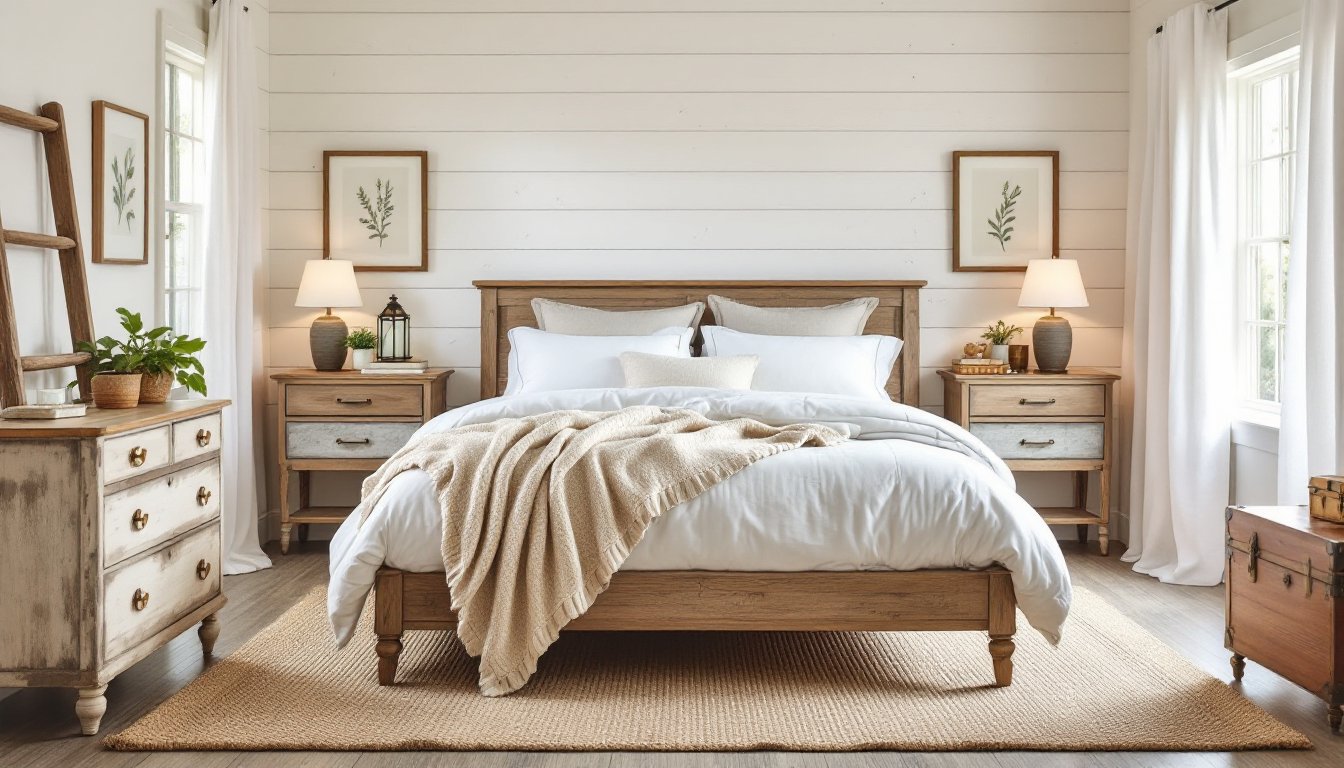
Your bed anchors the room, so choose wisely. Wooden bed frames in farmhouse style include panel beds, spindle (Jenny Lind) beds, sleigh beds, and simple platform frames. Finishes vary: natural or stained wood, whitewashed, or painted then lightly distressed. Wood tones are typically warm, oak, pine, walnut, sometimes mixed with black iron for a modern farmhouse edge.
Nightstands and bedside tables follow the same logic: solid wood with simple profiles or subtle antique detailing. The collected look often means mismatched tables, an old desk on one side, a small vintage dresser on the other. This doesn’t look careless: it looks like pieces gathered over time, which is exactly the farmhouse goal.
Repurposed and Upcycled Pieces
Farmhouse style celebrates reuse. Old doors become headboards. Vintage trunks or wooden crates transform into bedside tables. Ladders hang as blanket racks. Window frames or shutters decorate walls. This approach adds character while reducing waste, it’s the practical heart of farmhouse living.
When repurposing, safety matters. If a piece will support weight (bed frame, shelf, nightstand), verify its structural integrity before trusting it. A beautiful old door works as a headboard because it hangs decoratively: it wouldn’t work as a shelf that holds books. Use common sense and you’ll create unique focal points that feel authentically collected.
Layer Textures With Fabrics and Bedding
Farmhouse style avoids bold pattern overload: instead, it layers solids and subtle textures to create depth. Your bedding is the largest opportunity to add visual and tactile interest.
Build bedding in layers: a base of cotton or linen sheets, a middle layer of quilt or matelassé coverlet, then a chunky knit or woven throw across the foot or sides. Add multiple pillows in neutral or muted tones. This composition feels intentional and inviting, you can sink into it.
Beyond the bed, textures anchor the whole room. Area rugs in jute, wool, braided, or flatweave materials add warmth to wood floors. Window treatments in light cotton or linen curtains (usually white or cream) soften the space and filter light gently. Accent pieces like an upholstered bench, poufs, and cushions in natural, textured fabrics fill the corners. The goal is visual and tactile depth using solids and subtle patterns, stripes, small checks, small florals, rather than competing prints that fight for attention.
Design sources like Country Living’s farmhouse bedroom ideas showcase how layers of texture, not color, create visual richness.
Natural Fabrics and Linens
Cotton is the workhorse: breathable, durable, and versatile for sheets, quilts, and curtains. Linen offers a relaxed, slightly wrinkled texture that reads as effortlessly collected: it’s perfect for duvet covers, pillowcases, and drapes. Wool in blankets, throws, and some rugs adds warmth and a subtle nap that feels luxurious. Jute and sisal in rugs create an earthy, rustic foundation.
Natural fibers aren’t just aesthetically right, they’re practical. They breathe, age beautifully, and complement the wood, stone, and greenery in farmhouse rooms. Over time, linen softens, cotton becomes more supple, and wool holds its shape. These aren’t defects: they’re the material’s character developing, which is exactly what farmhouse embraces. If you’re refreshing a bedroom on a budget, interior design ideas that don’t expensive offer smart strategies for layering affordable natural textiles effectively.