

Farmhouse style never really goes out of fashion, it’s grounded in authenticity and comfort. Whether you’re starting from scratch or refreshing a single room, farmhouse home decor ideas blend vintage charm with modern livability. The beauty of this aesthetic lies in its accessibility: you don’t need a sprawling property or a limitless budget to achieve that warm, welcoming farmhouse feel. This guide walks through practical ways to introduce farmhouse decoration ideas and farm style decor into your home, from foundational elements like color and materials to specific projects and finishing touches that tie everything together.
Key Takeaways
- Farmhouse home decor ideas blend vintage charm with modern comfort using repurposed furniture, reclaimed materials, and authentic pieces that tell a story without requiring a large budget.
- Establish a warm, cohesive aesthetic by choosing earthy color palettes (creams, soft whites, warm grays, muted greens) and natural materials like unfinished wood, linen, and stone that age gracefully.
- Shiplap walls and hardwood flooring anchor farmhouse interiors; prioritize prep work and accurate measurements to ensure installation success, or apply shiplap to a single accent wall for impact with less labor.
- Layer lighting with vintage-style fixtures, Edison bulbs, and warm-toned LED bulbs (2700K) to create functional warmth, and install dimmers to adjust mood throughout the day.
- DIY farmhouse decor projects like painted mason jar organizers, wooden signs, and pallet shelving are budget-friendly ways to inject personal character while building foundational design skills.
- Balance curated vintage finds and farm style decor with modern comfort through textile layering, grouped vintage accessories, greenery, and gallery walls to create an inviting, livable space.
Embrace Vintage And Repurposed Furniture
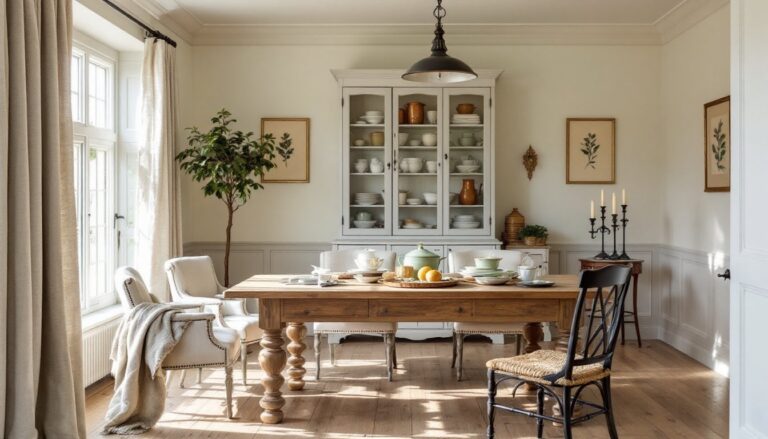
Farmhouse design thrives on pieces that tell a story. Vintage and repurposed furniture form the backbone of authentic farmhouse interiors, think reclaimed barn doors, old wooden tables, and weathered dressers that have seen decades of life.
Start by scouting local thrift stores, estate sales, and online marketplaces for solid wood pieces. A worn harvest table, a cast-iron bed frame, or a weathered cabinet becomes an anchor point in a room. These pieces don’t need to match perfectly: the eclectic mix is what makes farmhouse style feel genuine. When you find a good piece, the patina and imperfections are features, not flaws.
Repurposing is equally important. An old wooden ladder becomes wall decor, a vintage apple crate transforms into shelving, and a salvaged window frame can serve as wall art or a display case. Farmhouse interior design builds on this foundation of reuse, turning discarded items into conversation pieces. If you’re working within a tighter budget, Dollar Tree DIY projects can supplement your farmhouse collection with affordable painted crates, jars, and accessories that mimic the aesthetic without the price tag.
Warm Color Palettes And Natural Materials
Farmhouse decor relies on a restrained, earthy color palette. Think creams, soft whites, warm grays, muted greens, and gentle browns, colors pulled directly from nature and aged finishes. These hues create a calm, lived-in atmosphere that feels instantly welcoming.
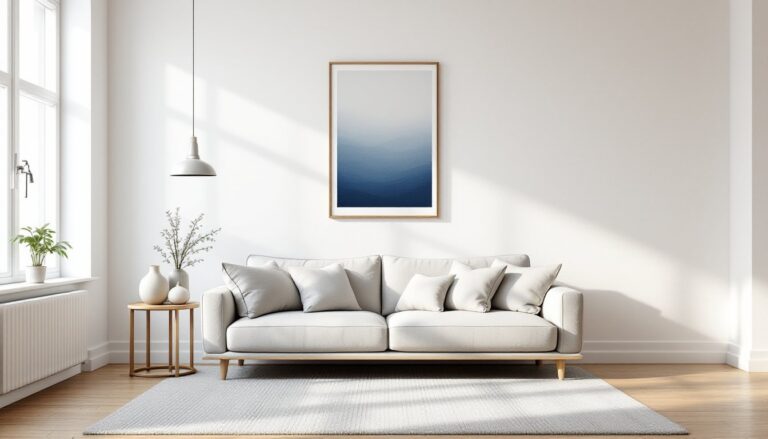
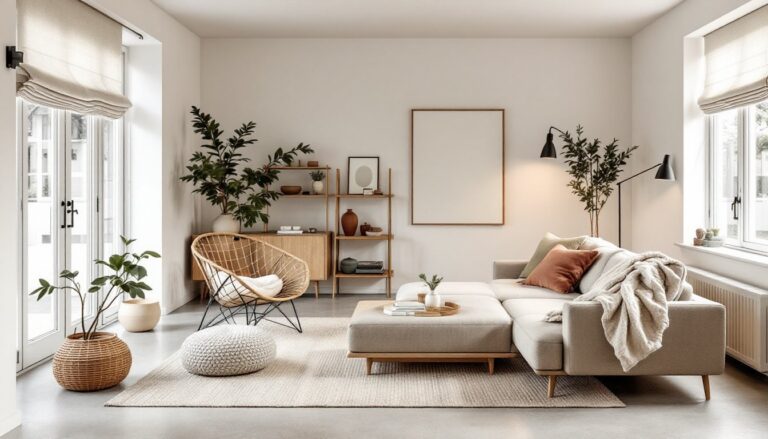
Natural materials anchor this palette. Unfinished wood, linen, cotton, wool, and stone should dominate textures. Avoid plastic and overly processed finishes: instead, opt for materials that age gracefully. A linen sofa in cream, wooden shelving with visible grain, or a jute area rug all reinforce the farmhouse aesthetic.
When selecting paint, choose low-sheen finishes that suggest age rather than pristine newness. Warm whites often work better than bright whites, brands like Benjamin Moore’s Decorator’s White or Sherwin-Williams’ Alabaster lean warmer. Layer in accent colors sparingly: a sage green wall in one room, a soft blue in another. The key is restraint: your space should feel cohesive, not chaotic. Design on a budget because neutral tones hide dust and imperfections while keeping the focus on textures and form.
Shiplap Walls And Hardwood Flooring
Shiplap, those horizontal wooden boards with a distinctive rabbet joint, has become synonymous with farmhouse style. Real shiplap installation requires measuring, cutting, and securing boards to wall studs, but it’s doable for a confident DIYer with basic carpentry skills.
Materials and Tools:
- 1×6 or 1×8 lumber (pine or cedar, typically 8-16 feet long)
- Stud finder, level, miter saw, nail gun, primer, and paint
- Safety glasses, dust mask, and work gloves
Basic Steps:
- Locate studs using a stud finder and mark them vertically on the wall.
- Cut boards to length, accounting for corner details (inside and outside corners require mitered cuts).
- Secure the first board at the bottom using 1.25-inch finish nails or a pneumatic nailer into studs.
- Stack subsequent boards with a slight offset (typically 1/4 to 1/2 inch) to mimic aged shiplap.
- Caulk seams, prime, and paint.
If full shiplap installation feels ambitious, apply shiplap to an accent wall only. This gives the look without overwhelming labor.
For flooring, hardwood in warm tones like oak, hickory, or reclaimed-style engineered plank flooring anchors farmhouse rooms. If real hardwood installation requires a professional, consider luxury vinyl planks (LVP) that mimic aged wood grain: modern LVP resembles authentic hardwood convincingly. Both require removing old flooring and ensuring the subfloor is level and structurally sound, this is where the prep work determines success or failure.
Layered Lighting And Vintage Fixtures
Farmhouse lighting feels warm and functional, never industrial or sterile. Layered lighting, combining overhead fixtures, task lighting, and ambient sources, creates depth and allows you to adjust mood throughout the day.
Fixture Types to Consider:
- Pendant lights with metal or glass shades (Edison-style bulbs add character)
- Chandeliers with wrought iron or wood details
- Vintage-style sconces flanking mirrors or artwork
- Table and floor lamps with burlap or linen shades
Look for fixtures that show age or intentional patina, weathered brass, brushed nickel, or blackened steel work better than polished chrome. Thrift stores and salvage yards often yield authentic vintage pieces for a fraction of new prices. When replacing fixtures, ensure electrical work meets code and, if you’re not comfortable with wiring, hire a licensed electrician.
Warm-toned LED bulbs (2700K color temperature) mimic incandescent warmth without the heat or energy cost. Dimmer switches on overhead lights let you transition from task lighting during the day to ambient evening mood. String lights and oil lanterns add texture for outdoors or covered porches.
DIY Farmhouse Decor Projects
Building your own farmhouse accessories gives you control over style, scale, and cost while injecting personal character into spaces.
Simple Projects For Beginners
1. Painted Mason Jar Organizers
Mason jars in white or cream paint create farmhouse-ready storage. Use interior acrylic paint, apply two coats, and add a burlap bow or label.
2. Wooden Sign with Lettering
Source a piece of reclaimed wood or pine board. Sand the surface, apply a whitewash or stain, then add hand-painted or stenciled lettering (vinyl stencils simplify this for beginners). Poly coat for durability.
3. Fabric Upholstered Wall Hanging
Stretch neutral linen or canvas over a simple wooden frame and hang as art. This adds texture without requiring nails or major wall work.
4. Galvanized Metal Tray Display
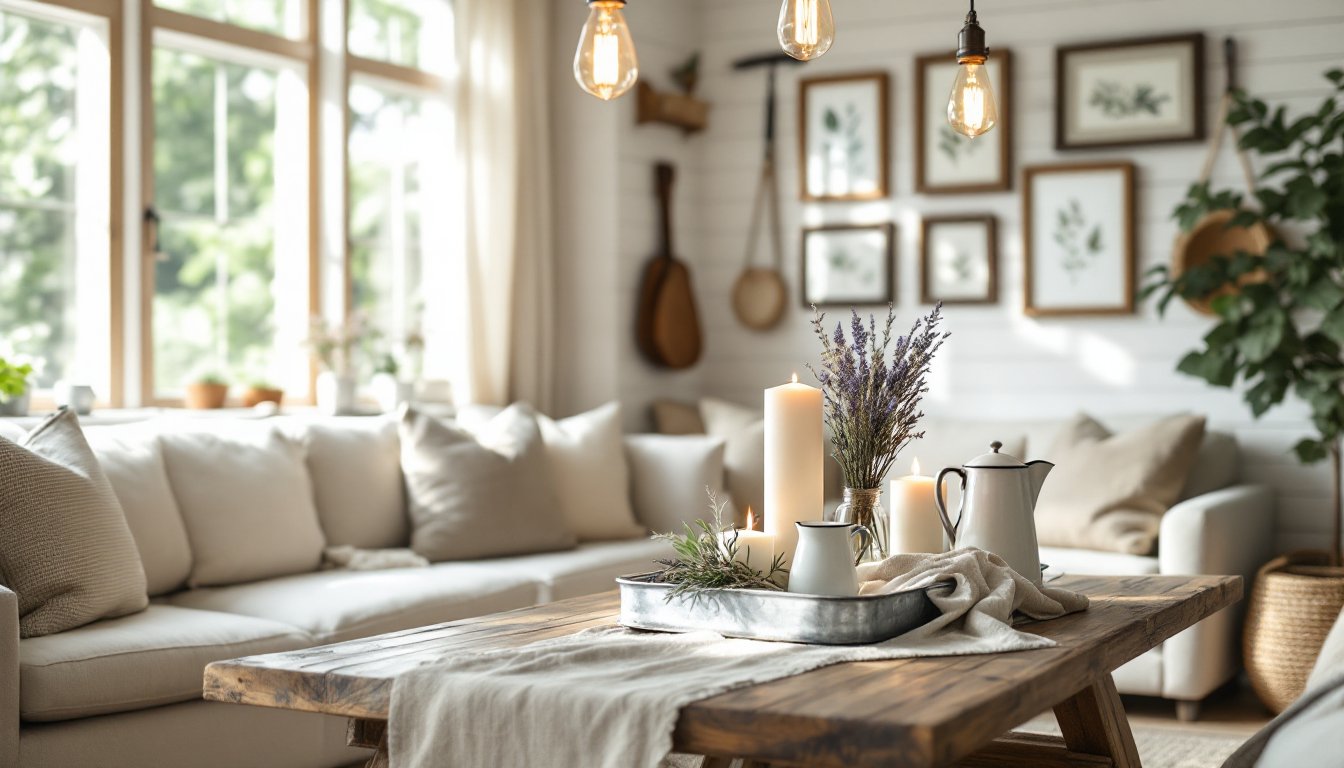
Fill food-safe galvanized steel trays (found at farm supply stores) with candles, small plants, or rolled linens. Group on shelves or coffee tables.
5. Pallet Shelving
Secure a wooden pallet to wall studs (critical for load-bearing safety) with heavy-duty brackets. Sand and paint to match your color scheme. Don’t overload: farmhouse style favors breathing room over clutter.
All these projects require basic tools: a paintbrush, sandpaper, drill, and level. Wear safety glasses when sanding and ensure good ventilation when painting. Prep work, sanding, priming, measuring, determines finish quality, so don’t skip these steps even if they feel tedious.
Farmhouse Accessories And Final Touches
Once foundational elements are in place, accessories seal the farmhouse aesthetic. These finishing touches tell the story of your space.
Textile Layering:
Farmhouse rooms breathe through layered textiles. Linen throw pillows, cotton area rugs, burlap table runners, and wool blankets drape over furniture and chairs. Mix neutral tones: off-white, sage, dusty blue, and warm gray work together naturally. Texture matters more than color matching.
Vintage and Industrial Accents:
Barnwood shelving, galvanized metal buckets, vintage scales, enamelware, and repurposed farm tools become wall art and functional storage. Group similar items, a collection of white pitcher and bowl sets, stacked vintage crates, or wrought-iron lanterns, to avoid a scattered thrift-store feel. Old farmhouse interiors demonstrate that authenticity comes from restraint, not excess.
Greenery and Natural Elements:
Fresh or dried florals, lavender bunches, wheat sheaves, cotton stems in tall vases, add life without demanding constant maintenance. Potted herbs on windowsills serve dual purposes: decoration and functionality. Woven baskets for storage, wood slice coasters, and stone accessories reinforce the natural palette.
Wall Displays:
Arrange gallery walls with mismatched wooden frames, vintage mirrors, and botanical prints. Don’t overthink alignment: farmhouse style tolerates asymmetry. Shiplap, beadboard, or plain white walls provide neutral backdrops that let these layers stand out.
According to resources like Country Living’s farmhouse decor roundup, the most successful farmhouse spaces balance curated vintage finds with modern comfort, ensuring rooms are beautiful and genuinely livable.