

Farmhouse interior design has moved beyond Instagram nostalgia to become a genuine lifestyle choice for homeowners seeking warmth, authenticity, and functionality. Unlike minimalist interior design’s stark restraint or bohemian design’s maximalist flair, farmhouse style balances character with livability, honoring the past without sacrificing modern comfort. Whether you’re drawn to the weathered beams of an actual farmhouse or simply want farm style decor ideas that bring that honest aesthetic to your suburban home, this approach works because it’s fundamentally about creating spaces that feel genuine. The design’s enduring appeal lies in its refusal to play by trendy rules, instead favoring materials with real patina, color palettes rooted in nature, and furniture that tells a story. In 2026, contemporary farmhouse interior design continues evolving, blending vintage character with smart storage and updated comfort, making it one of the most accessible and rewarding design journeys you can undertake.
Key Takeaways
- Farmhouse interior ideas prioritize functional authenticity and materials with real patina over trendy perfection, celebrating imperfections as proof of character.
- Use nature-inspired, muted color palettes like weathered barn red, sage green, and soft cream paired with textural layering—mixing rough with smooth fabrics and finishes to create visual interest.
- Build your farmhouse interior gradually with vintage and repurposed furniture from estate sales and salvage yards rather than matching sets, allowing each piece to tell its own story.
- Incorporate honest architectural features like exposed beams, open shelving, shiplap, and barn doors that prioritize structural honesty and functional storage over hidden modern built-ins.
- Layer flexible lighting with wrought-iron fixtures, vintage lanterns, and Edison bulbs alongside practical bedside lamps and dimmers to shift from energetic daytime to intimate evening atmospheres.
- Start with bones, color, and materials rather than rushing a complete overhaul—let your farmhouse interior evolve patiently with meaningful pieces that reflect your authentic lifestyle and home workflow.
What Defines Farmhouse Interior Design
Farmhouse interior design isn’t a rigid rulebook: it’s a philosophy rooted in rural authenticity and functional beauty. At its core, farmhouse style celebrates materials that age gracefully, reclaimed wood, exposed brick, wrought iron, and textured plaster, while rejecting the sterile perfection that defines corporate or overly staged interiors.
The style takes inspiration from working farms and country homes where form always followed function. A ladder-back chair wasn’t decorative: it was durable and honest. A wide wooden table bore the marks of countless family meals. A wrought-iron light fixture was crafted to last generations. This honest utility is what sets farmhouse apart from purely decorative aesthetics. When you’re designing a farmhouse interior, you’re not chasing a look: you’re creating a home that actually works for real people.
Farmhouse design also embraces imperfection. Distressed finishes, uneven wood grain, peeling paint layers, and weathered surfaces aren’t flaws, they’re proof of character. This stands in sharp contrast to the contemporary farmhouse interior approach, which pairs farmhouse bones with cleaner lines and updated amenities, creating a hybrid that feels both rooted and fresh.
Essential Color Palettes and Textures
Farmhouse color schemes are nature-inspired and deliberately muted. Think weathered barn red, soft cream, sage green, weathered gray, and warm whites, colors you’d find in rural landscapes, not paint-brand showrooms. These hues work because they don’t shout: they whisper.
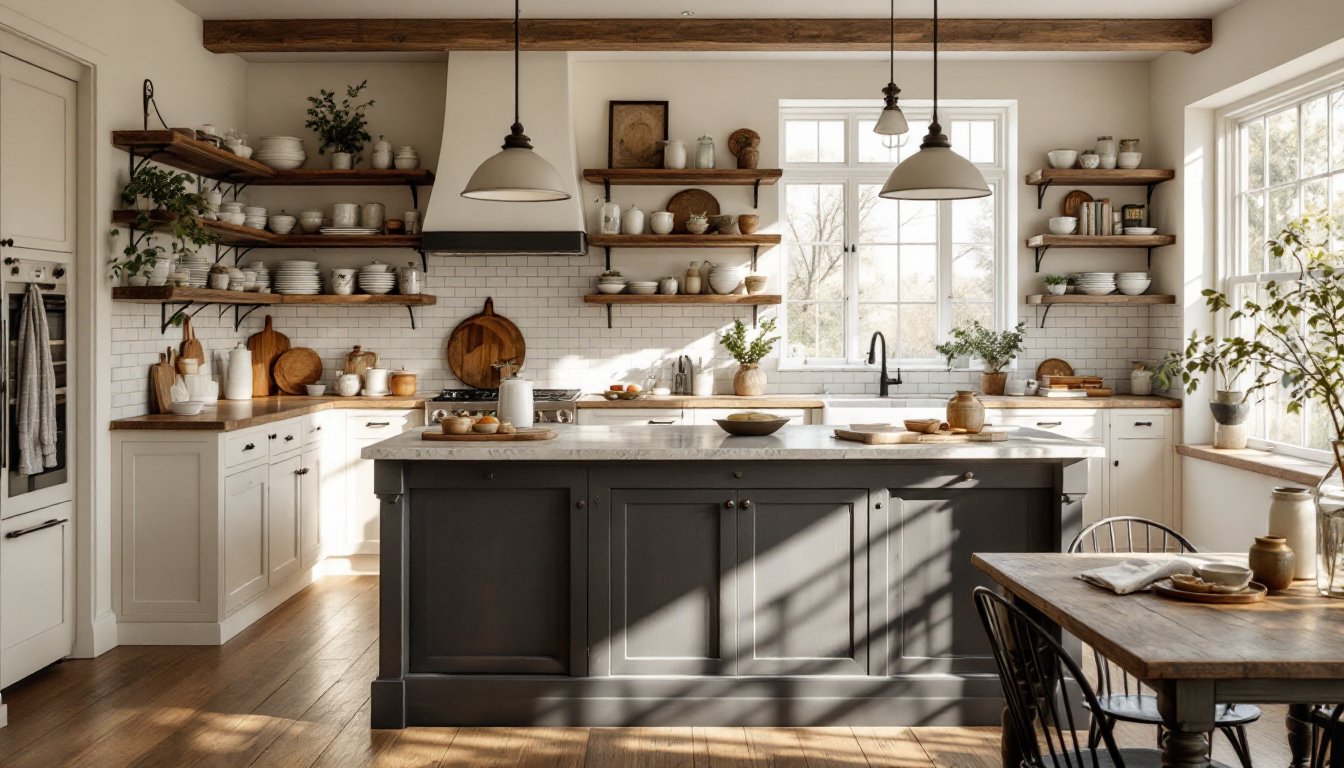
The palette typically revolves around a neutral base (creams, taupes, soft whites, or warm grays) with accents in deeper tones. A kitchen might feature cream cabinetry with a charcoal gray island. A bedroom could layer soft white walls with sage or dusty blue accents. These combinations feel restful, not clinical, because they mimic the layering you’d see naturally, imagine a weathered fence against overgrown grass against a cloudy sky.
Texture is equally critical. Farmhouse interiors layer rough with smooth: burlap against linen, distressed wood against smooth ceramic, matte finishes against subtle sheen. This textural variety prevents the space from feeling flat or boring. Your walls might be smooth plaster, but your upholstery is chunky linen. Your floor is wide plank, but your countertop is polished concrete or marble. These contrasts create visual and tactile interest that pure color alone can’t achieve. Focus on natural fibers, cotton, wool, linen, jute, over synthetic materials whenever possible. The farmhouse aesthetic fundamentally rejects plastic-feeling decor: everything should feel tangible and real.
Furniture and Decor Elements That Capture Farmhouse Style
Vintage and Repurposed Pieces
Farmhouse furniture is earned, not bought all at once. This is where the style’s authenticity shines and where your budget can stretch furthest. Rather than purchasing a matched bedroom set, a farmhouse home grows over time, a vintage dresser here, a reclaimed wood nightstand there, each piece carrying its own history.
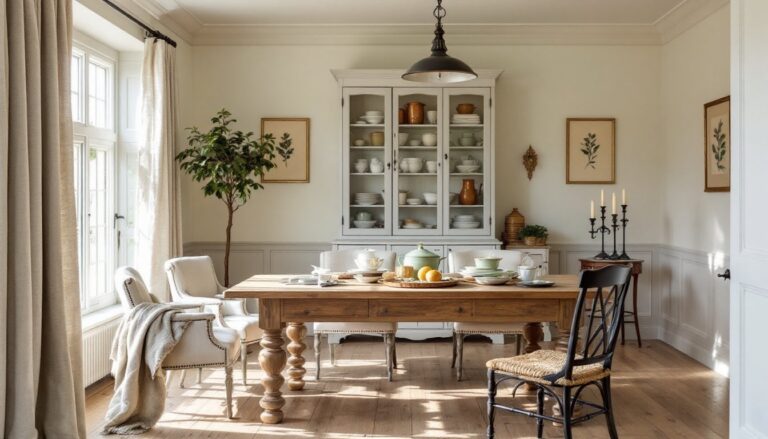
Hunt for solid wood pieces at estate sales, auctions, and salvage yards. A scarred walnut dresser with original hardware tells more about farmhouse style than any reproduction can. Bent-wood chairs, ladder-back styles, simple turned-leg tables, and open shelving units are foundational pieces. Don’t worry if finishes don’t match perfectly: that mix actually strengthens the authentic feel. A whitewashed table paired with a stained dresser looks intentional because it echoes how real farmhouses evolved, each item acquired as needed, not coordinated by design.
Repurposing is core to farm style decor ideas. Old doors become headboards or accent walls. Vintage windows transform into shelving backs or decorative wall art. Wooden crates become storage or side tables. Reclaimed beams become mantel shelves. This isn’t about being cheap: it’s about respecting materials and honoring function. Old farmhouse interior design showcases how these repurposed elements create layered, character-rich spaces without feeling cluttered.
Key furniture staples include farmhouse tables (simple, sturdy, often whitewashed or natural wood), benches paired with dining chairs for casual flexibility, upholstered sofas in durable fabrics like linen or canvas, and bedroom pieces that prioritize wood construction over upholstered frames. Storage should be visible and functional, open shelving, apothecary cabinets, and vintage hutches work better than modern built-ins with hidden storage.
Lighting and Architectural Features
Lighting in farmhouse interiors should feel sourced, not designed. Wrought-iron fixtures with cream or frosted shades, vintage-style lanterns, and Edison bulb pendants are staples, not because they’re trendy, but because they genuinely fit the aesthetic. Avoid ultra-modern fixtures with sleek metals or glass: they’ll clash with the warm, approachable feeling you’re building.
Consider layering your lighting. A statement fixture (perhaps a wrought-iron chandelier or a lantern-style pendant) anchors a room, but bedside lamps, table lamps with linen shades, and wall sconces add functional warmth. Dimmers are essential, farmhouse spaces benefit from flexible, soft lighting that can shift from energetic daytime to intimate evening.
Architecturally, farmhouse design celebrates structural honesty. Exposed beams (authentic or installed post-construction to mimic that look) add immediate character. Open shelving exposes what you store, a commitment that requires curating your items. Shiplap or board-and-batten wainscoting adds textural interest and historical authenticity. Contemporary farmhouse interior design often incorporates features like barn doors (functional room dividers, not purely decorative), wide plank flooring (possibly with intentional knots and grain variation), and open floor plans that echo how older farmhouses often flowed.
Architectural features don’t require major renovation. Crown molding, baseboards, and trim installed in simple profiles (avoid ornate dentil or overly detailed styles) instantly shift a room toward farmhouse. If structural changes aren’t feasible, visual tricks work: shiplap wallpaper, brick veneer, or faux beam overlays can approximate the effect at lower cost and without permits. Always check local building codes if you’re installing actual beams or altering wall structures.
Bringing It All Together: Room-by-Room Styling
Kitchens are the farmhouse stronghold. Open shelving displays dishware, mason jars, and cookbooks. White or cream cabinetry pairs with a bold island (deep green, charcoal, or natural wood). Countertops favor marble, soapstone, or butcher block, materials that show age. Hardware is simple and often wrought iron or oil-rubbed bronze. Your backsplash might be classic subway tile or simply painted shiplap. HGTV’s farmhouse style guidance emphasizes functional beauty here, every choice should balance aesthetics with actual cooking workflow.
Living rooms work best with a focal point, a fireplace with a simple mantel and shiplap surround, or a feature wall with vintage wood or shiplap. Furniture clusters around this anchor, with a farmhouse table doubling as a workspace or game table. Textiles are essential: chunky throws, linen-covered cushions, and wool rugs ground the space and add warmth. Wall art should be minimal and meaningful, a simple mirror with a wood frame, vintage signage, or black-and-white photography rather than colorful abstract prints.
Bedrooms embrace calm simplicity. A wrought-iron or simple wooden bed frame anchors the room. Bedding is high-quality linen or cotton in creams, whites, or soft solids, patterns are minimal. Nightstands are simple wood pieces with vintage lamps. Wall color is typically soft neutral, with possible shiplap or board-and-batten on one accent wall. Storage is achieved through vintage dressers, open shelving, or antique trunks, modern closet organizers feel out of place.
Bathrooms present the biggest contemporary farmhouse challenge: marrying modern plumbing and fixtures with rustic warmth. A vanity built from reclaimed wood with a concrete or marble top works brilliantly. Lighting can be wrought iron or vintage glass. Tile should be simple, subway, penny round, or herringbone in whites and soft grays. Avoid overly decorative or shiny finishes. Open shelving with rolled towels, vintage bottles, and natural elements (dried botanicals, stones) keeps it authentic.
Conclusion
Transforming your home into a farmhouse interior doesn’t demand a complete overhaul or unlimited budget. Start with bones, color, texture, and honest materials. Layer in meaningful pieces gradually, preferring vintage and repurposed finds over new reproductions. Let your space evolve rather than forcing a finished look all at once. The beauty of farmhouse design is that it rewards patience, imperfection, and authenticity, qualities that make a home genuinely livable. When you’re ready to explore how this philosophy pairs with other design aesthetics, explore different interior design styles to find your perfect blend. Your farmhouse interior will be stronger for the thoughtfulness you invest.